While takeoff favors the right for the Øresund Strait, the landing view from the left—capturing Rome's Tiber River, urban landscape, and Alban Hills—is more visually rewarding and geographically significant. The landing experience outweighs the takeoff advantage.
Flown CPH to FCO? Did we get it right?
Flight Path
Copenhagen to Rome is 955 miles (1,536 km), a flight of about 2 hours 55 minutes.
The flight path crosses the Alps (visible around 1 hour 15 minutes into flight, appearing as a snow-capped ridge on the left side of northbound routes, or as elevated terrain on the right for southbound routing depending on actual flight plan). The Po River valley in northern Italy becomes visible during descent into Italian airspace. The Apennine Mountains run north-south along Italy's spine, visible as elevated terrain during the approach phase. The Mediterranean coast near Civitavecchia appears briefly on the right during final descent into FCO.
Great circle distance and headings ›


Phase by phase

Takeoff from CPH
RIGHTCPH typically departs runways 04L/R or 22L/R depending on wind. Rightward seats capture the Øresund Strait and Swedish coastline immediately after departure, with clear views of Malmö across the water. Left side shows only inland Danish terrain.
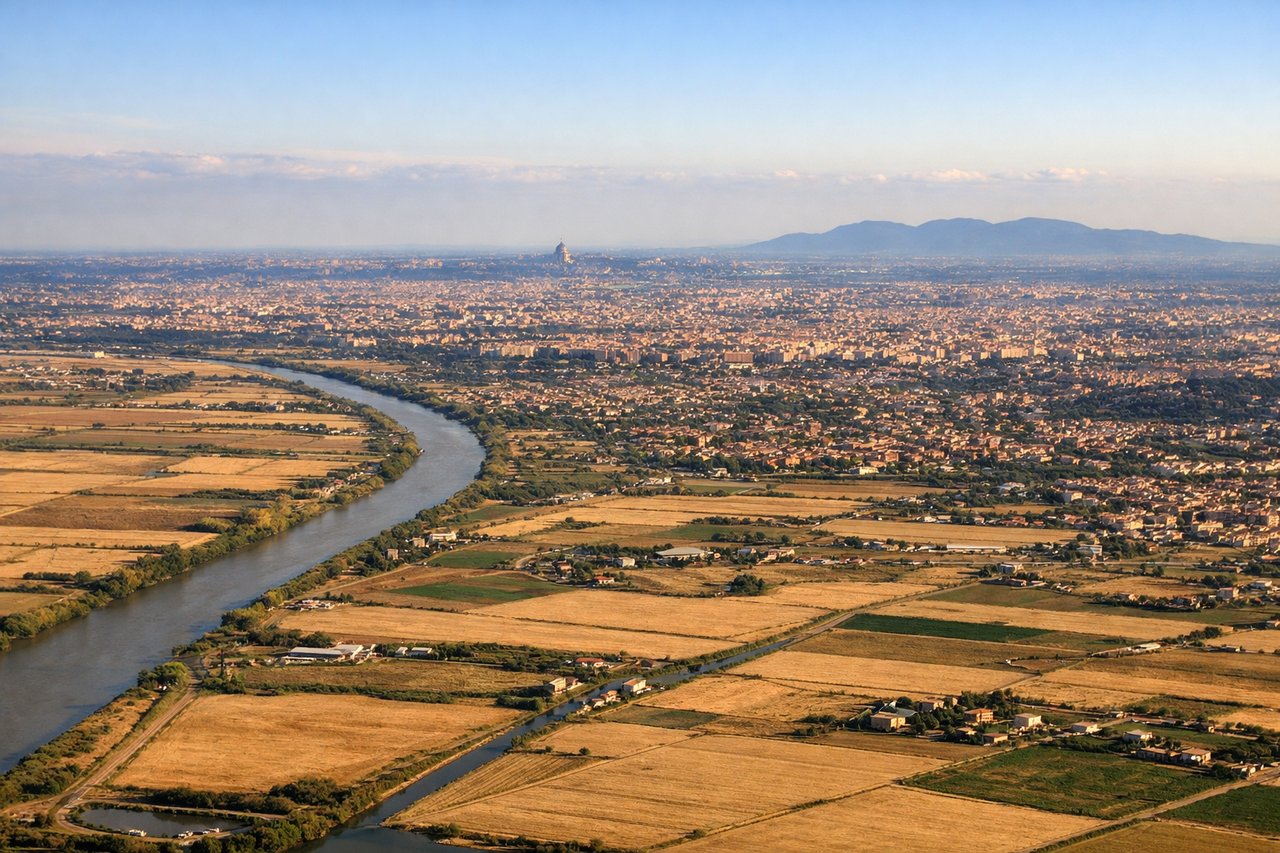
Landing at FCO
LEFTFCO uses runways 16L/R or 34L/R. Approaching from the north, left-side seats provide views of the Tiber River valley, Rome's urban sprawl, and the Alban Hills to the southeast. Right seats face away from the city toward the Tyrrhenian Sea and offer less distinctive landmarks during final approach.
Will your flight be in sunlight?
Pick a date and time in the Sun Map to watch the sun move across your whole flight.
About This Route
Which side of the plane should I sit on flying from Kastrup (CPH) to Fiumicino (FCO)?
Sit on the Left side of the plane for the best views on flights from Copenhagen to Rome. While takeoff favors the right for the Øresund Strait, the landing view from the left—capturing Rome's Tiber River, urban landscape, and Alban Hills—is more visually rewarding and geographically significant. The landing experience outweighs the takeoff advantage.
What can I see during takeoff from Kastrup in Copenhagen?
During takeoff from Kastrup (CPH), sit on the Right side for the best views. CPH typically departs runways 04L/R or 22L/R depending on wind. Rightward seats capture the Øresund Strait and Swedish coastline immediately after departure, with clear views of Malmö across the water. Left side shows only inland Danish terrain. Notable sights include: Øresund Strait (narrow water channel between Denmark and Sweden), Malmö city and harbor (Swedish coast, ~20 km away), Amager Island (CPH's island location), Copenhagen city sprawl to the northwest.
What can I see when landing at Fiumicino in Rome?
When landing at Fiumicino (FCO), sit on the Left side for the best views. FCO uses runways 16L/R or 34L/R. Approaching from the north, left-side seats provide views of the Tiber River valley, Rome's urban sprawl, and the Alban Hills to the southeast. Right seats face away from the city toward the Tyrrhenian Sea and offer less distinctive landmarks during final approach. Notable sights include: Tiber River (winding through Rome's landscape), Rome city sprawl (extensive urban development visible from 15+ km out), Alban Hills (volcanic ridge southeast of Rome, appearing as elevated terrain on the horizon), Fiumicino marshlands and Ostia coastal area (flat terrain immediately around the airport).
How long is the flight from Copenhagen to Rome?
The flight from Kastrup (CPH) to Fiumicino (FCO) takes about 2 hours 55 minutes. The shortest flight path between them is 955 miles (1,536 km); winds and air traffic control usually add a few percent.
What does the Copenhagen to Rome flight path pass over?
The flight path crosses the Alps (visible around 1 hour 15 minutes into flight, appearing as a snow-capped ridge on the left side of northbound routes, or as elevated terrain on the right for southbound routing depending on actual flight plan). The Po River valley in northern Italy becomes visible during descent into Italian airspace. The Apennine Mountains run north-south along Italy's spine, visible as elevated terrain during the approach phase. The Mediterranean coast near Civitavecchia appears briefly on the right during final descent into FCO.