The left side (northbound departure from Copenhagen) scores slightly higher due to the Øresund Strait crossing and Scandinavian coastal geography providing more distinct visual landmarks during takeoff. However, both sides are limited by the transatlantic nature of the route: the majority of the 9+ hour flight crosses open Atlantic Ocean with minimal scenic content. Neither side achieves above 2.5 because ocean-dominated long-haul flights inherently lack terrain variety. The landing approach to Miami on the right side is moderately scenic but cannot overcome the left side's superior departure experience.
Flown CPH to MIA? Did we get it right?
Flight Path
Copenhagen to Miami is 4,874 miles (7,845 km), a flight of about 9 hours 15 minutes.
The flight path crosses the North Atlantic with no significant visible landmarks for approximately 7 hours of cruise. Notable waypoints include the southern tip of Greenland (visible only on far-northern routing variants, not typical for this route), the Mid-Atlantic Ridge (underwater, not visible), and the Bahamas archipelago appearing as scattered islands and shallow banks during the final 90 minutes of descent toward Miami. The Azores, if visible on the southern horizon during mid-cruise, would be the only notable landmass, but they typically lie south of the direct great-circle route and are not reliably visible.
Great circle distance and headings ›


Phase by phase

Takeoff from CPH
LEFTCopenhagen departure offers views of the Øresund Strait, the Danish coastline, and the transition from urban harbor to open water. The strait itself and the Swedish coast across it provide brief but distinct geographic features during climb-out.
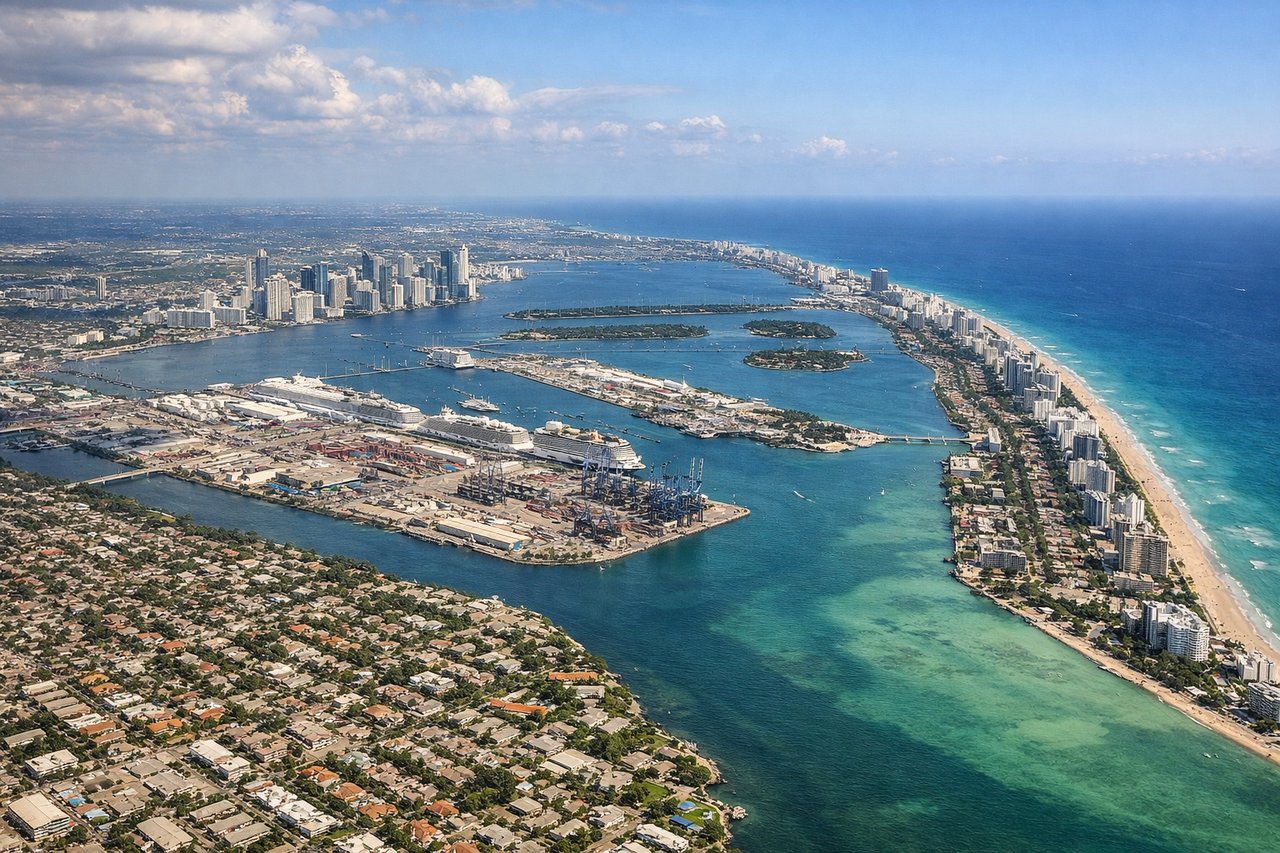
Landing at MIA
RIGHTMiami approach from the north provides views of the Florida coastline, Biscayne Bay, and the Miami metropolitan area. The contrast between the Atlantic Ocean, the bay system, and the urban sprawl of Miami-Dade County creates more visual variety than the departure side's ocean-dominated descent.
Will your flight be in sunlight?
Pick a date and time in the Sun Map to watch the sun move across your whole flight.
About This Route
Which side of the plane should I sit on flying from Kastrup (CPH) to Miami International (MIA)?
Sit on the Left side of the plane for the best views on flights from Copenhagen to Miami. The left side (northbound departure from Copenhagen) scores slightly higher due to the Øresund Strait crossing and Scandinavian coastal geography providing more distinct visual landmarks during takeoff. However, both sides are limited by the transatlantic nature of the route: the majority of the 9+ hour flight crosses open Atlantic Ocean with minimal scenic content. Neither side achieves above 2.5 because ocean-dominated long-haul flights inherently lack terrain variety. The landing approach to Miami on the right side is moderately scenic but cannot overcome the left side's superior departure experience.
What can I see during takeoff from Kastrup in Copenhagen?
During takeoff from Kastrup (CPH), sit on the Left side for the best views. Copenhagen departure offers views of the Øresund Strait, the Danish coastline, and the transition from urban harbor to open water. The strait itself and the Swedish coast across it provide brief but distinct geographic features during climb-out. Notable sights include: Øresund Strait, Copenhagen harbor and city grid, Swedish coastline (Scania region), Baltic Sea transition.
What can I see when landing at Miami International in Miami?
When landing at Miami International (MIA), sit on the Right side for the best views. Miami approach from the north provides views of the Florida coastline, Biscayne Bay, and the Miami metropolitan area. The contrast between the Atlantic Ocean, the bay system, and the urban sprawl of Miami-Dade County creates more visual variety than the departure side's ocean-dominated descent. Notable sights include: Biscayne Bay, Miami Beach barrier islands, Atlantic coastline, Miami downtown skyline and port.
How long is the flight from Copenhagen to Miami?
The flight from Kastrup (CPH) to Miami International (MIA) takes about 9 hours 15 minutes. The shortest flight path between them is 4,874 miles (7,845 km); winds and air traffic control usually add a few percent.
What does the Copenhagen to Miami flight path pass over?
The flight path crosses the North Atlantic with no significant visible landmarks for approximately 7 hours of cruise. Notable waypoints include the southern tip of Greenland (visible only on far-northern routing variants, not typical for this route), the Mid-Atlantic Ridge (underwater, not visible), and the Bahamas archipelago appearing as scattered islands and shallow banks during the final 90 minutes of descent toward Miami. The Azores, if visible on the southern horizon during mid-cruise, would be the only notable landmass, but they typically lie south of the direct great-circle route and are not reliably visible.