While Cape Town's departure is more dramatic, Bombay's landing approach scores higher overall due to sustained scenic variety throughout the flight. The 9+ hour journey crosses the African continent and Indian Ocean with limited dramatic features on most of the route, but Bombay's arrival compensates with complex urban-coastal geography, visible mountain ranges, and harbor scenery. The right side captures the most visually interesting segments of both takeoff and landing phases.
Flight Path
The flight path crosses southern Africa (Botswana, Zimbabwe, Mozambique) with limited dramatic terrain—mostly savanna and scattered woodland. The Zambezi River valley and Victoria Falls region may be visible on some routing. The Indian Ocean crossing dominates the middle 4-5 hours with open water. As the aircraft approaches India, the Western Ghats mountains become visible on the eastern horizon, and the Deccan Plateau's edge marks the transition to the subcontinent's interior.
Great circle distance and headings ›

.jpg?width=600)
Phase by phase
Takeoff from CPT
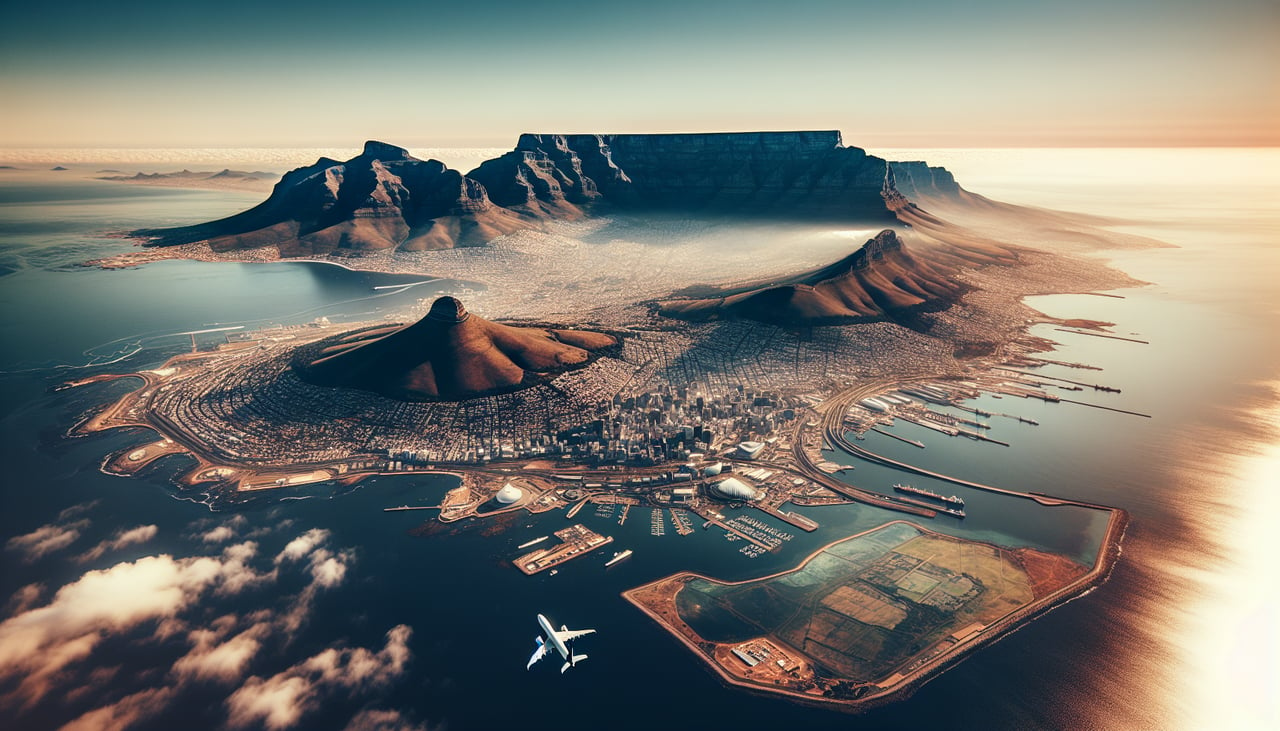
LEFTCape Town's departure offers immediate dramatic scenery: Table Mountain dominates the western skyline during climb-out, and the Atlantic coastline with its rocky shores and beaches is visible within minutes. The city harbor and surrounding peninsulas provide urban and coastal interest that Bombay's approach lacks on the opposite side.
Landing at BOM
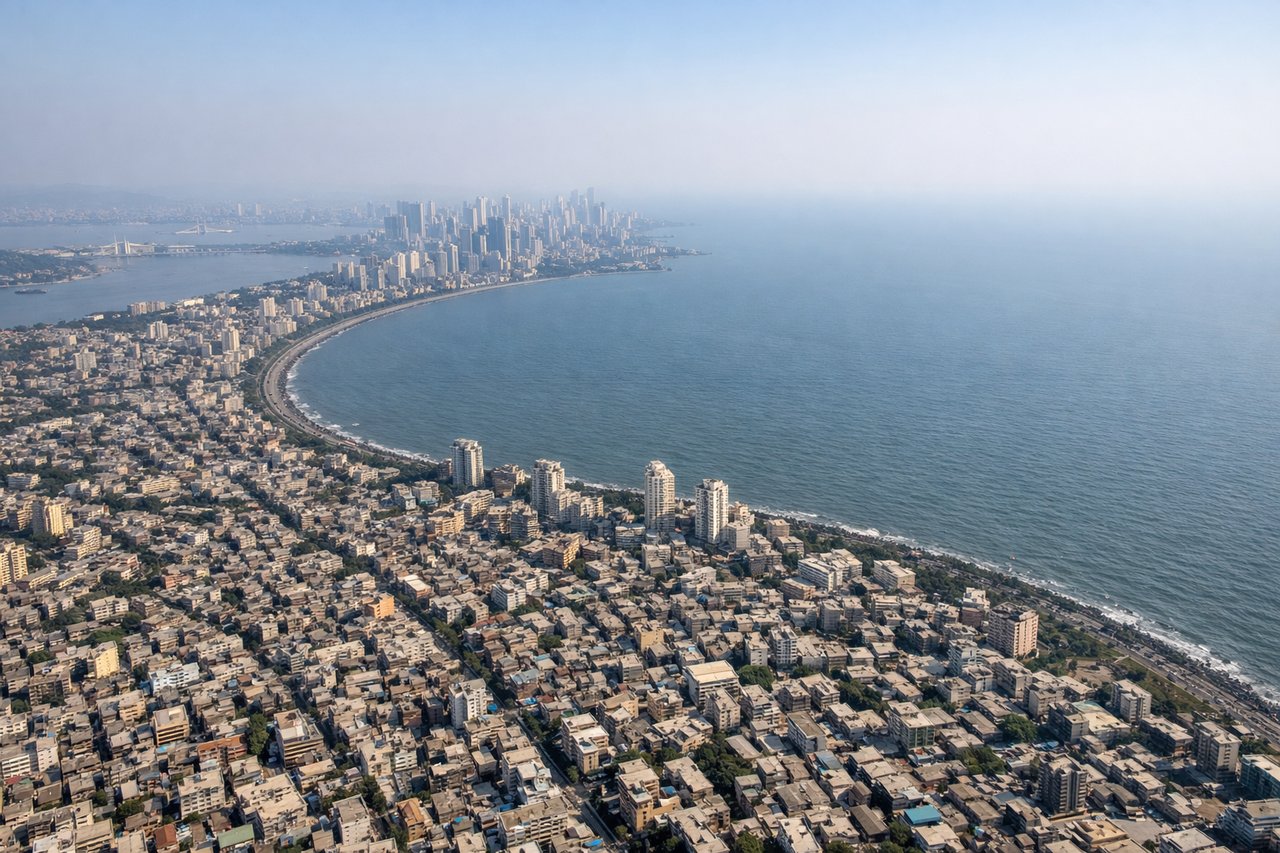
RIGHTBombay's approach provides sustained scenic interest: the Arabian Sea coastline with its distinctive harbor geometry, the city's dense urban sprawl spreading across multiple islands and peninsulas, and the Western Ghats mountains visible inland to the east. The approach path offers views of the Thane Creek, Mahim Bay, and the city's characteristic island-based geography that creates visual complexity and landmark density.
Landmarks on this routeAll landmarks →
Will your flight be in sunlight?
See exactly which side of the plane gets sun and shade at your departure time.
About This Route
Which side of the plane should I sit on flying from Cape Town International (CPT) to Chhatrapati Shivaji International (BOM)?
Sit on the Right side of the plane for the best views on flights from Cape Town to Bombay. While Cape Town's departure is more dramatic, Bombay's landing approach scores higher overall due to sustained scenic variety throughout the flight. The 9+ hour journey crosses the African continent and Indian Ocean with limited dramatic features on most of the route, but Bombay's arrival compensates with complex urban-coastal geography, visible mountain ranges, and harbor scenery. The right side captures the most visually interesting segments of both takeoff and landing phases.
What can I see during takeoff from Cape Town International in Cape Town?
During takeoff from Cape Town International (CPT), sit on the Left side for the best views. Cape Town's departure offers immediate dramatic scenery: Table Mountain dominates the western skyline during climb-out, and the Atlantic coastline with its rocky shores and beaches is visible within minutes. The city harbor and surrounding peninsulas provide urban and coastal interest that Bombay's approach lacks on the opposite side. Notable sights include: Table Mountain (1,086 m, directly west of airport), Cape Peninsula coastline, Atlantic Ocean meeting the city, Signal Hill and surrounding ridges.
What can I see when landing at Chhatrapati Shivaji International in Bombay?
When landing at Chhatrapati Shivaji International (BOM), sit on the Right side for the best views. Bombay's approach provides sustained scenic interest: the Arabian Sea coastline with its distinctive harbor geometry, the city's dense urban sprawl spreading across multiple islands and peninsulas, and the Western Ghats mountains visible inland to the east. The approach path offers views of the Thane Creek, Mahim Bay, and the city's characteristic island-based geography that creates visual complexity and landmark density. Notable sights include: Arabian Sea and Bombay Harbor, Western Ghats mountain range (inland, eastern horizon), Mahim Bay and coastal peninsulas, dense urban cityscape of Greater Mumbai.
How long is the flight from Cape Town to Bombay?
The flight from Cape Town International (CPT) to Chhatrapati Shivaji International (BOM) takes 09h 15m.
What does the Cape Town to Bombay flight path pass over?
The flight path crosses southern Africa (Botswana, Zimbabwe, Mozambique) with limited dramatic terrain—mostly savanna and scattered woodland. The Zambezi River valley and Victoria Falls region may be visible on some routing. The Indian Ocean crossing dominates the middle 4-5 hours with open water. As the aircraft approaches India, the Western Ghats mountains become visible on the eastern horizon, and the Deccan Plateau's edge marks the transition to the subcontinent's interior.