The right side delivers a genuinely bookended scenic flight: Table Mountain and the Cape Peninsula at departure, occasional glimpses of the Garden Route coastline during cruise, and a coastal approach into Durban past its beachfront and harbor. The left side spends most of the flight over the relatively flat Karoo interior, with only a distant view of the southern Drakensberg escarpment breaking up the monotony.
Flight Path
The direct route crosses the semi-arid Karoo interior of the Eastern Cape, then skirts the southern edge of Lesotho, where the southern Drakensberg escarpment is visible as a distant mountain wall to the north (left side) before the descent into Durban begins.
Great circle distance and headings ›

.jpg?width=600)
Phase by phase
Takeoff from CPT
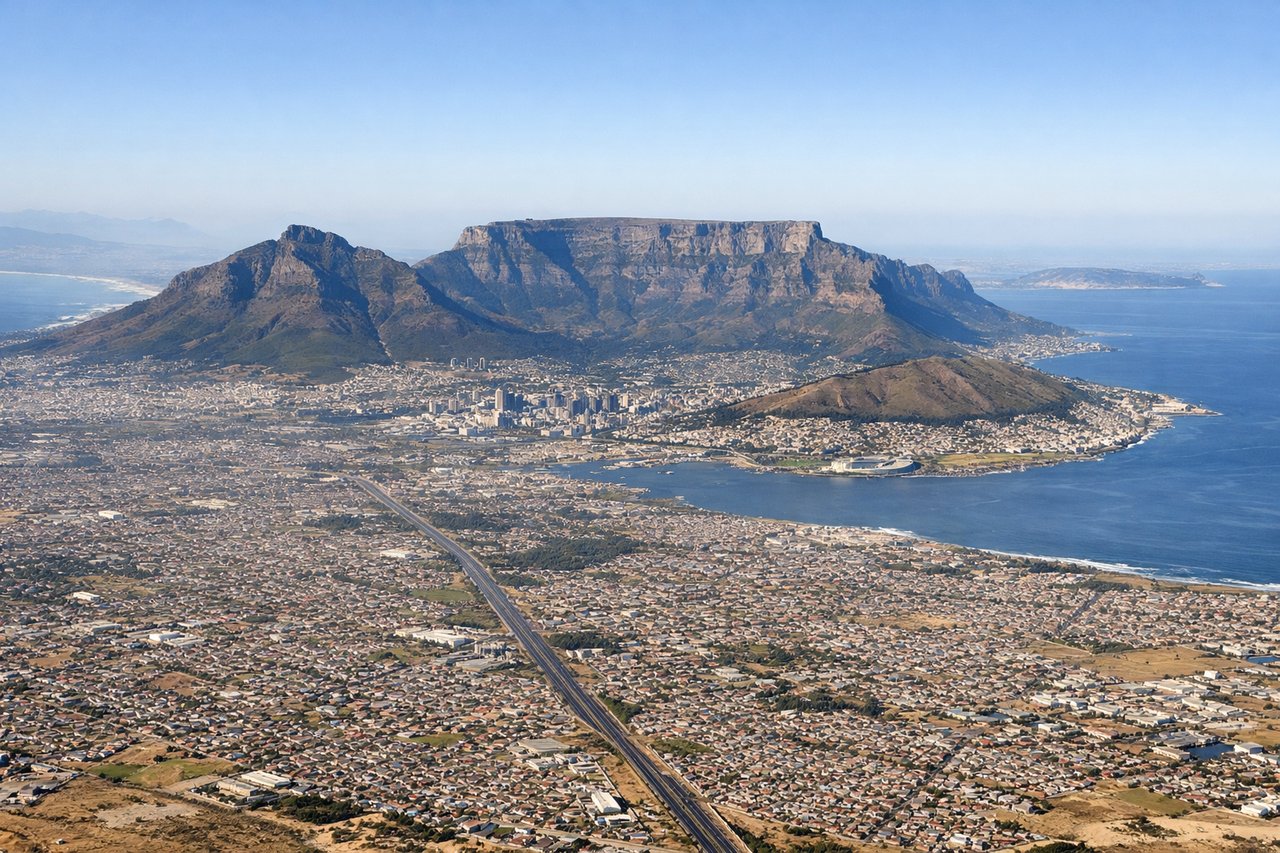
RIGHTDeparting CPT, the aircraft typically climbs out over the Cape Flats before turning east toward Durban, putting Table Mountain, Lion's Head and Table Bay squarely on the right side. It's one of the most recognizable mountain-and-harbor views in commercial aviation, especially when the 'Cape Doctor' wind has traffic using runway 19 southbound before the turn.
Landing at DUR
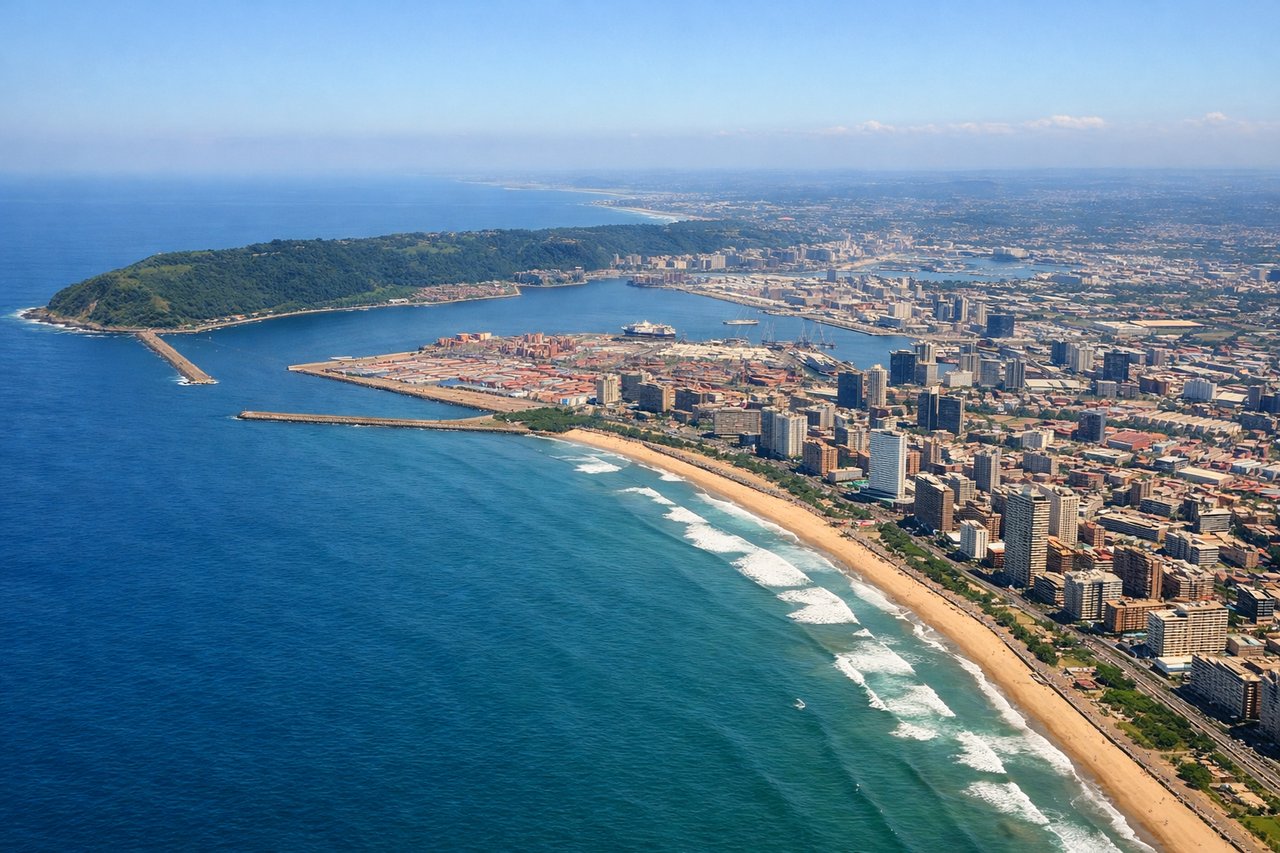
RIGHTOn the approach into King Shaka, arriving flights from the southwest typically line up for runway 06, tracking in over the KwaZulu-Natal coast with the Indian Ocean, Durban's beachfront and the harbor entrance visible off the right side just before touchdown. It's a strong coastal bookend to the Table Mountain departure.
Landmarks on this routeAll landmarks →
Will your flight be in sunlight?
See exactly which side of the plane gets sun and shade at your departure time.
About This Route
Which side of the plane should I sit on flying from Cape Town International (CPT) to King Shaka International Airport (DUR)?
Sit on the Right side of the plane for the best views on flights from Cape Town to Durban. The right side delivers a genuinely bookended scenic flight: Table Mountain and the Cape Peninsula at departure, occasional glimpses of the Garden Route coastline during cruise, and a coastal approach into Durban past its beachfront and harbor. The left side spends most of the flight over the relatively flat Karoo interior, with only a distant view of the southern Drakensberg escarpment breaking up the monotony.
What can I see during takeoff from Cape Town International in Cape Town?
During takeoff from Cape Town International (CPT), sit on the Right side for the best views. Departing CPT, the aircraft typically climbs out over the Cape Flats before turning east toward Durban, putting Table Mountain, Lion's Head and Table Bay squarely on the right side. It's one of the most recognizable mountain-and-harbor views in commercial aviation, especially when the 'Cape Doctor' wind has traffic using runway 19 southbound before the turn. Notable sights include: Table Mountain, Lion's Head, Table Bay and Cape Town harbor, Cape Peninsula in the distance.
What can I see when landing at King Shaka International Airport in Durban?
When landing at King Shaka International Airport (DUR), sit on the Right side for the best views. On the approach into King Shaka, arriving flights from the southwest typically line up for runway 06, tracking in over the KwaZulu-Natal coast with the Indian Ocean, Durban's beachfront and the harbor entrance visible off the right side just before touchdown. It's a strong coastal bookend to the Table Mountain departure. Notable sights include: Indian Ocean coastline, Durban's Golden Mile beachfront, Durban harbor entrance and the Bluff headland, Umhlanga coastline to the north.
How long is the flight from Cape Town to Durban?
The flight from Cape Town International (CPT) to King Shaka International Airport (DUR) takes 2h 05m.
What does the Cape Town to Durban flight path pass over?
The direct route crosses the semi-arid Karoo interior of the Eastern Cape, then skirts the southern edge of Lesotho, where the southern Drakensberg escarpment is visible as a distant mountain wall to the north (left side) before the descent into Durban begins.