Right side scores higher (3.5 vs 2.5) due to superior scenic variety across the full flight. Takeoff from Cape Town offers Table Mountain and the dramatic Cape Peninsula coastline. The cruise phase over the Indian Ocean and Arabian Sea is equally flat on both sides, but the approach into Dubai heavily favors the right, where passengers see the Persian Gulf, Palm Jumeirah, The World Islands, and Dubai's urban landscape. Left side offers only inland desert and mountains with minimal visual interest on both ends of the flight.
Flown CPT to DWC? Did we get it right?
Flight Path
Cape Town to Dubai is 4,722 miles (7,600 km), a flight of about 7 hours 45 minutes.
Indian Ocean (open water for approximately 5 hours), Socotra Island (Yemen, visible as a small rocky landmass if flight path passes nearby), Arabian Sea, Oman coastline (Musandam Peninsula with dramatic fjord-like inlets visible on some routing), Persian Gulf entrance near Strait of Hormuz
Great circle distance and headings ›Phase by phase
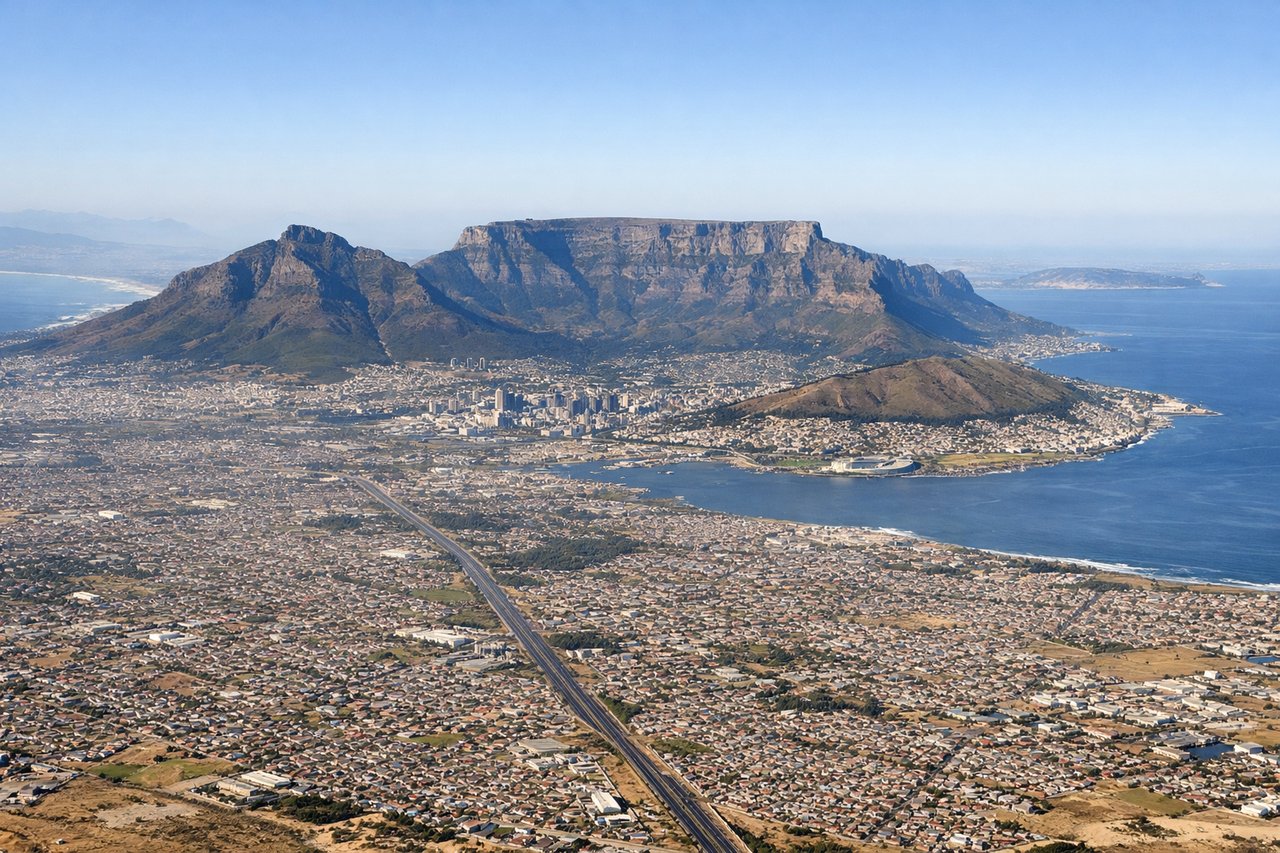
Takeoff from CPT
RIGHTRight side captures Table Mountain and the Cape Peninsula's dramatic coastline during northbound departure from runway 01. Left side faces inland toward the Hottentots Holland Mountains, which are less visually striking from this angle.
Landing at DWC
RIGHTRight side offers superior approach views into Dubai. Descending from the northeast, the right side reveals the Persian Gulf coastline, Dubai's urban sprawl, and the distinctive Palm Jumeirah and World Islands artificial developments. Left side faces inland toward the Arabian Desert with minimal visual interest.
Will your flight be in sunlight?
Pick a date and time in the Sun Map to watch the sun move across your whole flight.
About This Route
Which side of the plane should I sit on flying from Cape Town International (CPT) to Al Maktoum International Airport (DWC)?
Sit on the Right side of the plane for the best views on flights from Cape Town to Dubai. Right side scores higher (3.5 vs 2.5) due to superior scenic variety across the full flight. Takeoff from Cape Town offers Table Mountain and the dramatic Cape Peninsula coastline. The cruise phase over the Indian Ocean and Arabian Sea is equally flat on both sides, but the approach into Dubai heavily favors the right, where passengers see the Persian Gulf, Palm Jumeirah, The World Islands, and Dubai's urban landscape. Left side offers only inland desert and mountains with minimal visual interest on both ends of the flight.
What can I see during takeoff from Cape Town International in Cape Town?
During takeoff from Cape Town International (CPT), sit on the Right side for the best views. Right side captures Table Mountain and the Cape Peninsula's dramatic coastline during northbound departure from runway 01. Left side faces inland toward the Hottentots Holland Mountains, which are less visually striking from this angle. Notable sights include: Table Mountain (iconic flat-topped peak), Cape Peninsula coastline, Atlantic Ocean meeting False Bay, Hottentots Holland Mountains receding inland.
What can I see when landing at Al Maktoum International Airport in Dubai?
When landing at Al Maktoum International Airport (DWC), sit on the Right side for the best views. Right side offers superior approach views into Dubai. Descending from the northeast, the right side reveals the Persian Gulf coastline, Dubai's urban sprawl, and the distinctive Palm Jumeirah and World Islands artificial developments. Left side faces inland toward the Arabian Desert with minimal visual interest. Notable sights include: Palm Jumeirah (artificial palm-shaped island), The World Islands (archipelago of artificial islands), Dubai Marina and downtown skyline, Persian Gulf coastline.
How long is the flight from Cape Town to Dubai?
The flight from Cape Town International (CPT) to Al Maktoum International Airport (DWC) takes about 7 hours 45 minutes. The shortest flight path between them is 4,722 miles (7,600 km); winds and air traffic control usually add a few percent.
What does the Cape Town to Dubai flight path pass over?
Indian Ocean (open water for approximately 5 hours), Socotra Island (Yemen, visible as a small rocky landmass if flight path passes nearby), Arabian Sea, Oman coastline (Musandam Peninsula with dramatic fjord-like inlets visible on some routing), Persian Gulf entrance near Strait of Hormuz