The takeoff view from Cape Town is more visually distinctive and geographically dramatic—Table Mountain and the Atlantic coastline provide unmatched visual impact. While the landing approach into São Paulo offers urban geography interest, the takeoff experience is superior for window-seat value.
Flight Path
This route crosses the South Atlantic Ocean for roughly 9,000 kilometers. The flight path typically tracks southeast from Cape Town across open ocean, passing south of the Mid-Atlantic Ridge (not visible at altitude). After crossing the equator around the 8-hour mark, the aircraft enters the South American airspace approaching Brazil's coast. Notable geographic features along the route include the Walvis Ridge (underwater, not visible), the Brazilian continental shelf approaching landfall, and the Atlantic coastal regions of Brazil before turning inland toward São Paulo. The entire midpoint section is open ocean with no visible landmarks—only cloud formations and occasionally the curvature of Earth at cruise altitude.
Great circle distance and headings ›


Phase by phase
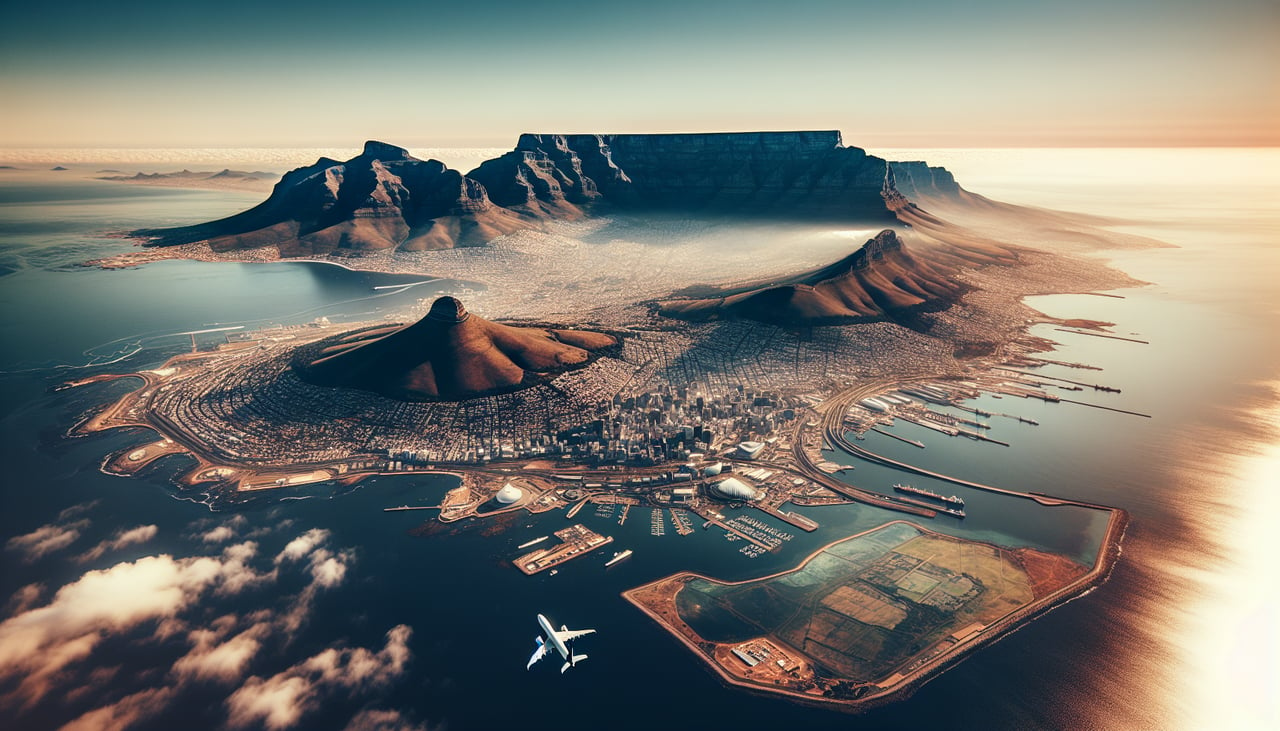
Takeoff from CPT
LEFTCape Town International typically departs runways 01 or 03 (northeasterly headings). Left-side seats face the Atlantic Ocean and Table Mountain immediately after climb-out, providing dramatic views of the mountain's flat-topped profile and the city sprawl beneath.
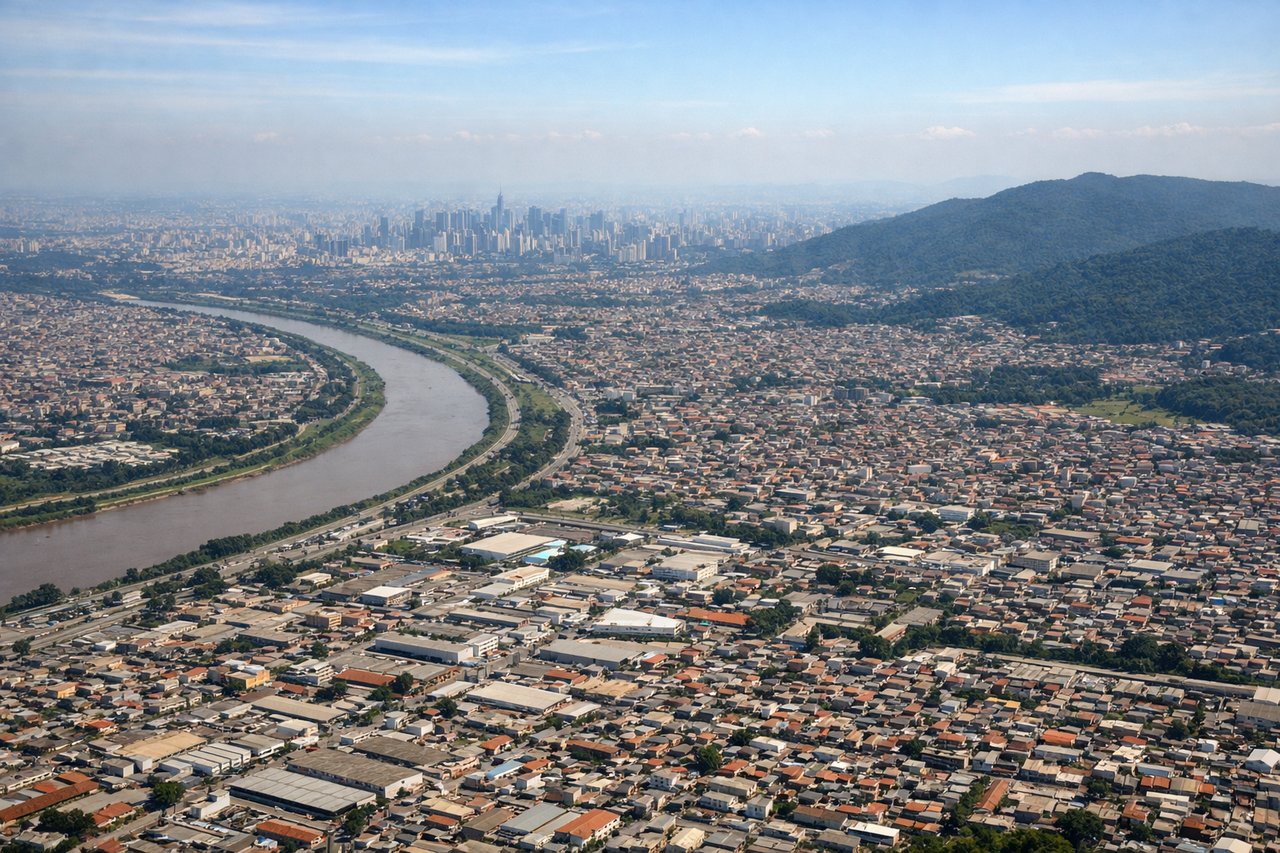
Landing at GRU
RIGHTGuarulhos typically lands on runways 09L/09R or 27L/27R depending on wind. Right-side seats during approach from the south or east provide views of São Paulo's urban sprawl, the Cantareira Mountains to the north, and the Serra da Mantiqueira range on the horizon—all major geographic features surrounding the airport.
Landmarks on this routeAll landmarks →
Will your flight be in sunlight?
See exactly which side of the plane gets sun and shade at your departure time.
About This Route
Which side of the plane should I sit on flying from Cape Town International (CPT) to Guarulhos (GRU)?
Sit on the Left side of the plane for the best views on flights from Cape Town to Sao Paulo. The takeoff view from Cape Town is more visually distinctive and geographically dramatic—Table Mountain and the Atlantic coastline provide unmatched visual impact. While the landing approach into São Paulo offers urban geography interest, the takeoff experience is superior for window-seat value.
What can I see during takeoff from Cape Town International in Cape Town?
During takeoff from Cape Town International (CPT), sit on the Left side for the best views. Cape Town International typically departs runways 01 or 03 (northeasterly headings). Left-side seats face the Atlantic Ocean and Table Mountain immediately after climb-out, providing dramatic views of the mountain's flat-topped profile and the city sprawl beneath. Notable sights include: Table Mountain (distinctive flat-topped peak), Atlantic Ocean coastline, Cape Peninsula extending southward, Twelve Apostles mountain range running along the peninsula's spine.
What can I see when landing at Guarulhos in Sao Paulo?
When landing at Guarulhos (GRU), sit on the Right side for the best views. Guarulhos typically lands on runways 09L/09R or 27L/27R depending on wind. Right-side seats during approach from the south or east provide views of São Paulo's urban sprawl, the Cantareira Mountains to the north, and the Serra da Mantiqueira range on the horizon—all major geographic features surrounding the airport. Notable sights include: Cantareira Mountains (northern boundary of São Paulo metro), Serra da Mantiqueira range (distant southeastern horizon), Tietê River valley with its reservoir system, São Paulo urban grid extending to the horizon.
How long is the flight from Cape Town to Sao Paulo?
The flight from Cape Town International (CPT) to Guarulhos (GRU) takes Approximately 14-15 hours.
What does the Cape Town to Sao Paulo flight path pass over?
This route crosses the South Atlantic Ocean for roughly 9,000 kilometers. The flight path typically tracks southeast from Cape Town across open ocean, passing south of the Mid-Atlantic Ridge (not visible at altitude). After crossing the equator around the 8-hour mark, the aircraft enters the South American airspace approaching Brazil's coast. Notable geographic features along the route include the Walvis Ridge (underwater, not visible), the Brazilian continental shelf approaching landfall, and the Atlantic coastal regions of Brazil before turning inland toward São Paulo. The entire midpoint section is open ocean with no visible landmarks—only cloud formations and occasionally the curvature of Earth at cruise altitude.