Right side scores higher due to the extraordinary Himalayan arrival sequence. While left side offers modest Appalachian views during departure, right side delivers the rare, dramatic alpine approach into Kathmandu Valley—a world-class scenic landing that elevates the entire flight experience. The Himalayan peaks visible during descent represent genuine, high-altitude drama comparable to premium alpine routes.
Flown DAY to KTM? Did we get it right?
Flight Path
Dayton to Kathmandu is 7,718 miles (12,421 km), a flight of about 15 hours 20 minutes.
Atlantic Ocean crossing (6+ hours over open water with minimal visual interest), European airspace over France and Germany (scattered cities and farmland), Alpine crossing into Central Europe (Swiss Alps and Austrian valleys visible during cruise), Middle Eastern airspace over Iran and Afghanistan (Hindu Kush and Pamir mountain ranges along southern route corridor), final approach into Nepal via Himalayan foothills
Great circle distance and headings ›Phase by phase
Takeoff from DAY
LEFTLeft side (north/northeast) captures the initial climb over the Miami Valley and early views toward the Appalachian foothills. Right side faces southwest over relatively flat farmland with minimal terrain variation.
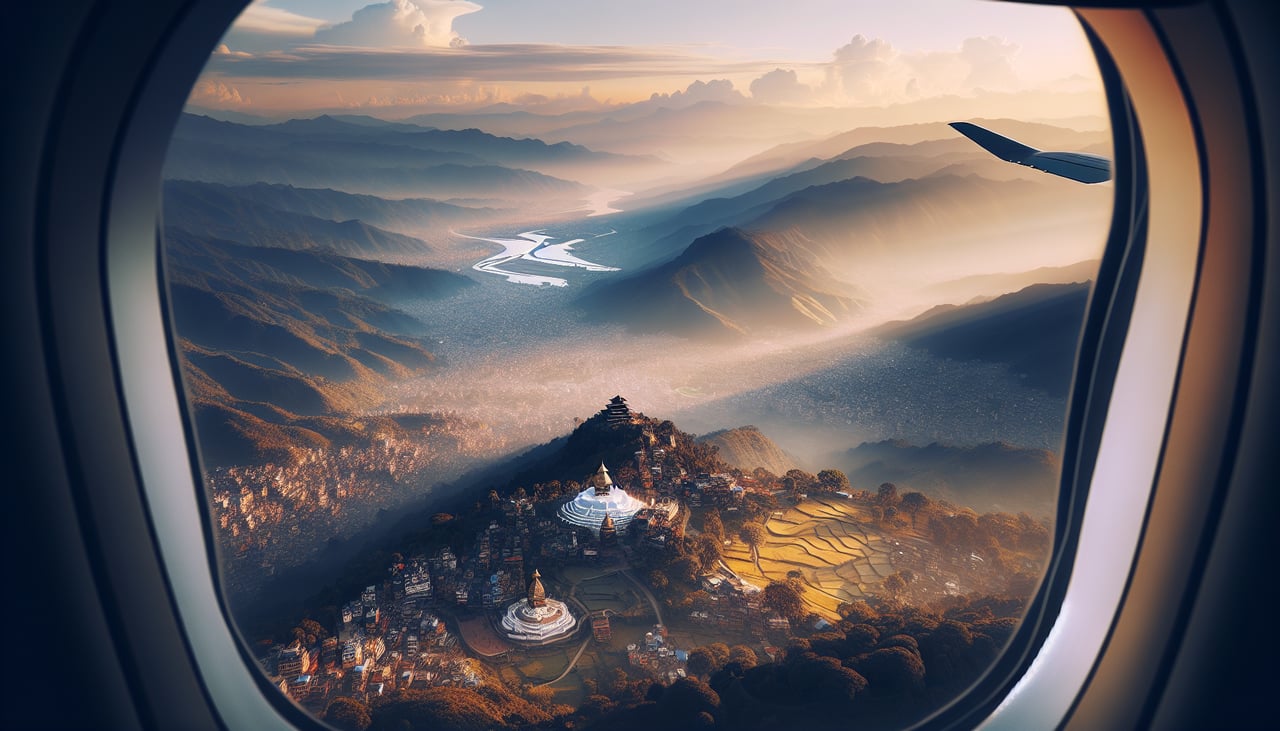
Landing at KTM
RIGHTRight side (south/southwest approach) offers the dramatic Himalayan arrival sequence. Runway 02 northbound landings provide striking views of snow-capped peaks filling the northern horizon as the aircraft descends into the Kathmandu Valley. Left side faces the valley floor and southern approaches with less alpine drama.
Will your flight be in sunlight?
Pick a date and time in the Sun Map to watch the sun move across your whole flight.
About This Route
Which side of the plane should I sit on flying from James M Cox Dayton International (DAY) to Tribhuvan International (KTM)?
Sit on the Right side of the plane for the best views on flights from Dayton to Kathmandu. Right side scores higher due to the extraordinary Himalayan arrival sequence. While left side offers modest Appalachian views during departure, right side delivers the rare, dramatic alpine approach into Kathmandu Valley—a world-class scenic landing that elevates the entire flight experience. The Himalayan peaks visible during descent represent genuine, high-altitude drama comparable to premium alpine routes.
What can I see during takeoff from James M Cox Dayton International in Dayton?
During takeoff from James M Cox Dayton International (DAY), sit on the Left side for the best views. Left side (north/northeast) captures the initial climb over the Miami Valley and early views toward the Appalachian foothills. Right side faces southwest over relatively flat farmland with minimal terrain variation. Notable sights include: Miami River valley floor, early Appalachian ridgelines to the northeast, Dayton urban sprawl transitioning to rural Ohio.
What can I see when landing at Tribhuvan International in Kathmandu?
When landing at Tribhuvan International (KTM), sit on the Right side for the best views. Right side (south/southwest approach) offers the dramatic Himalayan arrival sequence. Runway 02 northbound landings provide striking views of snow-capped peaks filling the northern horizon as the aircraft descends into the Kathmandu Valley. Left side faces the valley floor and southern approaches with less alpine drama. Notable sights include: Kathmandu Valley floor with terraced agriculture, Himalayan peaks (Langtang and Gaurishankar ranges), Bagmati River valley, Kathmandu city sprawl.
How long is the flight from Dayton to Kathmandu?
The flight from James M Cox Dayton International (DAY) to Tribhuvan International (KTM) takes about 15 hours 20 minutes. The shortest flight path between them is 7,718 miles (12,421 km); winds and air traffic control usually add a few percent.
What does the Dayton to Kathmandu flight path pass over?
Atlantic Ocean crossing (6+ hours over open water with minimal visual interest), European airspace over France and Germany (scattered cities and farmland), Alpine crossing into Central Europe (Swiss Alps and Austrian valleys visible during cruise), Middle Eastern airspace over Iran and Afghanistan (Hindu Kush and Pamir mountain ranges along southern route corridor), final approach into Nepal via Himalayan foothills