The left seat wins overall because the DCA departure view of the National Mall and monuments is one of the most iconic urban aerial views in the world and is genuinely hard to beat. The landing at HND slightly favors right, but the takeoff spectacle on the left is the highlight of the journey. On the transpacific cruise at 35,000 feet, neither side offers dramatically different views over the open Pacific, so the departure experience is the deciding factor.
Flight Path
Great Lakes visible during initial climb-out over the northeast; Canadian Shield boreal forest and frozen lakes across Ontario and Manitoba; Hudson Bay if routing far north; Aleutian Island chain of Alaska as a dramatic mid-Pacific waypoint with volcanic peaks and island arcs visible on clear days; open North Pacific Ocean for the majority of the transpacific segment with occasional cloud systems; Japanese coastline of Honshu on descent, with the Kanto Plain and Mount Fuji potentially visible to the southwest on approach
Great circle distance and headings ›.jpeg?width=600)


Phase by phase
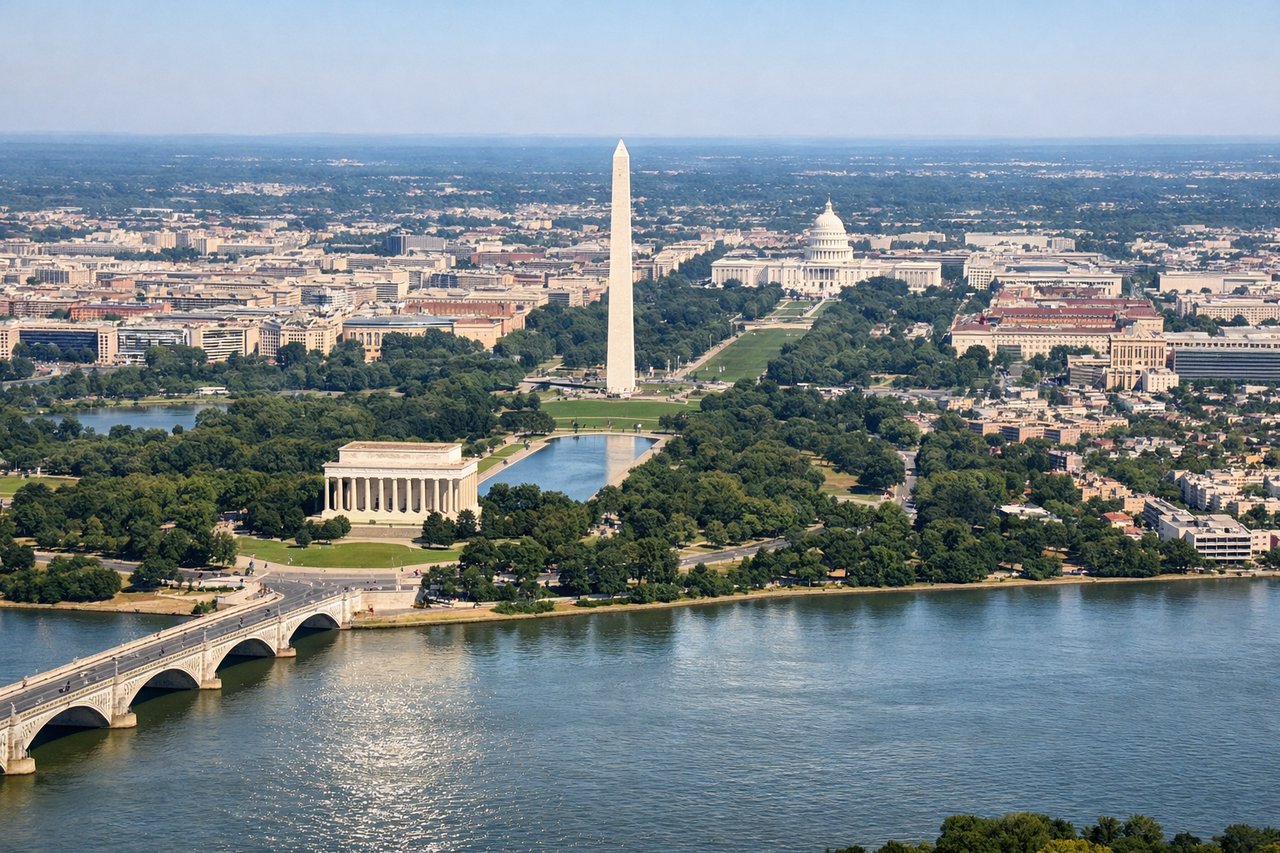
Takeoff from DCA
LEFTDCA's primary departure runway is Runway 1 heading north, then aircraft bank left (west) over the Potomac. The left side gets the iconic view of the National Mall, Capitol Hill, and the monuments as you climb out over the river. Right side faces Virginia suburbs with no comparable landmarks.
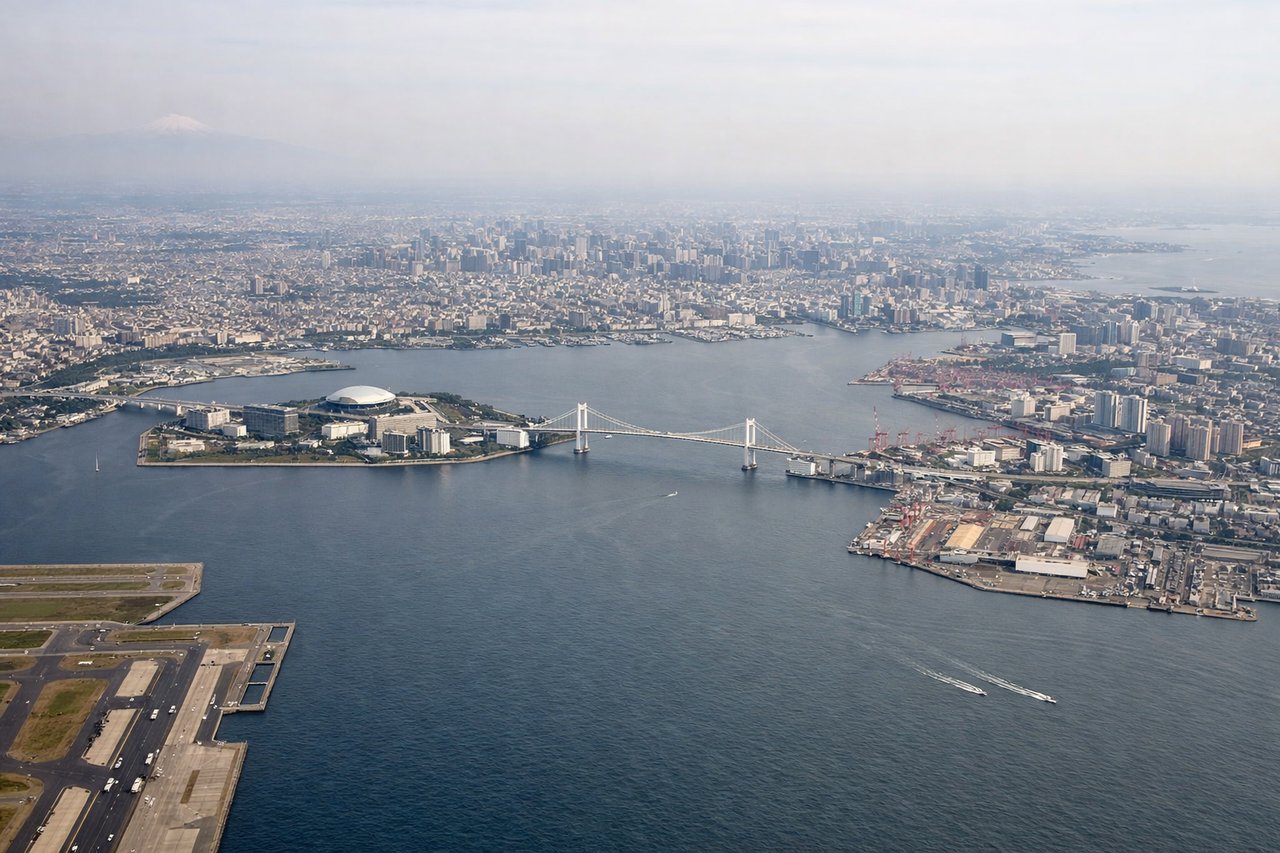
Landing at HND
RIGHTHND sits on Tokyo Bay's western shore, and aircraft typically approach from the north or northeast on Runway 34L/34R. The right side faces south and east over Tokyo Bay, giving clear views of the bay's expanse and the city waterfront. Left side faces inland toward the dense urban grid of central Tokyo and can also be interesting, but the bay approach on the right is more visually dramatic.
Landmarks on this routeAll landmarks →
Will your flight be in sunlight?
See exactly which side of the plane gets sun and shade at your departure time.
About This Route
Which side of the plane should I sit on flying from Ronald Reagan Washington National (DCA) to Tokyo International (HND)?
Sit on the Left side of the plane for the best views on flights from Washington to Tokyo. The left seat wins overall because the DCA departure view of the National Mall and monuments is one of the most iconic urban aerial views in the world and is genuinely hard to beat. The landing at HND slightly favors right, but the takeoff spectacle on the left is the highlight of the journey. On the transpacific cruise at 35,000 feet, neither side offers dramatically different views over the open Pacific, so the departure experience is the deciding factor.
What can I see during takeoff from Ronald Reagan Washington National in Washington?
During takeoff from Ronald Reagan Washington National (DCA), sit on the Left side for the best views. DCA's primary departure runway is Runway 1 heading north, then aircraft bank left (west) over the Potomac. The left side gets the iconic view of the National Mall, Capitol Hill, and the monuments as you climb out over the river. Right side faces Virginia suburbs with no comparable landmarks. Notable sights include: National Mall and Lincoln Memorial, U.S. Capitol dome, Potomac River, Arlington Memorial Bridge.
What can I see when landing at Tokyo International in Tokyo?
When landing at Tokyo International (HND), sit on the Right side for the best views. HND sits on Tokyo Bay's western shore, and aircraft typically approach from the north or northeast on Runway 34L/34R. The right side faces south and east over Tokyo Bay, giving clear views of the bay's expanse and the city waterfront. Left side faces inland toward the dense urban grid of central Tokyo and can also be interesting, but the bay approach on the right is more visually dramatic. Notable sights include: Tokyo Bay, Rainbow Bridge and Tokyo waterfront, Haneda Airport reclaimed land peninsulas, Yokohama port area to the south.
How long is the flight from Washington to Tokyo?
The flight from Ronald Reagan Washington National (DCA) to Tokyo International (HND) takes Approximately 14 to 15 hours nonstop, though this route typically operates with a connection; a nonstop would route over Canada, the northern Pacific, and the Aleutian arc.
What does the Washington to Tokyo flight path pass over?
Great Lakes visible during initial climb-out over the northeast; Canadian Shield boreal forest and frozen lakes across Ontario and Manitoba; Hudson Bay if routing far north; Aleutian Island chain of Alaska as a dramatic mid-Pacific waypoint with volcanic peaks and island arcs visible on clear days; open North Pacific Ocean for the majority of the transpacific segment with occasional cloud systems; Japanese coastline of Honshu on descent, with the Kanto Plain and Mount Fuji potentially visible to the southwest on approach