Left side wins at both ends of the flight. The departure offers the iconic Washington DC monuments over the Potomac, and the arrival delivers a prolonged view of the Thames and London skyline on approach. The transatlantic cruise portion offers little differentiation between sides over open ocean.
Flight Path
The flight tracks northeast from DC over New England and Nova Scotia, crossing Newfoundland near St. John's before heading over the North Atlantic. Passengers may see the coastline of Ireland's County Clare or Galway on the right side during descent, then cross Wales before entering English airspace. At cruise altitude over the Atlantic, there is little to see beyond ocean and occasional cloud cover, though northern routes sometimes offer glimpses of Greenland's ice sheet edge on the left side in clear conditions.
Great circle distance and headings ›.jpeg?width=600)
.jpg?width=600)
.jpg?width=600)

.jpeg?width=600)
Phase by phase
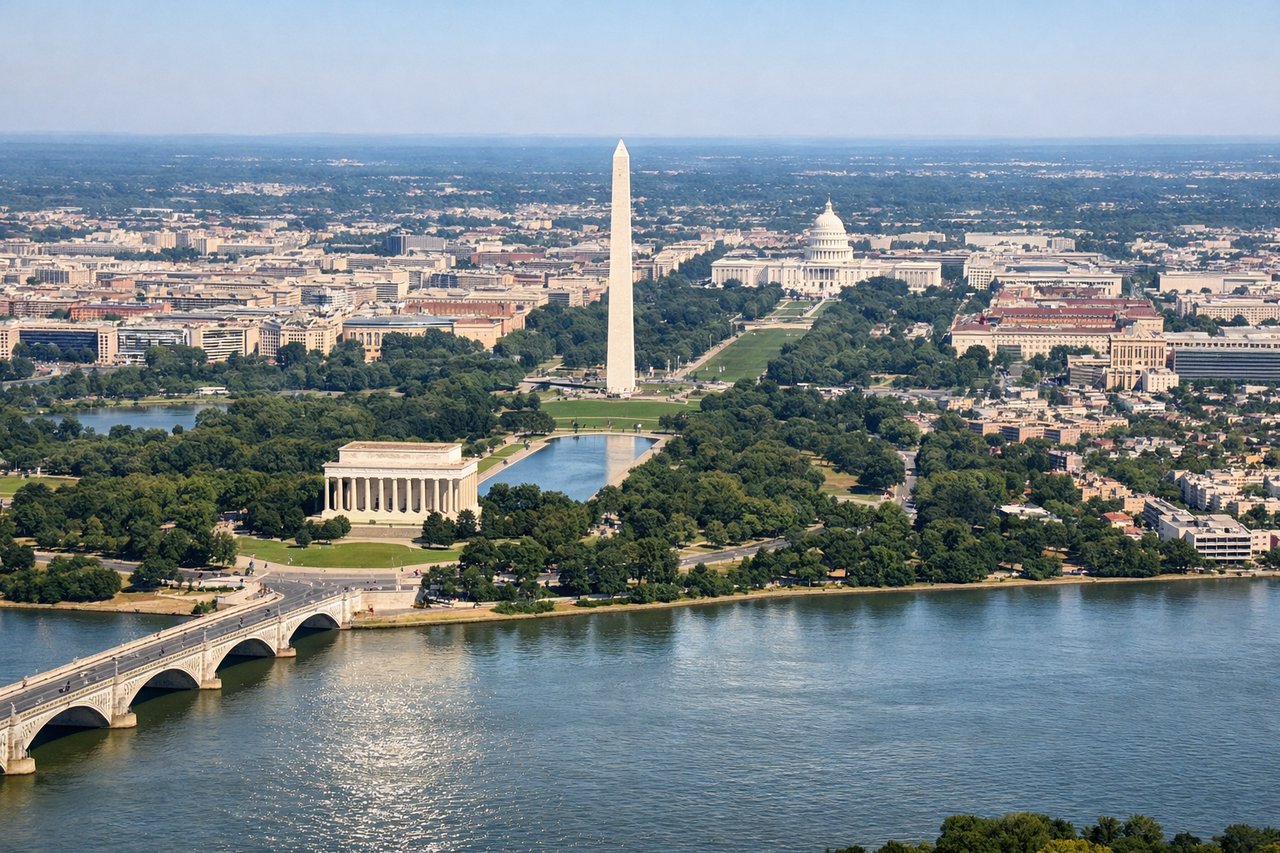
Takeoff from DCA
LEFTDCA's primary northbound departures on Runway 1 take you directly over the Potomac River and the National Mall. Left side passengers get a clear view of the Capitol, Washington Monument, and Lincoln Memorial as the aircraft banks northeast over the city.
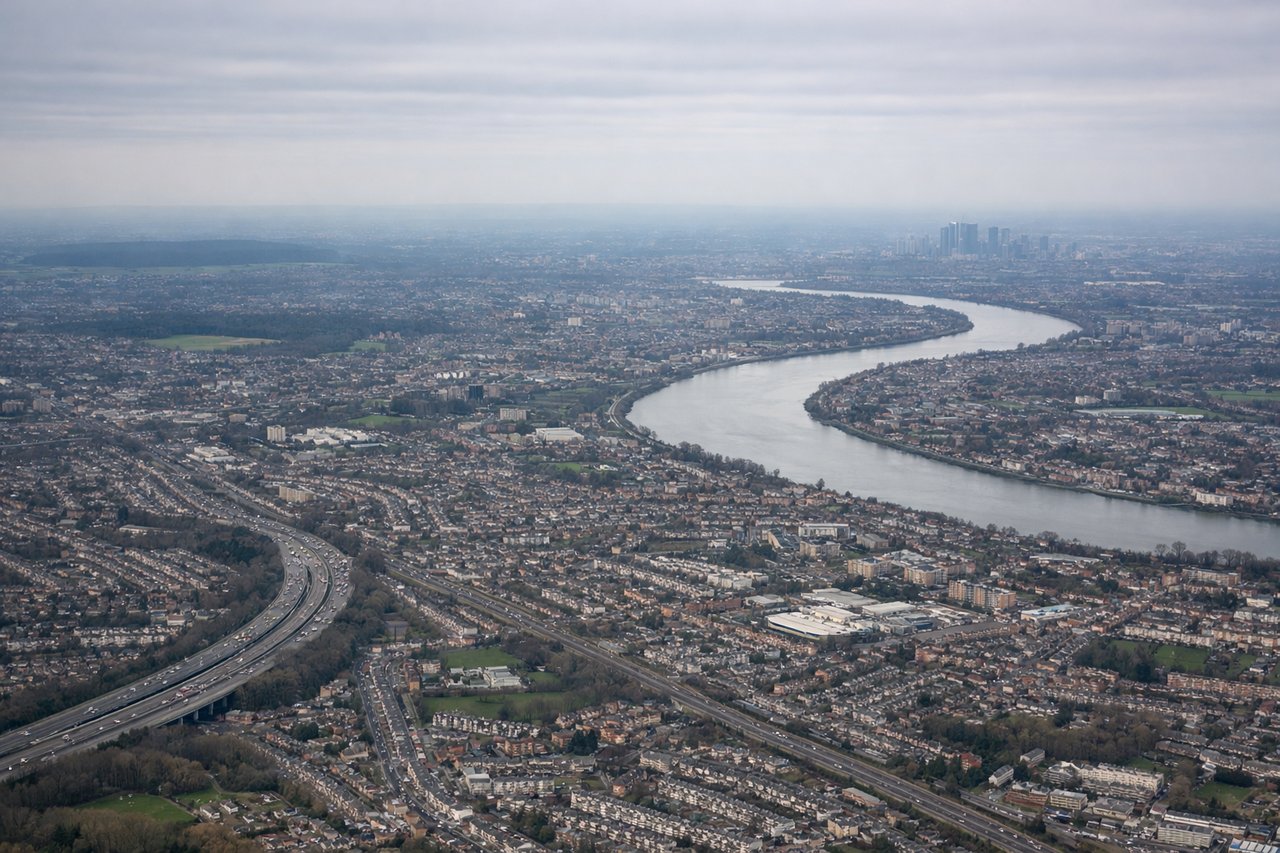
Landing at LHR
LEFTHeathrow's most common westerly approaches on runways 27L/27R bring aircraft in from the east over central London. Left side seats face south and get a prolonged view of the Thames, the City of London, Tower Bridge, and Canary Wharf as the aircraft descends over the eastern suburbs.
Landmarks on this routeAll landmarks →
Will your flight be in sunlight?
See exactly which side of the plane gets sun and shade at your departure time.
About This Route
Which side of the plane should I sit on flying from Ronald Reagan Washington National (DCA) to Heathrow (LHR)?
Sit on the Left side of the plane for the best views on flights from Washington to London. Left side wins at both ends of the flight. The departure offers the iconic Washington DC monuments over the Potomac, and the arrival delivers a prolonged view of the Thames and London skyline on approach. The transatlantic cruise portion offers little differentiation between sides over open ocean.
What can I see during takeoff from Ronald Reagan Washington National in Washington?
During takeoff from Ronald Reagan Washington National (DCA), sit on the Left side for the best views. DCA's primary northbound departures on Runway 1 take you directly over the Potomac River and the National Mall. Left side passengers get a clear view of the Capitol, Washington Monument, and Lincoln Memorial as the aircraft banks northeast over the city. Notable sights include: Potomac River, National Mall and Washington Monument, Capitol Building, Arlington Memorial Bridge.
What can I see when landing at Heathrow in London?
When landing at Heathrow (LHR), sit on the Left side for the best views. Heathrow's most common westerly approaches on runways 27L/27R bring aircraft in from the east over central London. Left side seats face south and get a prolonged view of the Thames, the City of London, Tower Bridge, and Canary Wharf as the aircraft descends over the eastern suburbs. Notable sights include: River Thames, Canary Wharf towers, Tower Bridge, City of London skyline.
How long is the flight from Washington to London?
The flight from Ronald Reagan Washington National (DCA) to Heathrow (LHR) takes Approximately 7 to 8 hours.
What does the Washington to London flight path pass over?
The flight tracks northeast from DC over New England and Nova Scotia, crossing Newfoundland near St. John's before heading over the North Atlantic. Passengers may see the coastline of Ireland's County Clare or Galway on the right side during descent, then cross Wales before entering English airspace. At cruise altitude over the Atlantic, there is little to see beyond ocean and occasional cloud cover, though northern routes sometimes offer glimpses of Greenland's ice sheet edge on the left side in clear conditions.