While takeoff favors left seats for Washington monuments, the landing approach to Incheon from the west provides more dramatic and sustained views from right seats of the Yellow Sea, bridge infrastructure, and Seoul's skyline. The landing experience outweighs the takeoff advantage.
Flight Path
The flight path crosses the North American continent heading northwest, passing over the Great Lakes region (visible from altitude: Lake Michigan, Lake Erie, Lake Ontario), then over Canada's boreal forests and Arctic regions. The route then crosses the Bering Sea and approaches the Asian continent over Russia's Far East. Notable midpoint features include the Rocky Mountains (visible as a distant ridge during western US climb), the Canadian Shield's lake-dotted terrain, and the Aleutian Islands chain (weather permitting). Over the Pacific, the flight passes north of Japan, with potential views of Hokkaido's northern coast and the Sea of Japan before descending toward Incheon.
Great circle distance and headings ›.jpeg?width=600)

Phase by phase
Takeoff from DCA
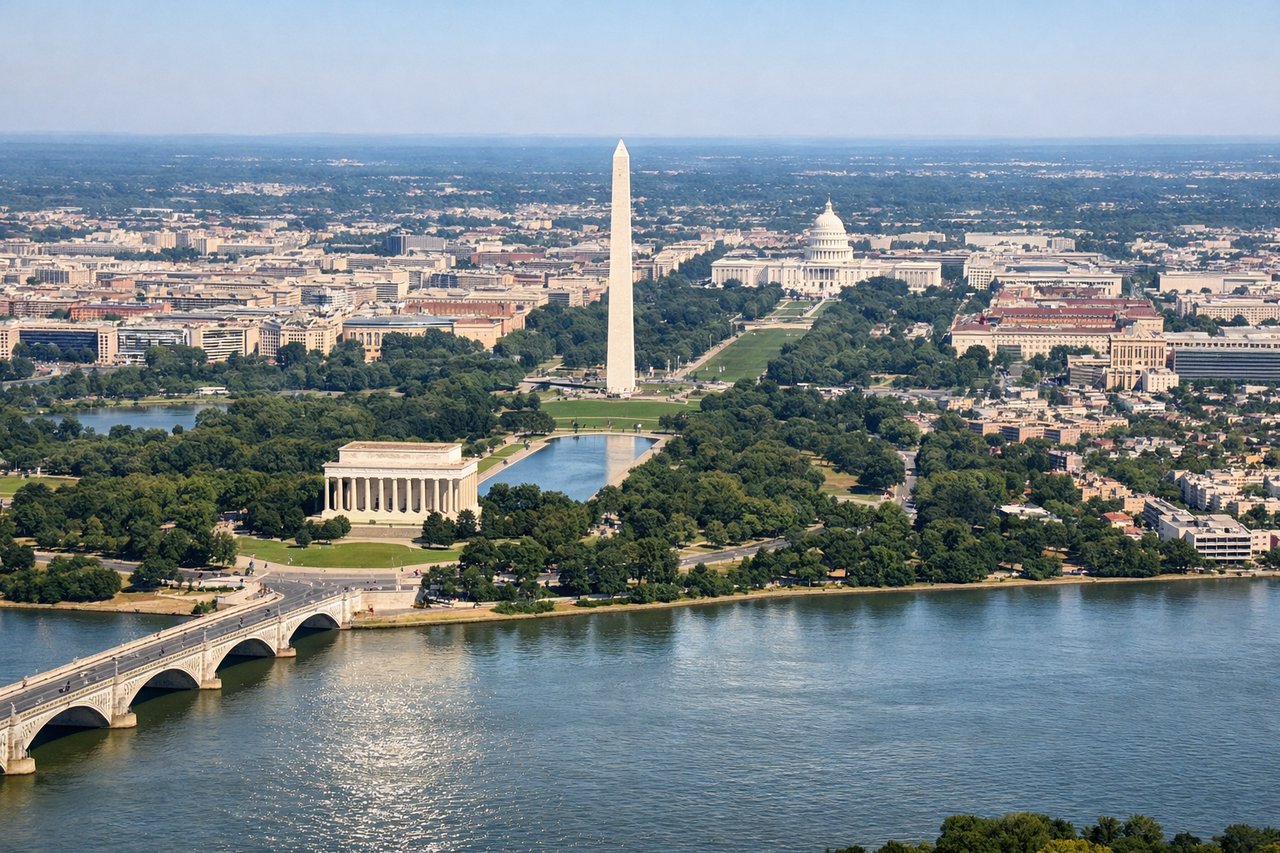
LEFTDCA typically departs runway 01 (northbound) or 19 (southbound). Left seats offer views of the Potomac River and central Washington monuments during climb-out. Right seats face the Virginia suburbs with less distinctive landmarks.
Landing at ICN
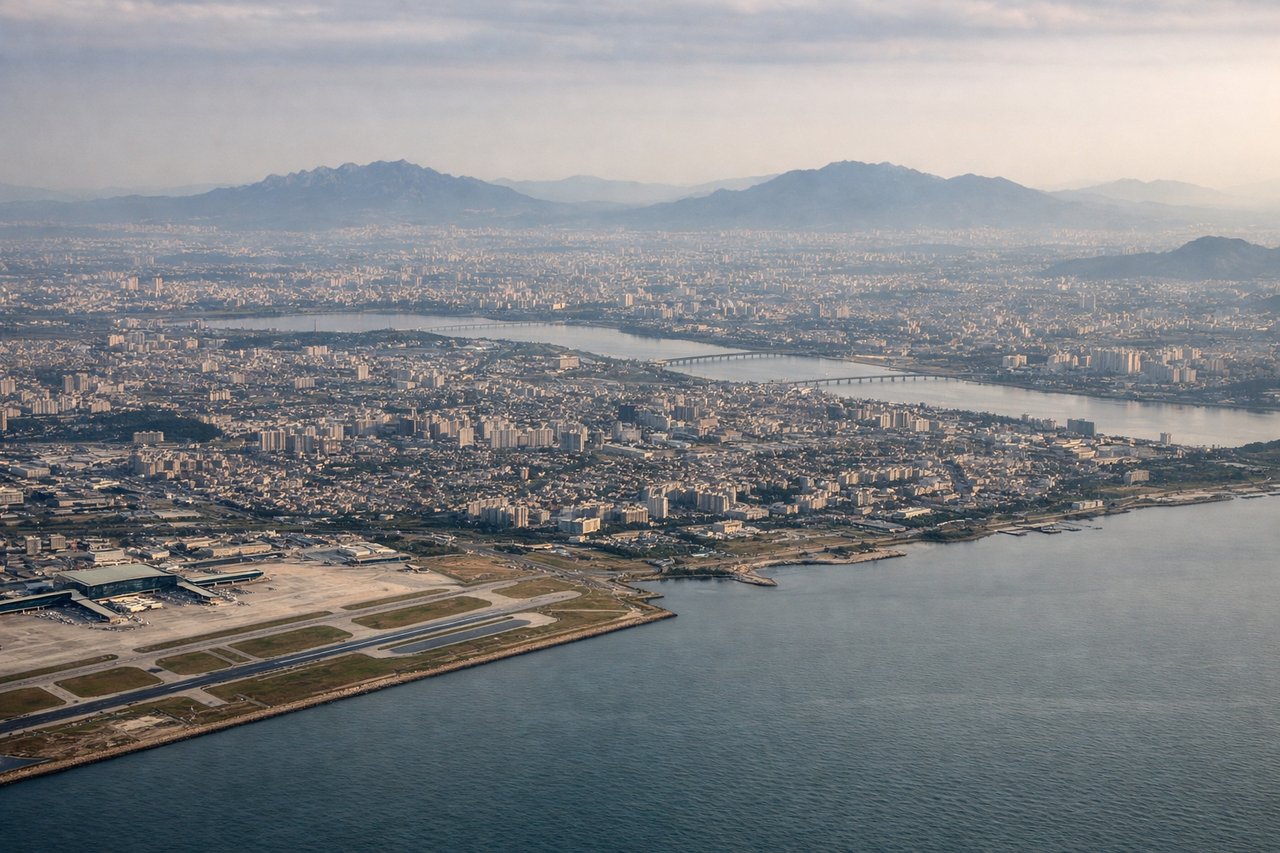
RIGHTIncheon typically uses runways 03L/03R or 15L/15R depending on wind. Right seats during approach from the west offer views of the Yellow Sea, Incheon's harbor, and the bridge infrastructure connecting to Seoul. Left seats face inland terrain with fewer distinctive features.
Landmarks on this routeAll landmarks →
Will your flight be in sunlight?
See exactly which side of the plane gets sun and shade at your departure time.
About This Route
Which side of the plane should I sit on flying from Ronald Reagan Washington National (DCA) to Incheon International (ICN)?
Sit on the Right side of the plane for the best views on flights from Washington to Seoul. While takeoff favors left seats for Washington monuments, the landing approach to Incheon from the west provides more dramatic and sustained views from right seats of the Yellow Sea, bridge infrastructure, and Seoul's skyline. The landing experience outweighs the takeoff advantage.
What can I see during takeoff from Ronald Reagan Washington National in Washington?
During takeoff from Ronald Reagan Washington National (DCA), sit on the Left side for the best views. DCA typically departs runway 01 (northbound) or 19 (southbound). Left seats offer views of the Potomac River and central Washington monuments during climb-out. Right seats face the Virginia suburbs with less distinctive landmarks. Notable sights include: Potomac River, Washington Monument and Capitol Building complex, Lincoln Memorial, Arlington National Cemetery.
What can I see when landing at Incheon International in Seoul?
When landing at Incheon International (ICN), sit on the Right side for the best views. Incheon typically uses runways 03L/03R or 15L/15R depending on wind. Right seats during approach from the west offer views of the Yellow Sea, Incheon's harbor, and the bridge infrastructure connecting to Seoul. Left seats face inland terrain with fewer distinctive features. Notable sights include: Yellow Sea (Hwanghae), Incheon Harbor and port facilities, Incheon Bridge, Seoul metropolitan area skyline.
How long is the flight from Washington to Seoul?
The flight from Ronald Reagan Washington National (DCA) to Incheon International (ICN) takes Approximately 14-15 hours block time.
What does the Washington to Seoul flight path pass over?
The flight path crosses the North American continent heading northwest, passing over the Great Lakes region (visible from altitude: Lake Michigan, Lake Erie, Lake Ontario), then over Canada's boreal forests and Arctic regions. The route then crosses the Bering Sea and approaches the Asian continent over Russia's Far East. Notable midpoint features include the Rocky Mountains (visible as a distant ridge during western US climb), the Canadian Shield's lake-dotted terrain, and the Aleutian Islands chain (weather permitting). Over the Pacific, the flight passes north of Japan, with potential views of Hokkaido's northern coast and the Sea of Japan before descending toward Incheon.