Delhi to Port St Johns is 5,201 miles (8,370 km), a flight of about 9 hours 50 minutes.
The left side wins because it bookends a very long, mostly featureless ocean crossing with two genuine highlights: Delhi's cityscape along the Yamuna at departure and the dramatic river-gorge coastline of South Africa's Wild Coast at arrival, plus a distant glimpse of Madagascar's coast during cruise. The right side offers flat Haryana farmland at takeoff, pure open ocean for most of the flight, and inland hills rather than coastline on landing.
Flight Path
The great-circle track leaves the Indian coast, crosses several thousand kilometers of open Arabian Sea and Indian Ocean with no land in sight, then passes near Madagascar's northwestern coast before crossing the Mozambique Channel toward the African mainland and the South African coast.
Great circle distance and headings ›Phase by phase
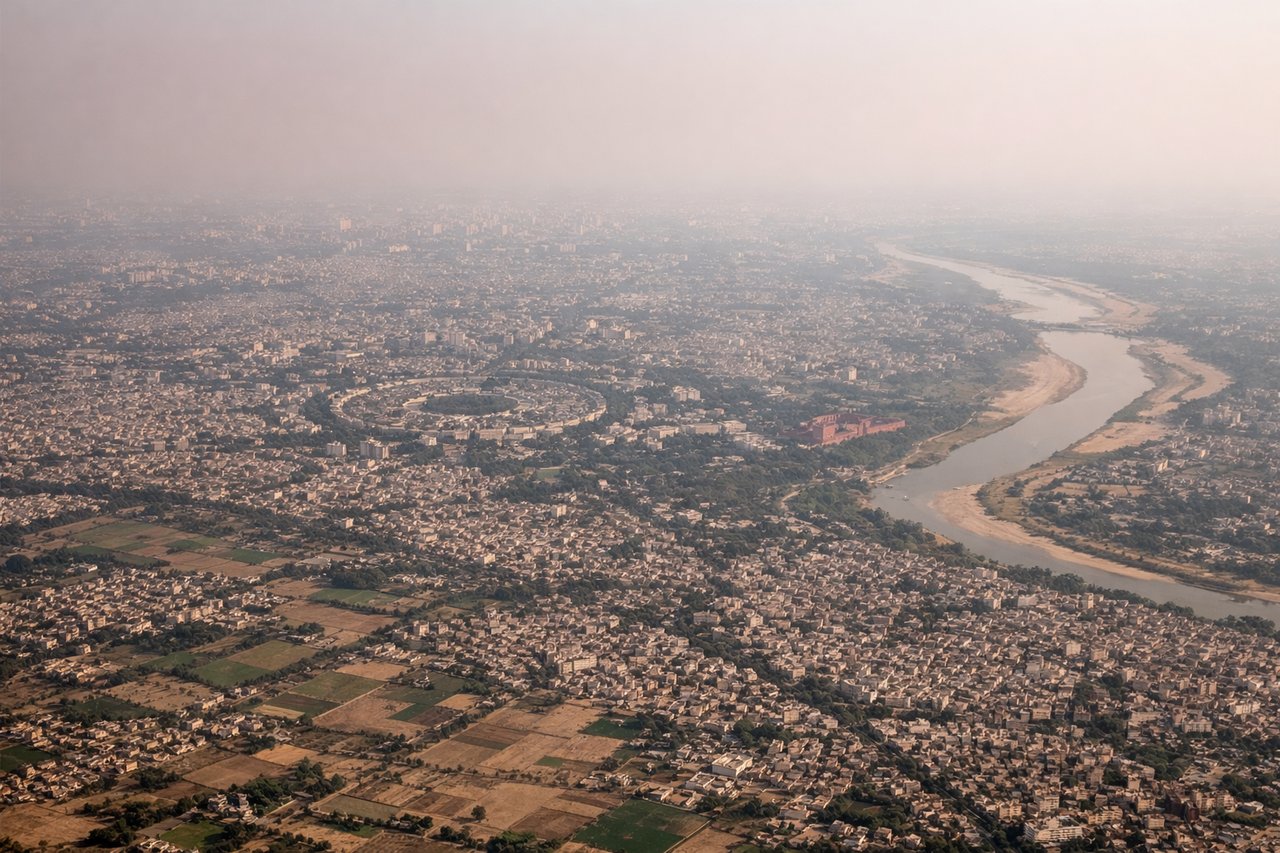
Takeoff from DEL
LEFTAs the aircraft lifts off and banks south to pick up the long southwest heading toward Africa, the left side faces back across central Delhi, giving a brief look at the Yamuna River and the city's dense urban core before the Indo-Gangetic plain flattens out below. The right side mostly shows Haryana's featureless farmland.
Landing at JOH
LEFTOn approach into Port St Johns the aircraft tracks in along South Africa's Wild Coast, and the left side captures the dramatic Mzimvubu River mouth flanked by the twin hills known as the Gates of St John, with the Indian Ocean and rugged green coastline stretching out below. The right side mainly shows inland Pondoland hills without the coastal drama.
Will your flight be in sunlight?
Pick a date and time in the Sun Map to watch the sun move across your whole flight.
About This Route
Which side of the plane should I sit on flying from Indira Gandhi International (DEL) to Port St Johns Airport (JOH)?
Sit on the Left side of the plane for the best views on flights from Delhi to Port St Johns. The left side wins because it bookends a very long, mostly featureless ocean crossing with two genuine highlights: Delhi's cityscape along the Yamuna at departure and the dramatic river-gorge coastline of South Africa's Wild Coast at arrival, plus a distant glimpse of Madagascar's coast during cruise. The right side offers flat Haryana farmland at takeoff, pure open ocean for most of the flight, and inland hills rather than coastline on landing.
What can I see during takeoff from Indira Gandhi International in Delhi?
During takeoff from Indira Gandhi International (DEL), sit on the Left side for the best views. As the aircraft lifts off and banks south to pick up the long southwest heading toward Africa, the left side faces back across central Delhi, giving a brief look at the Yamuna River and the city's dense urban core before the Indo-Gangetic plain flattens out below. The right side mostly shows Haryana's featureless farmland. Notable sights include: Yamuna River, central Delhi urban sprawl, low Aravalli/Delhi Ridge hills on the horizon.
What can I see when landing at Port St Johns Airport in Port St Johns?
When landing at Port St Johns Airport (JOH), sit on the Left side for the best views. On approach into Port St Johns the aircraft tracks in along South Africa's Wild Coast, and the left side captures the dramatic Mzimvubu River mouth flanked by the twin hills known as the Gates of St John, with the Indian Ocean and rugged green coastline stretching out below. The right side mainly shows inland Pondoland hills without the coastal drama. Notable sights include: Mzimvubu River mouth and 'Gates of St John' twin hills, Indian Ocean coastline, Wild Coast cliffs, rolling green Pondoland hills.
How long is the flight from Delhi to Port St Johns?
The flight from Indira Gandhi International (DEL) to Port St Johns Airport (JOH) takes about 9 hours 50 minutes. The shortest flight path between them is 5,201 miles (8,370 km); winds and air traffic control usually add a few percent.
What does the Delhi to Port St Johns flight path pass over?
The great-circle track leaves the Indian coast, crosses several thousand kilometers of open Arabian Sea and Indian Ocean with no land in sight, then passes near Madagascar's northwestern coast before crossing the Mozambique Channel toward the African mainland and the South African coast.