The left side keeps the Rocky Mountain cordillera in view for most of the flight — the Colorado Front Range at takeoff, the Wyoming and Montana Rockies near Glacier country, and the Canadian Rockies through Alberta and British Columbia — giving it the most consistent and dramatic scenery across the whole route, even though the right side wins during the Anchorage approach.
Flight Path
The route's midpoint falls over the Yukon Territory near the Coast Mountains and the boreal plateau around Whitehorse, with the St. Elias Mountains and their icefields visible ahead as the flight path bends northwest toward Alaska.
Great circle distance and headings ›.jpg?width=600)
.jpg?width=600)


Phase by phase
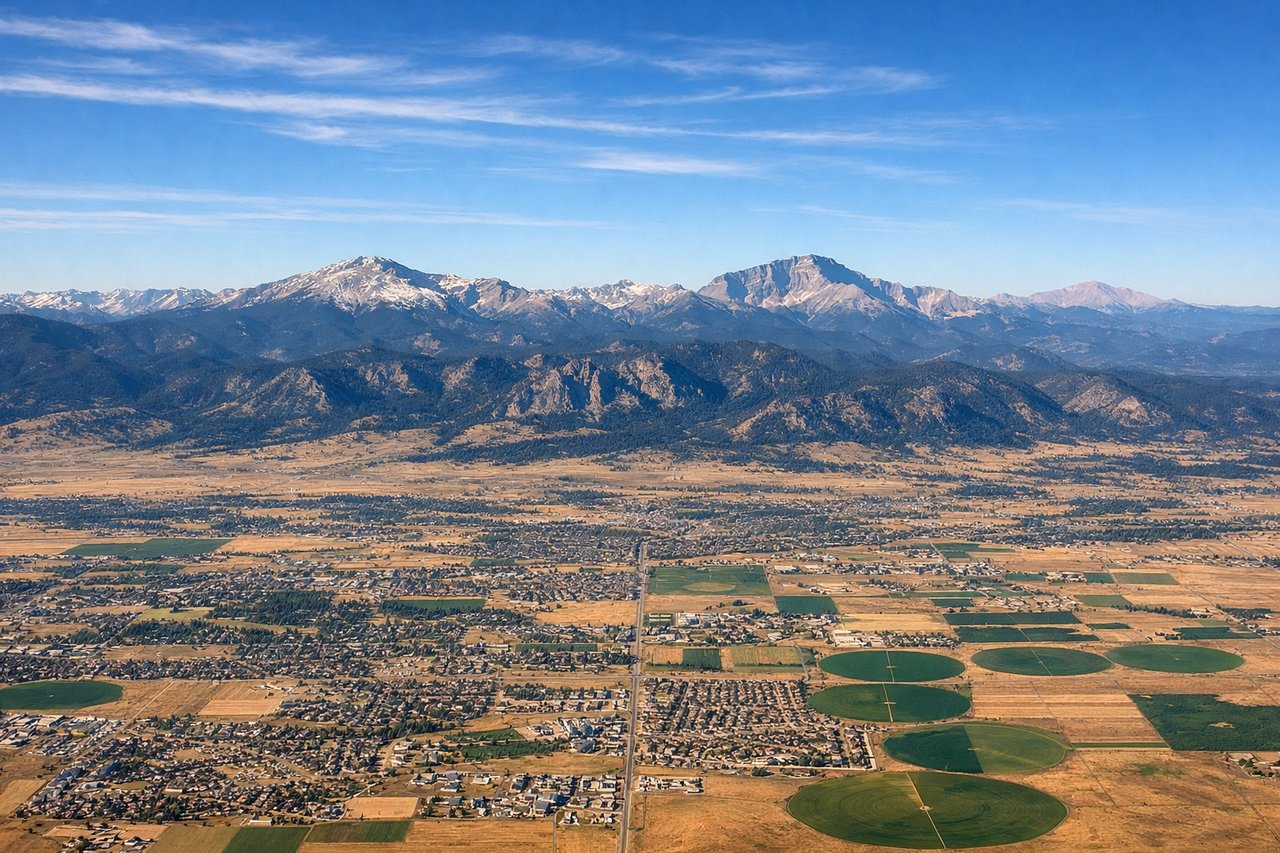
Takeoff from DEN
LEFTDeparting DEN and turning onto a northbound track toward Alaska puts the Front Range squarely on the left side. Passengers get a close, sustained view of the Rockies rising above the plains just west of Denver during the climb.
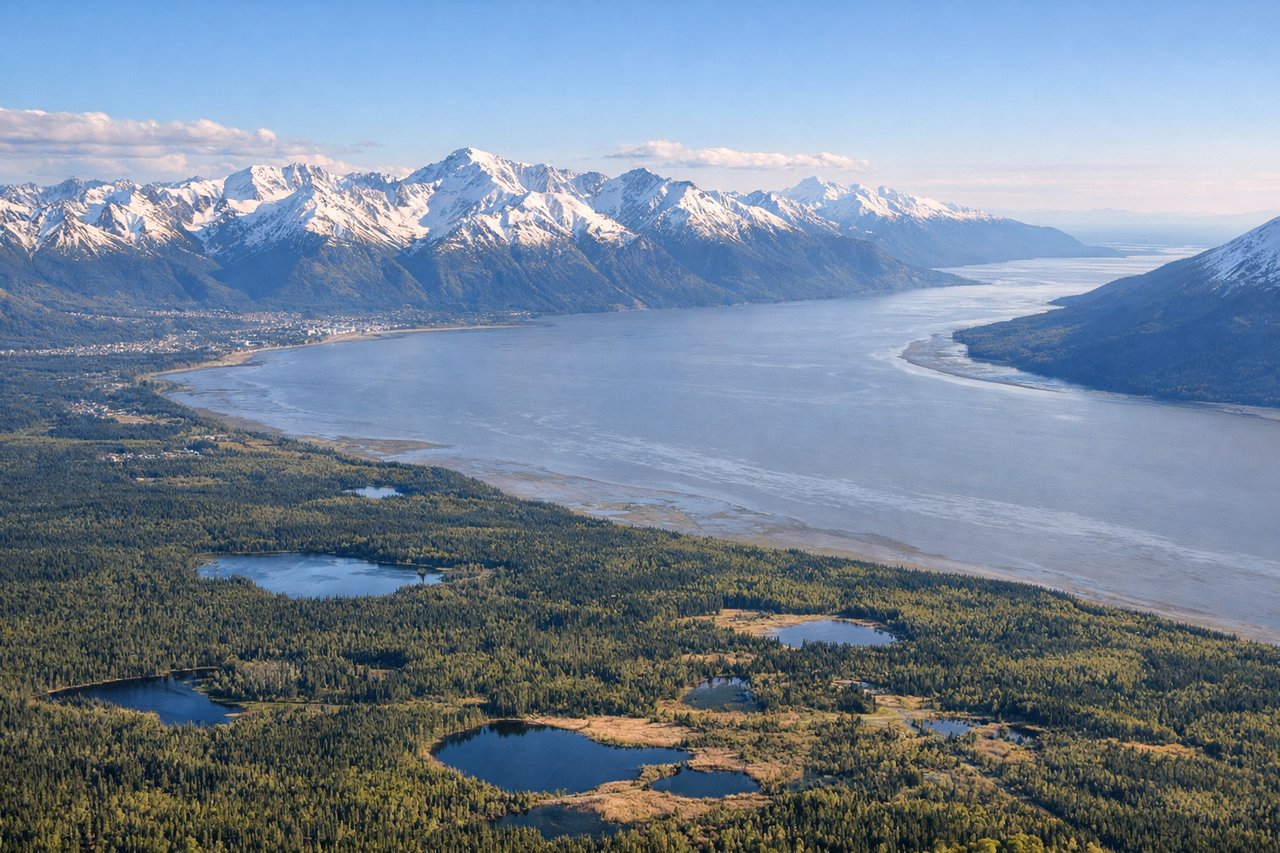
Landing at ANC
RIGHTOn the descent into Anchorage from the northeast, the right side faces north toward the Chugach Mountains and the Matanuska/Knik Arm lowlands, with Denali sometimes visible far on the horizon on clear days. This side offers the most dramatic close-in terrain during the final approach.
Landmarks on this routeAll landmarks →
Will your flight be in sunlight?
See exactly which side of the plane gets sun and shade at your departure time.
About This Route
Which side of the plane should I sit on flying from Denver International (DEN) to Ted Stevens Anchorage International (ANC)?
Sit on the Left side of the plane for the best views on flights from Denver to Anchorage. The left side keeps the Rocky Mountain cordillera in view for most of the flight — the Colorado Front Range at takeoff, the Wyoming and Montana Rockies near Glacier country, and the Canadian Rockies through Alberta and British Columbia — giving it the most consistent and dramatic scenery across the whole route, even though the right side wins during the Anchorage approach.
What can I see during takeoff from Denver International in Denver?
During takeoff from Denver International (DEN), sit on the Left side for the best views. Departing DEN and turning onto a northbound track toward Alaska puts the Front Range squarely on the left side. Passengers get a close, sustained view of the Rockies rising above the plains just west of Denver during the climb. Notable sights include: Longs Peak, Mount Evans, the Flatirons near Boulder, South Platte River valley.
What can I see when landing at Ted Stevens Anchorage International in Anchorage?
When landing at Ted Stevens Anchorage International (ANC), sit on the Right side for the best views. On the descent into Anchorage from the northeast, the right side faces north toward the Chugach Mountains and the Matanuska/Knik Arm lowlands, with Denali sometimes visible far on the horizon on clear days. This side offers the most dramatic close-in terrain during the final approach. Notable sights include: Chugach Mountains, Knik Arm, Pioneer Peak, Denali (distant, weather permitting).
How long is the flight from Denver to Anchorage?
The flight from Denver International (DEN) to Ted Stevens Anchorage International (ANC) takes 4h 45m.
What does the Denver to Anchorage flight path pass over?
The route's midpoint falls over the Yukon Territory near the Coast Mountains and the boreal plateau around Whitehorse, with the St. Elias Mountains and their icefields visible ahead as the flight path bends northwest toward Alaska.