Detroit to Seoul is 6,615 miles (10,645 km), a flight of about 14 hours 20 minutes.
This is an ultra-long polar-adjacent route where the great circle carries the flight over the Alaska Range, the Aleutian chain, and the volcanic peaks of Kamchatka before crossing the Sea of Okhotsk toward Korea — all visible on the left side during the many hours of cruise, far outweighing the shorter right-side advantage on landing.
Flight Path
Gulf of Alaska and Aleutian Islands, Bering Sea, Kamchatka Peninsula volcanoes, Sea of Okhotsk, Sakhalin Island
Great circle distance and headings ›Phase by phase
Takeoff from DET
LEFTDET's single runway favors a northwest departure (Runway 33) that aligns almost exactly with the great-circle heading toward Canada, and this puts downtown Detroit and its riverfront on the left side as the aircraft banks away from the field.
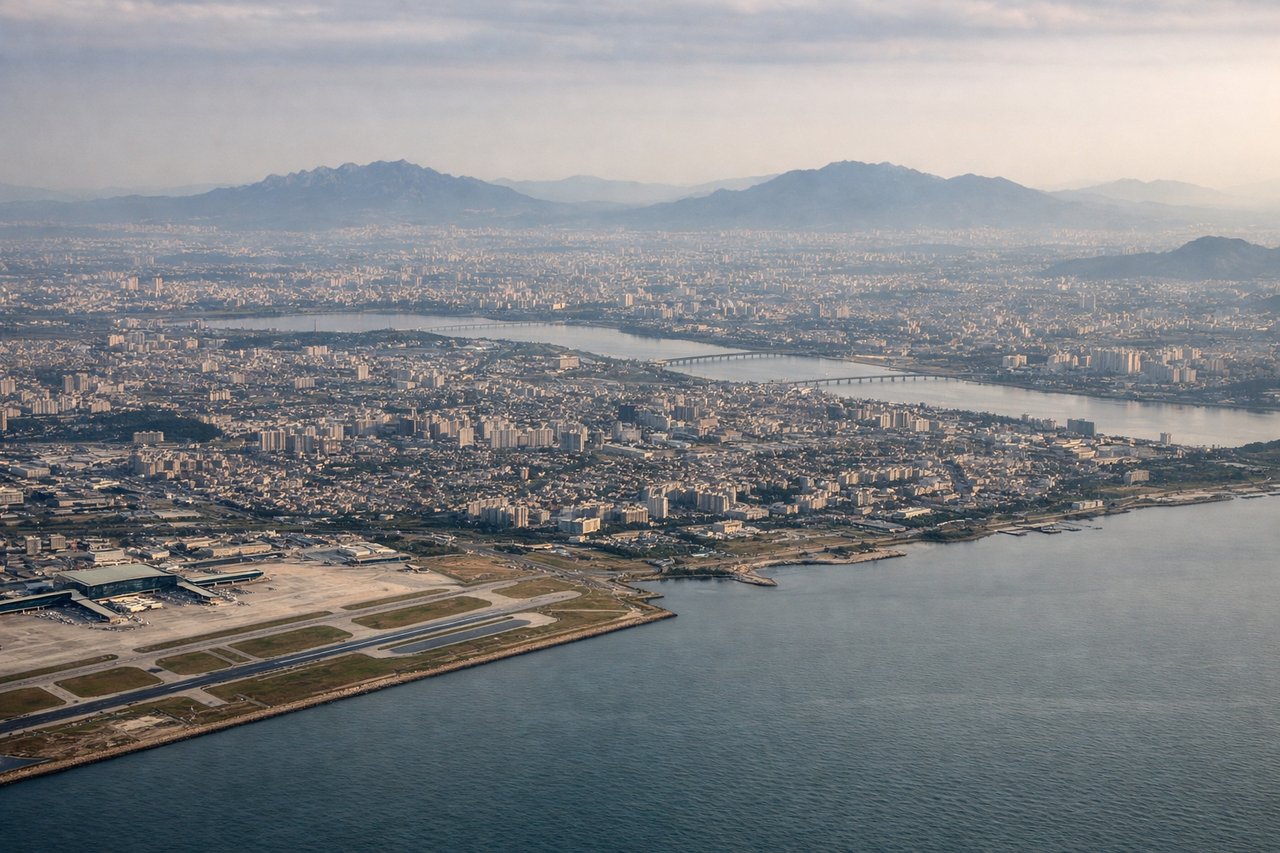
Landing at ICN
RIGHTICN's typical northwest-heading approach from the southeast puts Seoul's distant skyline and the Han River estuary on the right side of the aircraft, while the left side only faces open Yellow Sea water and low-lying islands.
Landmarks on this routeAll landmarks →
Will your flight be in sunlight?
Pick a date and time in the Sun Map to watch the sun move across your whole flight.
About This Route
Which side of the plane should I sit on flying from Detroit City (DET) to Incheon International (ICN)?
Sit on the Left side of the plane for the best views on flights from Detroit to Seoul. This is an ultra-long polar-adjacent route where the great circle carries the flight over the Alaska Range, the Aleutian chain, and the volcanic peaks of Kamchatka before crossing the Sea of Okhotsk toward Korea — all visible on the left side during the many hours of cruise, far outweighing the shorter right-side advantage on landing.
What can I see during takeoff from Detroit City in Detroit?
During takeoff from Detroit City (DET), sit on the Left side for the best views. DET's single runway favors a northwest departure (Runway 33) that aligns almost exactly with the great-circle heading toward Canada, and this puts downtown Detroit and its riverfront on the left side as the aircraft banks away from the field. Notable sights include: Downtown Detroit skyline, Detroit River, Ambassador Bridge, Windsor, Ontario.
What can I see when landing at Incheon International in Seoul?
When landing at Incheon International (ICN), sit on the Right side for the best views. ICN's typical northwest-heading approach from the southeast puts Seoul's distant skyline and the Han River estuary on the right side of the aircraft, while the left side only faces open Yellow Sea water and low-lying islands. Notable sights include: Seoul skyline (distant), Incheon Bridge, Songdo International Business District, Han River estuary.
How long is the flight from Detroit to Seoul?
The flight from Detroit City (DET) to Incheon International (ICN) takes about 14 hours 20 minutes. The shortest flight path between them is 6,615 miles (10,645 km); winds and air traffic control usually add a few percent.
What does the Detroit to Seoul flight path pass over?
Gulf of Alaska and Aleutian Islands, Bering Sea, Kamchatka Peninsula volcanoes, Sea of Okhotsk, Sakhalin Island