Seoul to Detroit is 6,615 miles (10,645 km), a flight of about 13 hours 30 minutes.
The right side captures the most dramatic scenery on both ends of the journey—Seoul's urban landscape and Yellow Sea on departure, and the Detroit River and downtown skyline on arrival. The westbound routing over the Pacific and North America offers fewer notable landmarks on the left side during cruise.
Flight Path
The flight path crosses the Pacific Ocean (minimal visual features), passes over or near the Aleutian Islands (weather-dependent visibility), then crosses into North American airspace over Alaska and Canada. The Canadian prairies and Great Lakes region become visible during the eastern approach. Lake Michigan and the Great Lakes system are visible during descent into the Detroit area. No major mountain ranges are directly on the standard routing, though the Rocky Mountains lie to the south of the typical great-circle path.
Great circle distance and headings ›Phase by phase
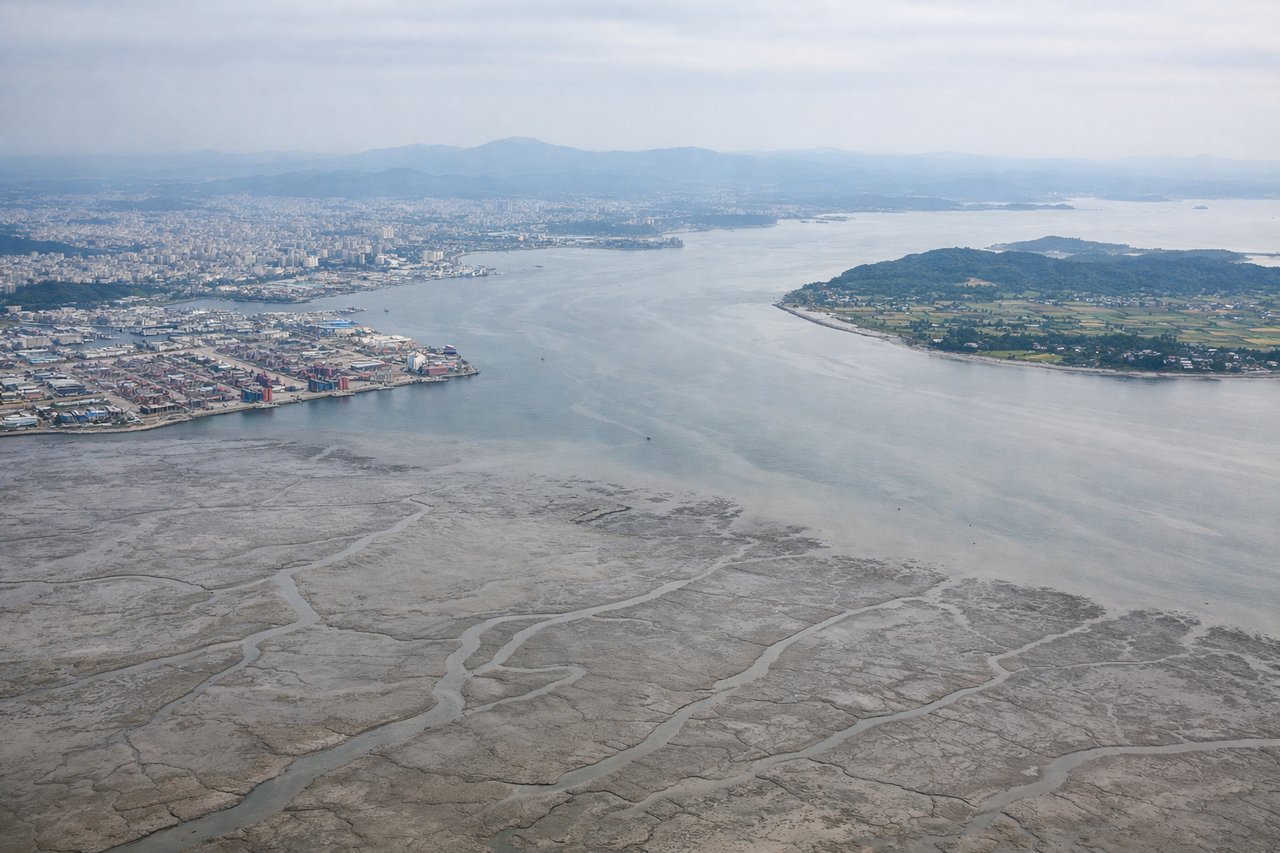
Takeoff from ICN
RIGHTRight-side seats offer views of the Yellow Sea coastline and Seoul metropolitan area during the initial climb-out westward from Incheon. You'll see the sprawling urban grid of Seoul and the irregular coastline of the Korean peninsula receding beneath you.
Landing at DET
LEFTLeft-side seats provide excellent views during the descent approach into Detroit City Airport. You'll see the Detroit River, Windsor Ontario across the border, and the downtown Detroit skyline as you descend toward the runway on the eastern side of the airport.
Landmarks on this routeAll landmarks →
Will your flight be in sunlight?
Pick a date and time in the Sun Map to watch the sun move across your whole flight.
About This Route
Which side of the plane should I sit on flying from Incheon International (ICN) to Detroit City (DET)?
Sit on the Right side of the plane for the best views on flights from Seoul to Detroit. The right side captures the most dramatic scenery on both ends of the journey—Seoul's urban landscape and Yellow Sea on departure, and the Detroit River and downtown skyline on arrival. The westbound routing over the Pacific and North America offers fewer notable landmarks on the left side during cruise.
What can I see during takeoff from Incheon International in Seoul?
During takeoff from Incheon International (ICN), sit on the Right side for the best views. Right-side seats offer views of the Yellow Sea coastline and Seoul metropolitan area during the initial climb-out westward from Incheon. You'll see the sprawling urban grid of Seoul and the irregular coastline of the Korean peninsula receding beneath you. Notable sights include: Seoul metropolitan area (urban sprawl visible as a dense grid), Yellow Sea (body of water to the west), Incheon harbor and industrial zones, Korean peninsula coastline.
What can I see when landing at Detroit City in Detroit?
When landing at Detroit City (DET), sit on the Left side for the best views. Left-side seats provide excellent views during the descent approach into Detroit City Airport. You'll see the Detroit River, Windsor Ontario across the border, and the downtown Detroit skyline as you descend toward the runway on the eastern side of the airport. Notable sights include: Detroit River (narrow waterway separating US and Canada), Downtown Detroit skyline, Windsor Ontario (Canadian city across the river), Lake St. Clair (visible to the northeast during descent).
How long is the flight from Seoul to Detroit?
The flight from Incheon International (ICN) to Detroit City (DET) takes about 13 hours 30 minutes. The shortest flight path between them is 6,615 miles (10,645 km); winds and air traffic control usually add a few percent.
What does the Seoul to Detroit flight path pass over?
The flight path crosses the Pacific Ocean (minimal visual features), passes over or near the Aleutian Islands (weather-dependent visibility), then crosses into North American airspace over Alaska and Canada. The Canadian prairies and Great Lakes region become visible during the eastern approach. Lake Michigan and the Great Lakes system are visible during descent into the Detroit area. No major mountain ranges are directly on the standard routing, though the Rocky Mountains lie to the south of the typical great-circle path.