Left side wins both ends of the flight. During the cruise over Central Asia the left side also faces south toward the Kopet Dag range along the Iran-Turkmenistan border and later the Aral Sea basin, while the right side sees mostly featureless Kazakh steppe. The Tian Shan arrival view on the left is the single best moment of the whole flight.
Flown DOH to ALA? Did we get it right?
Flight Path
Doha to Almaty is 1,901 miles (3,060 km), a flight of about 4 hours 30 minutes.
The route tracks northeast from Qatar across the Persian Gulf, over Iran's central plateau and the Elburz Mountains north of Tehran, then across the Caspian Sea (visible as a large dark water body), over the flat Kazakh steppe and the remnant Aral Sea basin, before descending toward the Tian Shan foothills at Almaty. The Caspian crossing and the Aral Sea depression are the most geographically distinctive mid-flight features.
Great circle distance and headings ›


Phase by phase
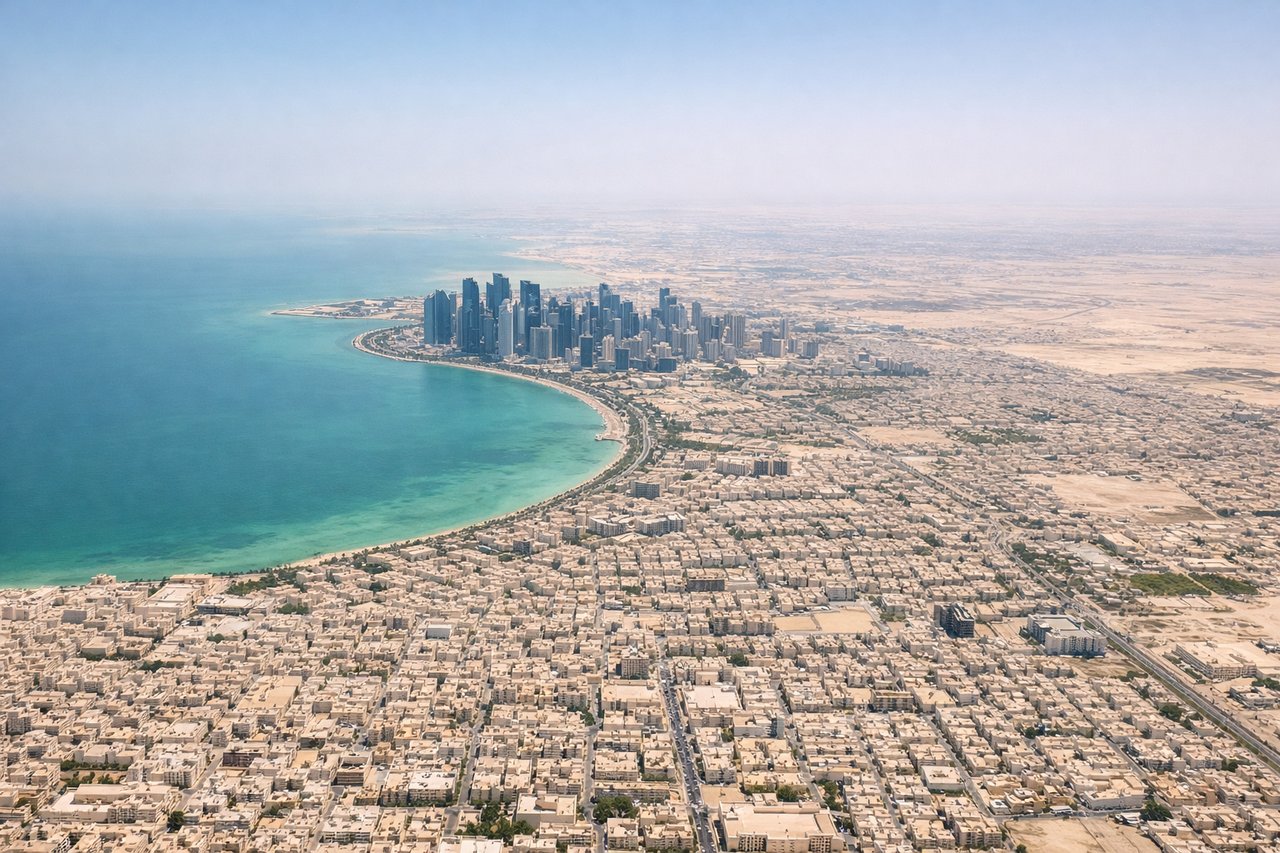
Takeoff from DOH
LEFTDoha's main departure runway 34L/34R sends aircraft northward over the city and then out over the Persian Gulf. The left side gives you the Doha city skyline and West Bay district as you climb, then the Gulf waters stretching west toward Bahrain. Right side faces the industrial port and desert hinterland.
Landing at ALA
LEFTAlmaty airport typically uses runway 05/23. Arrivals from the southwest on runway 05 approach from the west, and the left side faces south toward the Zailiysky Alatau range of the Tian Shan mountains, which form a dramatic snow-capped wall directly south of the city. This is the defining visual feature of any Almaty arrival.
Will your flight be in sunlight?
Pick a date and time in the Sun Map to watch the sun move across your whole flight.
About This Route
Which side of the plane should I sit on flying from Hamad International Airport (DOH) to Almaty (ALA)?
Sit on the Left side of the plane for the best views on flights from Doha to Almaty. Left side wins both ends of the flight. During the cruise over Central Asia the left side also faces south toward the Kopet Dag range along the Iran-Turkmenistan border and later the Aral Sea basin, while the right side sees mostly featureless Kazakh steppe. The Tian Shan arrival view on the left is the single best moment of the whole flight.
What can I see during takeoff from Hamad International Airport in Doha?
During takeoff from Hamad International Airport (DOH), sit on the Left side for the best views. Doha's main departure runway 34L/34R sends aircraft northward over the city and then out over the Persian Gulf. The left side gives you the Doha city skyline and West Bay district as you climb, then the Gulf waters stretching west toward Bahrain. Right side faces the industrial port and desert hinterland. Notable sights include: West Bay skyscraper cluster, Doha Corniche waterfront, Persian Gulf open water, Hamad Port container terminal.
What can I see when landing at Almaty in Almaty?
When landing at Almaty (ALA), sit on the Left side for the best views. Almaty airport typically uses runway 05/23. Arrivals from the southwest on runway 05 approach from the west, and the left side faces south toward the Zailiysky Alatau range of the Tian Shan mountains, which form a dramatic snow-capped wall directly south of the city. This is the defining visual feature of any Almaty arrival. Notable sights include: Zailiysky Alatau mountain range (Tian Shan), Almaty city grid, Ile River valley to the north, Medeu gorge area.
How long is the flight from Doha to Almaty?
The flight from Hamad International Airport (DOH) to Almaty (ALA) takes about 4 hours 30 minutes. The shortest flight path between them is 1,901 miles (3,060 km); winds and air traffic control usually add a few percent.
What does the Doha to Almaty flight path pass over?
The route tracks northeast from Qatar across the Persian Gulf, over Iran's central plateau and the Elburz Mountains north of Tehran, then across the Caspian Sea (visible as a large dark water body), over the flat Kazakh steppe and the remnant Aral Sea basin, before descending toward the Tian Shan foothills at Almaty. The Caspian crossing and the Aral Sea depression are the most geographically distinctive mid-flight features.