The Tian Shan mountain spectacle at departure on the right side is one of the most dramatic takeoff views in Central Asia — a sheer wall of snow-capped peaks immediately adjacent to a major city. The Doha landing view on the left is pleasant but relatively brief and modest. The right side wins overall for the Almaty departure alone.
Flight Path
The route tracks southwest across the flat Kazakh steppe, crosses the Caspian Sea (a notable visual landmark — the world's largest inland body of water, visible as a grey-blue expanse), then crosses Turkmenistan's Karakum Desert and northern Iran's arid plateau before descending over the Persian Gulf toward Qatar. The Caspian crossing is the most visually distinctive mid-flight feature.
Great circle distance and headings ›


Phase by phase
Takeoff from ALA
RIGHTAlmaty sits directly at the foot of the Trans-Ili Alatau range of the Tian Shan mountains. Departing westward on runway 05/23 or northward, the right side gives you a close view of the steep snow-capped ridgeline rising immediately south of the city to peaks above 4,000m. The city grid and the Medeu gorge area are also visible before the mountains dominate.
Landing at DOH
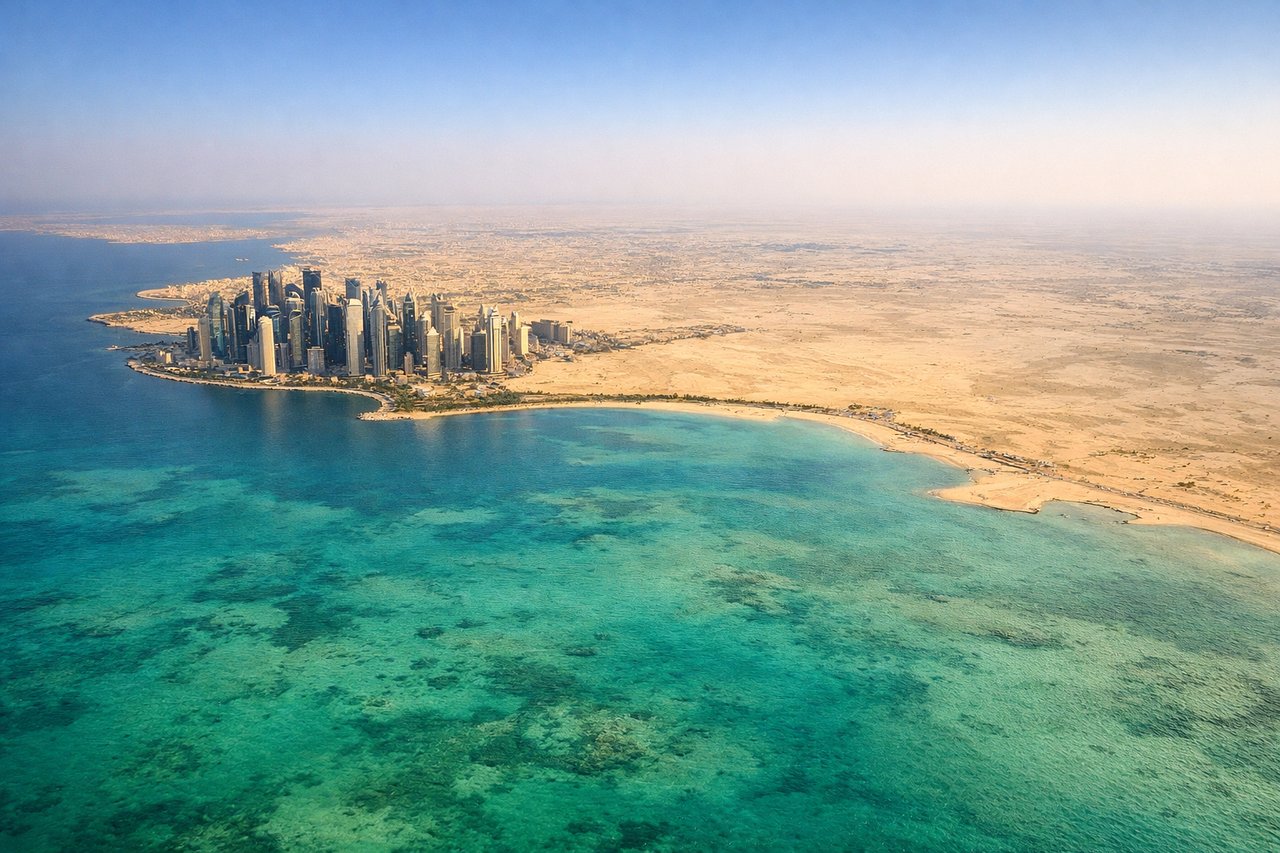
LEFTDoha's airport sits on reclaimed land on the eastern shore of Qatar, and aircraft typically approach from the east or northeast over the Persian Gulf. The left side gives you the Doha city skyline — the West Bay skyscraper cluster — and the shallow turquoise waters of the Gulf with its distinctive sandbar patterns. The right side faces inland over flat, featureless desert.
Landmarks on this routeAll landmarks →
Will your flight be in sunlight?
See exactly which side of the plane gets sun and shade at your departure time.
About This Route
Which side of the plane should I sit on flying from Almaty (ALA) to Hamad International Airport (DOH)?
Sit on the Right side of the plane for the best views on flights from Almaty to Doha. The Tian Shan mountain spectacle at departure on the right side is one of the most dramatic takeoff views in Central Asia — a sheer wall of snow-capped peaks immediately adjacent to a major city. The Doha landing view on the left is pleasant but relatively brief and modest. The right side wins overall for the Almaty departure alone.
What can I see during takeoff from Almaty in Almaty?
During takeoff from Almaty (ALA), sit on the Right side for the best views. Almaty sits directly at the foot of the Trans-Ili Alatau range of the Tian Shan mountains. Departing westward on runway 05/23 or northward, the right side gives you a close view of the steep snow-capped ridgeline rising immediately south of the city to peaks above 4,000m. The city grid and the Medeu gorge area are also visible before the mountains dominate. Notable sights include: Trans-Ili Alatau peaks (Tian Shan front range), Medeu valley and gorge, Almaty city grid spreading northward onto the steppe, Kapchagay Reservoir glinting to the north.
What can I see when landing at Hamad International Airport in Doha?
When landing at Hamad International Airport (DOH), sit on the Left side for the best views. Doha's airport sits on reclaimed land on the eastern shore of Qatar, and aircraft typically approach from the east or northeast over the Persian Gulf. The left side gives you the Doha city skyline — the West Bay skyscraper cluster — and the shallow turquoise waters of the Gulf with its distinctive sandbar patterns. The right side faces inland over flat, featureless desert. Notable sights include: West Bay skyscraper cluster (Doha CBD), Persian Gulf shallow turquoise waters and sandbars, Qatar peninsula coastline, Palm Tree Island area near the corniche.
How long is the flight from Almaty to Doha?
The flight from Almaty (ALA) to Hamad International Airport (DOH) takes Approximately 5 hours 30 minutes.
What does the Almaty to Doha flight path pass over?
The route tracks southwest across the flat Kazakh steppe, crosses the Caspian Sea (a notable visual landmark — the world's largest inland body of water, visible as a grey-blue expanse), then crosses Turkmenistan's Karakum Desert and northern Iran's arid plateau before descending over the Persian Gulf toward Qatar. The Caspian crossing is the most visually distinctive mid-flight feature.