Almaty to Dubai is 1,749 miles (2,814 km), a flight of about 4 hours.
The right side delivers the spectacular Tian Shan mountain panorama on departure — one of the most dramatic urban-to-mountain transitions anywhere in the world — and also captures the Caspian Sea crossing and parts of the Iranian plateau during the flight. The left side wins at landing for Dubai's landmarks, but the Almaty departure view is the single most impressive moment of the journey.
Flight Path
The route crosses the Caspian Sea (visible as a large inland body of water roughly 2 hours in), then tracks over Turkmenistan's Karakum Desert, northern Iran's Alborz mountain foothills, and the Zagros mountain ranges before descending over the Persian Gulf toward Dubai. The Karakum and Dasht-e Kavir deserts show dramatic sand and salt flat textures from altitude.
Great circle distance and headings ›
.jpg?width=600)
.jpg?width=600)
_and_the_Dubai_skyline_(25781049892).jpg?width=600)
.jpg?width=600)
Phase by phase
Takeoff from ALA
RIGHTAlmaty sits directly at the foot of the Trans-Ili Alatau range of the Tian Shan mountains. Departing on runway 05 (northeast) or 23 (southwest), the right side faces south toward these dramatic peaks rising to over 4,000m immediately behind the city. The snow-capped ridgeline is unmistakable and fills the window during climb-out.
Landing at DXB
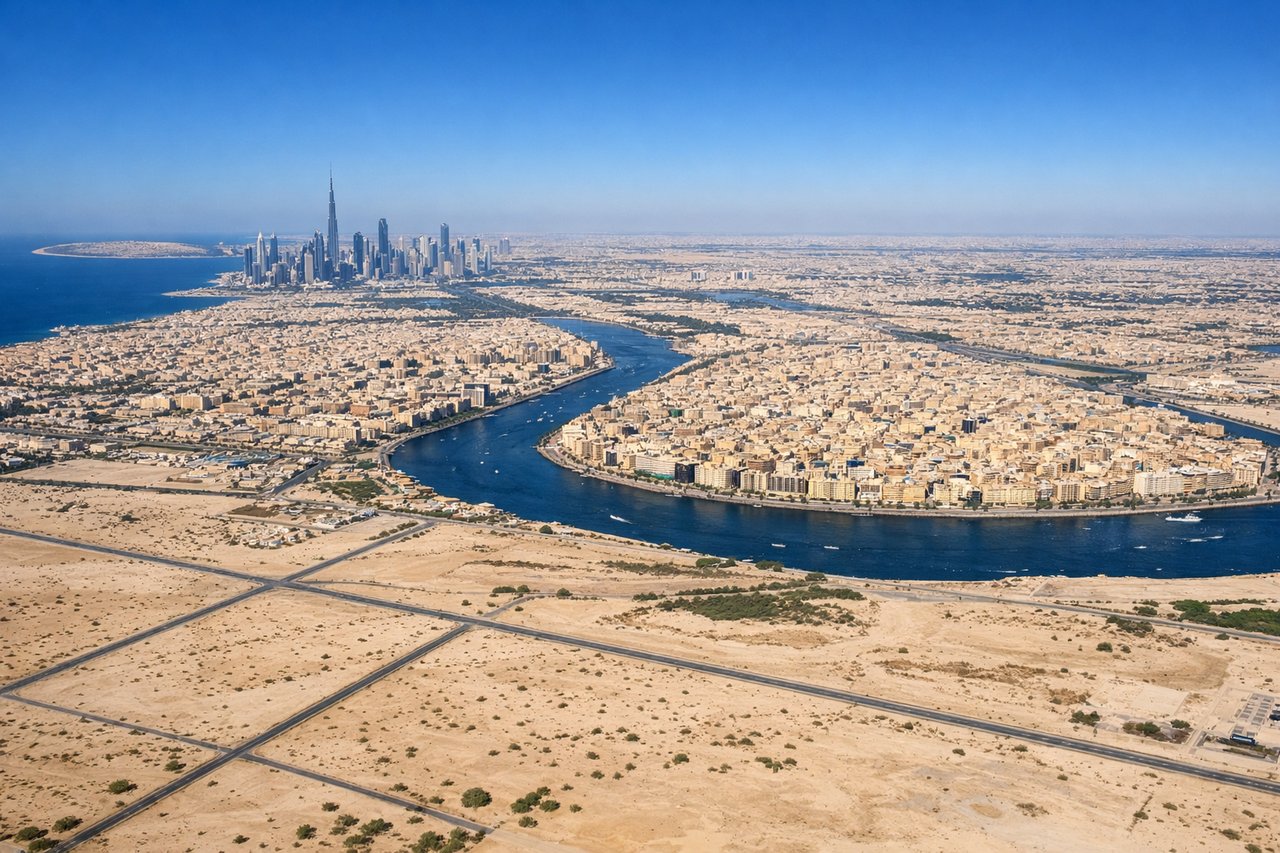
LEFTDubai International's primary runways (12L/30R and 12R/30L) run northwest to southeast. On the standard approach from the northeast over the Gulf, the left side looks south over the Dubai Creek, Downtown Dubai with the Burj Khalifa, and the Palm Jumeirah peninsula clearly visible in the shallow turquoise waters of the Arabian Gulf.
Landmarks on this routeAll landmarks →
Will your flight be in sunlight?
Pick a date and time in the Sun Map to watch the sun move across your whole flight.
About This Route
Which side of the plane should I sit on flying from Almaty (ALA) to Dubai International (DXB)?
Sit on the Right side of the plane for the best views on flights from Almaty to Dubai. The right side delivers the spectacular Tian Shan mountain panorama on departure — one of the most dramatic urban-to-mountain transitions anywhere in the world — and also captures the Caspian Sea crossing and parts of the Iranian plateau during the flight. The left side wins at landing for Dubai's landmarks, but the Almaty departure view is the single most impressive moment of the journey.
What can I see during takeoff from Almaty in Almaty?
During takeoff from Almaty (ALA), sit on the Right side for the best views. Almaty sits directly at the foot of the Trans-Ili Alatau range of the Tian Shan mountains. Departing on runway 05 (northeast) or 23 (southwest), the right side faces south toward these dramatic peaks rising to over 4,000m immediately behind the city. The snow-capped ridgeline is unmistakable and fills the window during climb-out. Notable sights include: Trans-Ili Alatau peaks (Tian Shan front range), Almaty city grid spreading northward onto the steppe, Chimbulak ski area visible in the mountain valleys, the flat Kazakh steppe extending to the north.
What can I see when landing at Dubai International in Dubai?
When landing at Dubai International (DXB), sit on the Left side for the best views. Dubai International's primary runways (12L/30R and 12R/30L) run northwest to southeast. On the standard approach from the northeast over the Gulf, the left side looks south over the Dubai Creek, Downtown Dubai with the Burj Khalifa, and the Palm Jumeirah peninsula clearly visible in the shallow turquoise waters of the Arabian Gulf. Notable sights include: Palm Jumeirah in the Arabian Gulf, Downtown Dubai skyline including Burj Khalifa, Dubai Creek and Deira district, the flat desert expanse of the Dubai hinterland.
How long is the flight from Almaty to Dubai?
The flight from Almaty (ALA) to Dubai International (DXB) takes about 4 hours. The shortest flight path between them is 1,749 miles (2,814 km); winds and air traffic control usually add a few percent.
What does the Almaty to Dubai flight path pass over?
The route crosses the Caspian Sea (visible as a large inland body of water roughly 2 hours in), then tracks over Turkmenistan's Karakum Desert, northern Iran's Alborz mountain foothills, and the Zagros mountain ranges before descending over the Persian Gulf toward Dubai. The Karakum and Dasht-e Kavir deserts show dramatic sand and salt flat textures from altitude.