The right side wins overall. The Tian Shan departure is genuinely spectacular and hard to beat — few city airports sit this close to a major mountain range. En route, the right side also picks up better views of the Caspian Sea crossing and parts of the Caucasus. The London approach on the left is excellent but the Almaty departure tips the balance.
Flight Path
The route crosses the Caspian Sea (visible as a large inland sea with no far shore), the Caucasus Mountains between Georgia and Russia, the Black Sea's northeastern corner, then Romania and the Carpathian Mountains, Poland or Germany depending on routing, the North Sea, and finally southeastern England. The Caspian crossing and Caucasus ridgeline are the most visually distinctive mid-flight features.
Great circle distance and headings ›
.jpeg?width=600)
Phase by phase
Takeoff from ALA
RIGHTAlmaty sits right at the foot of the Trans-Ili Alatau range of the Tian Shan. Departing on runway 05 (northeast), the right side faces southeast toward the mountains. You get a dramatic low-altitude view of the snow-capped ridgeline rising immediately south of the city, with the Medeu gorge and ski resort visible in the foothills.
Landing at LHR
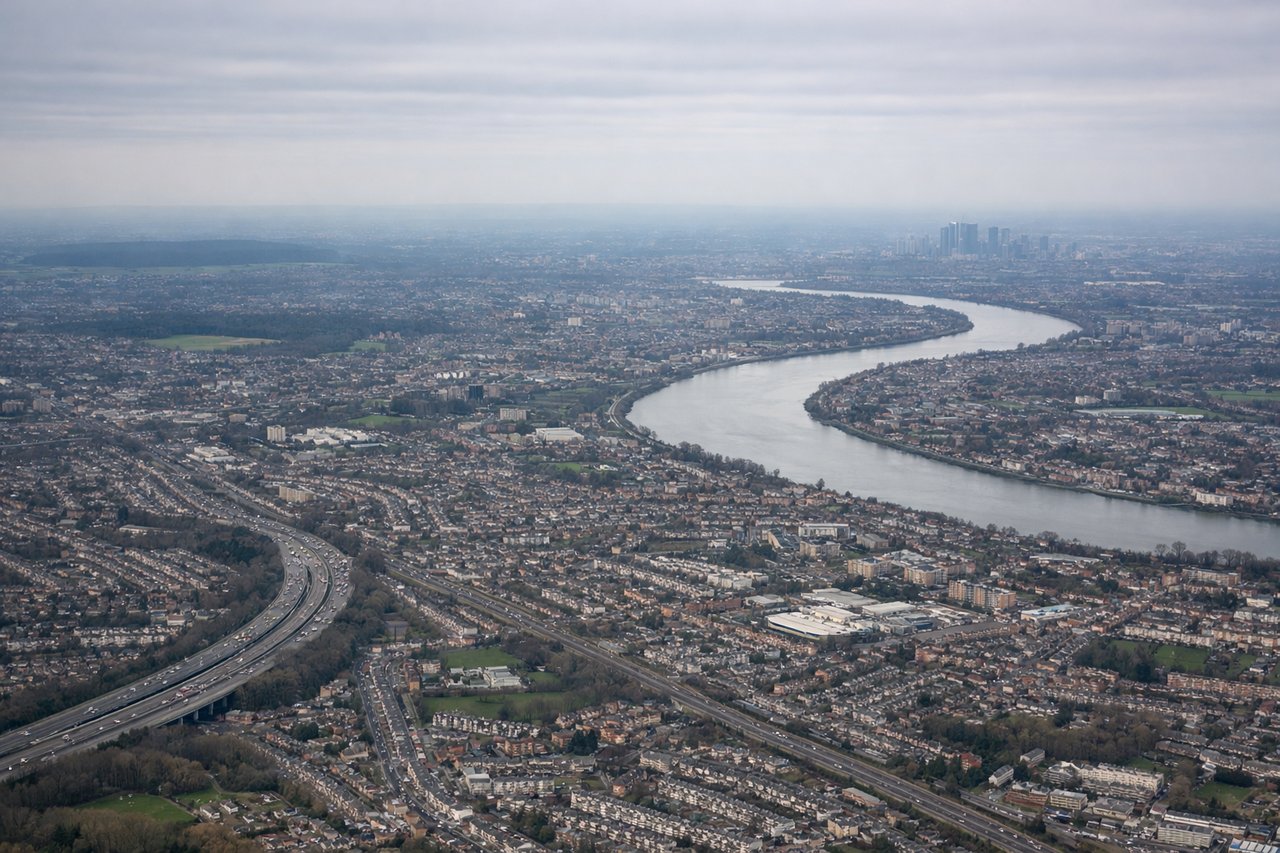
LEFTHeathrow's main approach is from the east on runway 27L/27R, meaning the aircraft tracks westward over London. The left (south) side gives you the Thames snaking through central London, with the City, Canary Wharf towers, and the distinctive bend at the Isle of Dogs clearly visible before crossing the M25 on final approach.
Landmarks on this routeAll landmarks →
Will your flight be in sunlight?
See exactly which side of the plane gets sun and shade at your departure time.
About This Route
Which side of the plane should I sit on flying from Almaty (ALA) to Heathrow (LHR)?
Sit on the Right side of the plane for the best views on flights from Almaty to London. The right side wins overall. The Tian Shan departure is genuinely spectacular and hard to beat — few city airports sit this close to a major mountain range. En route, the right side also picks up better views of the Caspian Sea crossing and parts of the Caucasus. The London approach on the left is excellent but the Almaty departure tips the balance.
What can I see during takeoff from Almaty in Almaty?
During takeoff from Almaty (ALA), sit on the Right side for the best views. Almaty sits right at the foot of the Trans-Ili Alatau range of the Tian Shan. Departing on runway 05 (northeast), the right side faces southeast toward the mountains. You get a dramatic low-altitude view of the snow-capped ridgeline rising immediately south of the city, with the Medeu gorge and ski resort visible in the foothills. Notable sights include: Trans-Ili Alatau (Tian Shan) ridgeline, Medeu valley and gorge, Almaty city grid spreading north across the steppe, Kapchagay Reservoir glinting to the north.
What can I see when landing at Heathrow in London?
When landing at Heathrow (LHR), sit on the Left side for the best views. Heathrow's main approach is from the east on runway 27L/27R, meaning the aircraft tracks westward over London. The left (south) side gives you the Thames snaking through central London, with the City, Canary Wharf towers, and the distinctive bend at the Isle of Dogs clearly visible before crossing the M25 on final approach. Notable sights include: River Thames and its central London bends, Canary Wharf tower cluster, Windsor Castle and Windsor Great Park, M25 motorway ring.
How long is the flight from Almaty to London?
The flight from Almaty (ALA) to Heathrow (LHR) takes Approximately 8 to 9 hours.
What does the Almaty to London flight path pass over?
The route crosses the Caspian Sea (visible as a large inland sea with no far shore), the Caucasus Mountains between Georgia and Russia, the Black Sea's northeastern corner, then Romania and the Carpathian Mountains, Poland or Germany depending on routing, the North Sea, and finally southeastern England. The Caspian crossing and Caucasus ridgeline are the most visually distinctive mid-flight features.