While takeoff offers interesting water views, the landing approach on the left side provides more dramatic and sustained scenic value with the Hudson River valley, Mohawk River, and Catskill Mountains—the defining geographic features of the Albany region.
Flown DTW to ALB? Did we get it right?
Flight Path
Detroit to Albany is 488 miles (785 km), a flight of about 1 hour 15 minutes.
The flight path crosses central New York State, passing over the Finger Lakes region to the south and the Adirondack foothills to the north. The landscape transitions from Michigan's Great Lakes plain through Ohio and Pennsylvania hill country, then into New York's glacially-carved valleys and low mountain terrain. The Mohawk Valley becomes visible in the final descent phase, marking the approach to Albany.
Great circle distance and headings ›
Phase by phase
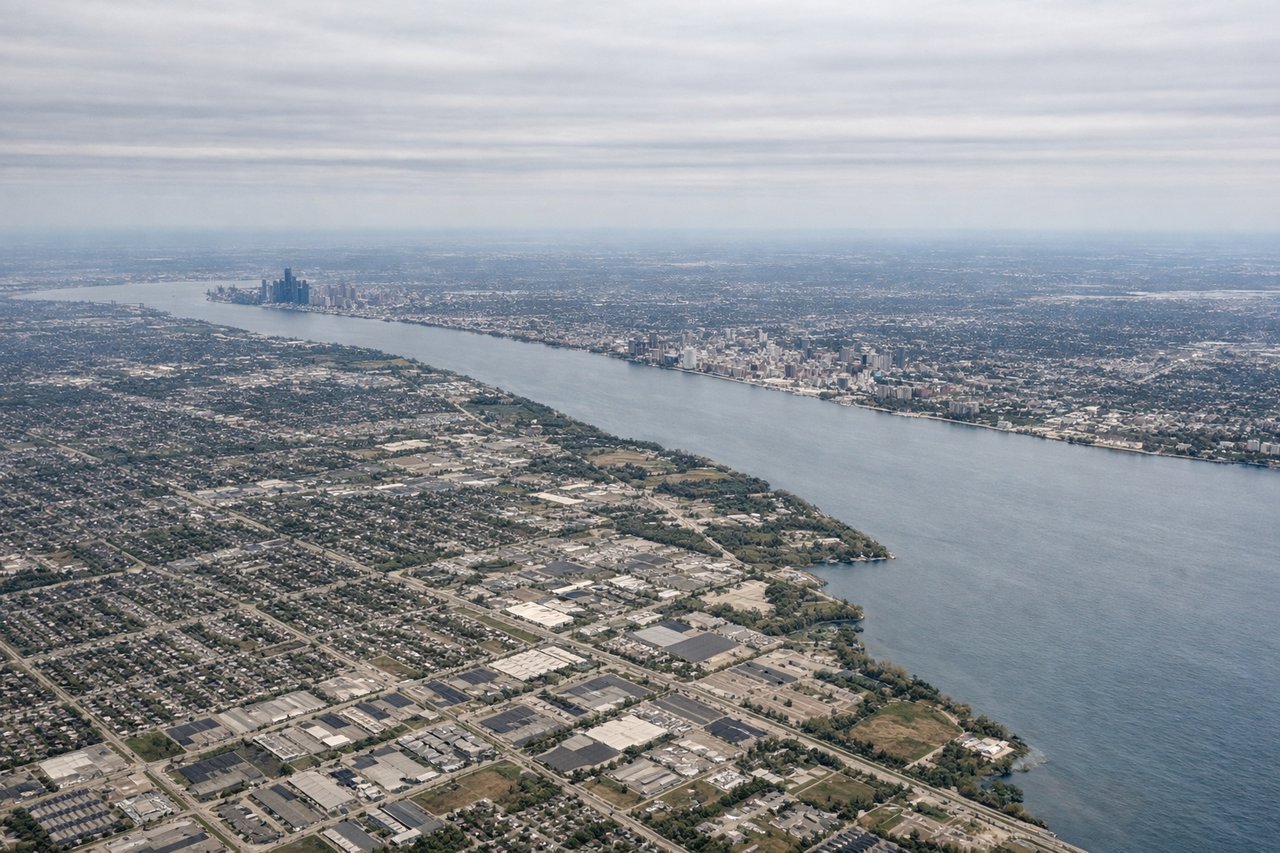
Takeoff from DTW
RIGHTRight side offers views of the Detroit River and Lake St. Clair as the aircraft climbs northeast. You'll see the water bodies that define Detroit's geography and the urban sprawl of the metro area receding below.
Landing at ALB
LEFTLeft side provides views of the Mohawk River valley and the Hudson River as you descend into Albany. These water features are the dominant geographic markers for approach and offer clear visual reference to the region's topography.
Will your flight be in sunlight?
Pick a date and time in the Sun Map to watch the sun move across your whole flight.
About This Route
Which side of the plane should I sit on flying from Detroit Metro Wayne Co (DTW) to Albany International (ALB)?
Sit on the Left side of the plane for the best views on flights from Detroit to Albany. While takeoff offers interesting water views, the landing approach on the left side provides more dramatic and sustained scenic value with the Hudson River valley, Mohawk River, and Catskill Mountains—the defining geographic features of the Albany region.
What can I see during takeoff from Detroit Metro Wayne Co in Detroit?
During takeoff from Detroit Metro Wayne Co (DTW), sit on the Right side for the best views. Right side offers views of the Detroit River and Lake St. Clair as the aircraft climbs northeast. You'll see the water bodies that define Detroit's geography and the urban sprawl of the metro area receding below. Notable sights include: Detroit River, Lake St. Clair, Detroit metropolitan area, Windsor Ontario across the border.
What can I see when landing at Albany International in Albany?
When landing at Albany International (ALB), sit on the Left side for the best views. Left side provides views of the Mohawk River valley and the Hudson River as you descend into Albany. These water features are the dominant geographic markers for approach and offer clear visual reference to the region's topography. Notable sights include: Mohawk River, Hudson River, Catskill Mountains to the west, Albany city center.
How long is the flight from Detroit to Albany?
The flight from Detroit Metro Wayne Co (DTW) to Albany International (ALB) takes about 1 hour 15 minutes. The shortest flight path between them is 488 miles (785 km); winds and air traffic control usually add a few percent.
What does the Detroit to Albany flight path pass over?
The flight path crosses central New York State, passing over the Finger Lakes region to the south and the Adirondack foothills to the north. The landscape transitions from Michigan's Great Lakes plain through Ohio and Pennsylvania hill country, then into New York's glacially-carved valleys and low mountain terrain. The Mohawk Valley becomes visible in the final descent phase, marking the approach to Albany.