While takeoff offers good water views on the right, the landing approach on the left provides more dramatic and recognizable geography—the Chesapeake Bay estuary and Baltimore Harbor are more visually distinctive than the Detroit departure. The left side captures the most memorable part of this route.
Flight Path
The flight path crosses central Ohio, passing east of Columbus and west of the Appalachian foothills. At cruise altitude (around 30,000 feet), you'll see the Ohio River valley and the transition from Midwestern plains to the more rolling terrain of West Virginia and Pennsylvania. The Appalachian ridge system becomes visible as a series of parallel ridges running northeast-southwest on the left (east) side during the latter half of the flight, though at cruise altitude these appear as subtle terrain texture rather than dramatic peaks.
Great circle distance and headings ›Phase by phase
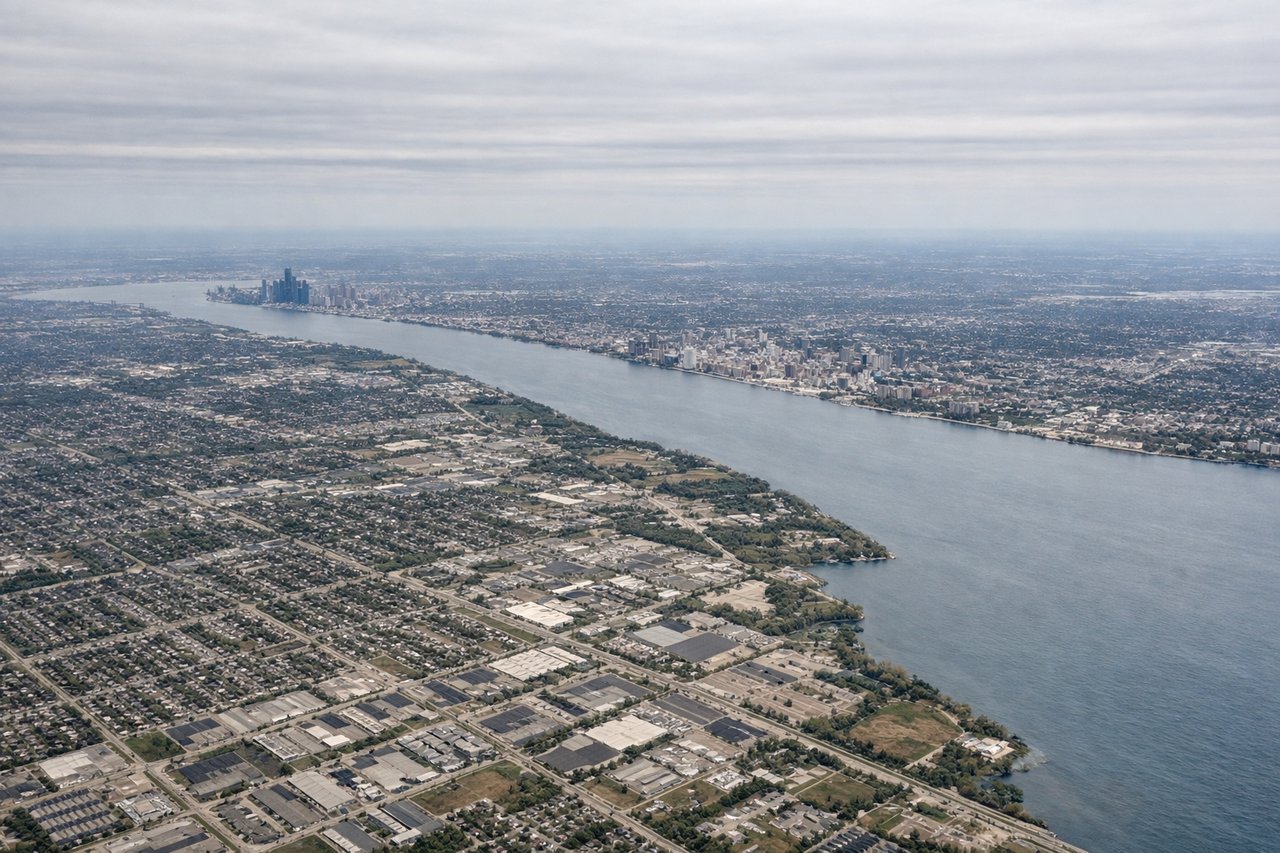
Takeoff from DTW
RIGHTRight side offers views of the Detroit River and Lake St. Clair as you climb out over southeastern Michigan. The water features are prominent and distinctive during the initial climb, especially if departing on runways 3L/3R or 22L/22R.
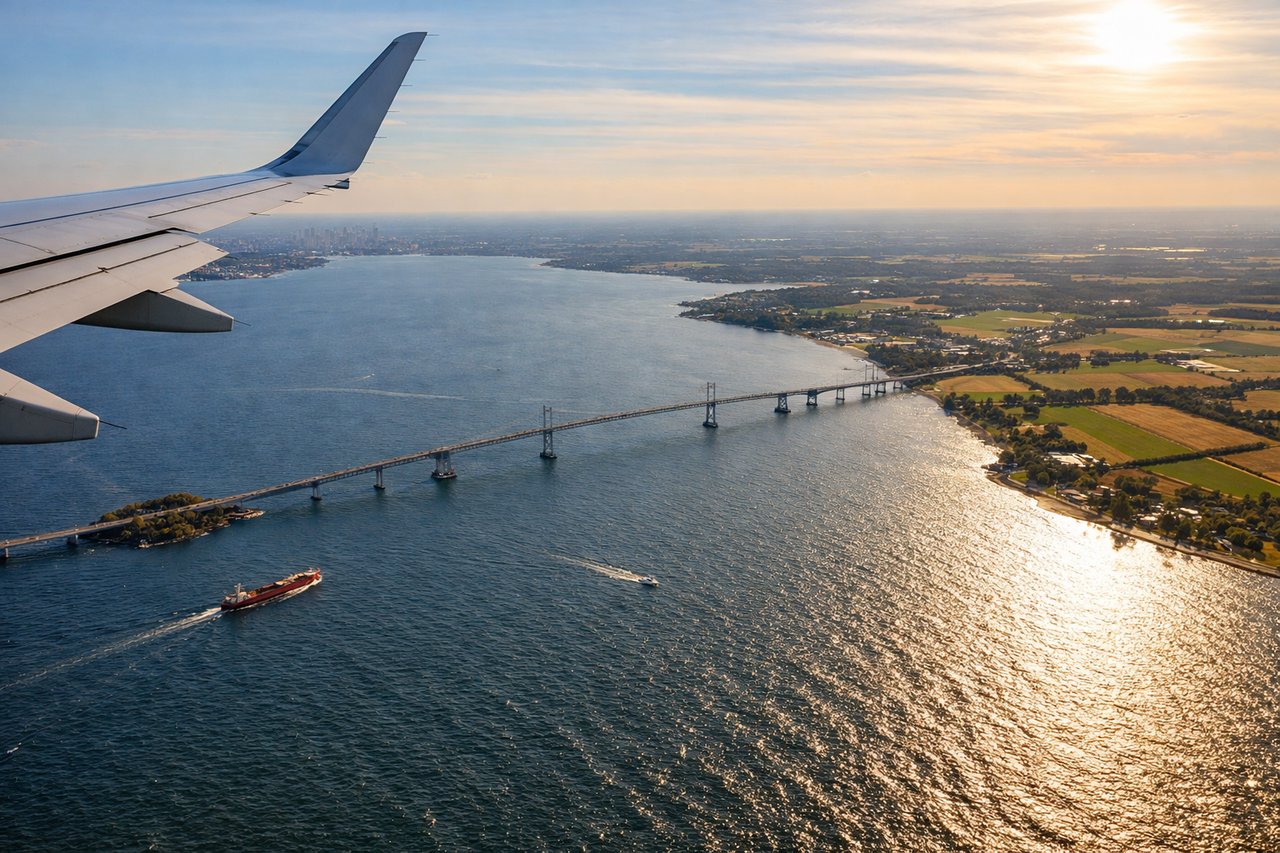
Landing at BWI
LEFTLeft side provides views of the Patapsco River estuary, Baltimore Harbor, and the Inner Harbor area during descent into BWI. These water features are visually striking and help orient you to the Chesapeake Bay region. Typical approach vectors from the north favor left-side visibility of these landmarks.
Landmarks on this routeAll landmarks →
Will your flight be in sunlight?
See exactly which side of the plane gets sun and shade at your departure time.
About This Route
Which side of the plane should I sit on flying from Detroit Metro Wayne Co (DTW) to Baltimore Washington International (BWI)?
Sit on the Left side of the plane for the best views on flights from Detroit to Baltimore. While takeoff offers good water views on the right, the landing approach on the left provides more dramatic and recognizable geography—the Chesapeake Bay estuary and Baltimore Harbor are more visually distinctive than the Detroit departure. The left side captures the most memorable part of this route.
What can I see during takeoff from Detroit Metro Wayne Co in Detroit?
During takeoff from Detroit Metro Wayne Co (DTW), sit on the Right side for the best views. Right side offers views of the Detroit River and Lake St. Clair as you climb out over southeastern Michigan. The water features are prominent and distinctive during the initial climb, especially if departing on runways 3L/3R or 22L/22R. Notable sights include: Detroit River, Lake St. Clair, Windsor Ontario (across the border), downtown Detroit skyline.
What can I see when landing at Baltimore Washington International in Baltimore?
When landing at Baltimore Washington International (BWI), sit on the Left side for the best views. Left side provides views of the Patapsco River estuary, Baltimore Harbor, and the Inner Harbor area during descent into BWI. These water features are visually striking and help orient you to the Chesapeake Bay region. Typical approach vectors from the north favor left-side visibility of these landmarks. Notable sights include: Patapsco River estuary, Baltimore Harbor, Chesapeake Bay, Fort McHenry (small but identifiable).
How long is the flight from Detroit to Baltimore?
The flight from Detroit Metro Wayne Co (DTW) to Baltimore Washington International (BWI) takes Approximately 1 hour 45 minutes.
What does the Detroit to Baltimore flight path pass over?
The flight path crosses central Ohio, passing east of Columbus and west of the Appalachian foothills. At cruise altitude (around 30,000 feet), you'll see the Ohio River valley and the transition from Midwestern plains to the more rolling terrain of West Virginia and Pennsylvania. The Appalachian ridge system becomes visible as a series of parallel ridges running northeast-southwest on the left (east) side during the latter half of the flight, though at cruise altitude these appear as subtle terrain texture rather than dramatic peaks.