While takeoff offers some Great Lakes interest on the right, the landing approach into Buenos Aires provides far more dramatic and distinctive geography—the massive Río de la Plata estuary, the Tigre Delta, and the city itself are visually compelling. Left-side seats capture these features best.
Flight Path
The flight path crosses the Atlantic Ocean for roughly 6-7 hours. Notable geographic features along the route include: the Appalachian Mountains (visible during initial eastbound climb if departing on runway 03), the Atlantic coastline near the Carolinas or Mid-Atlantic states (depending on exact routing), then open ocean. As the aircraft approaches South America, the southern coast of Brazil becomes visible on the horizon, followed by the convergence of the Paraná River system and the Río de la Plata estuary. The flight typically passes over or near the Misiones Province of Argentina (jungle terrain) before descending toward Buenos Aires. No major mountain ranges are visible from cruise altitude on this route, but the transition from ocean to continental landmass is geographically significant.
Great circle distance and headings ›.jpeg?width=600)


_(cropped).jpg?width=600)
Phase by phase
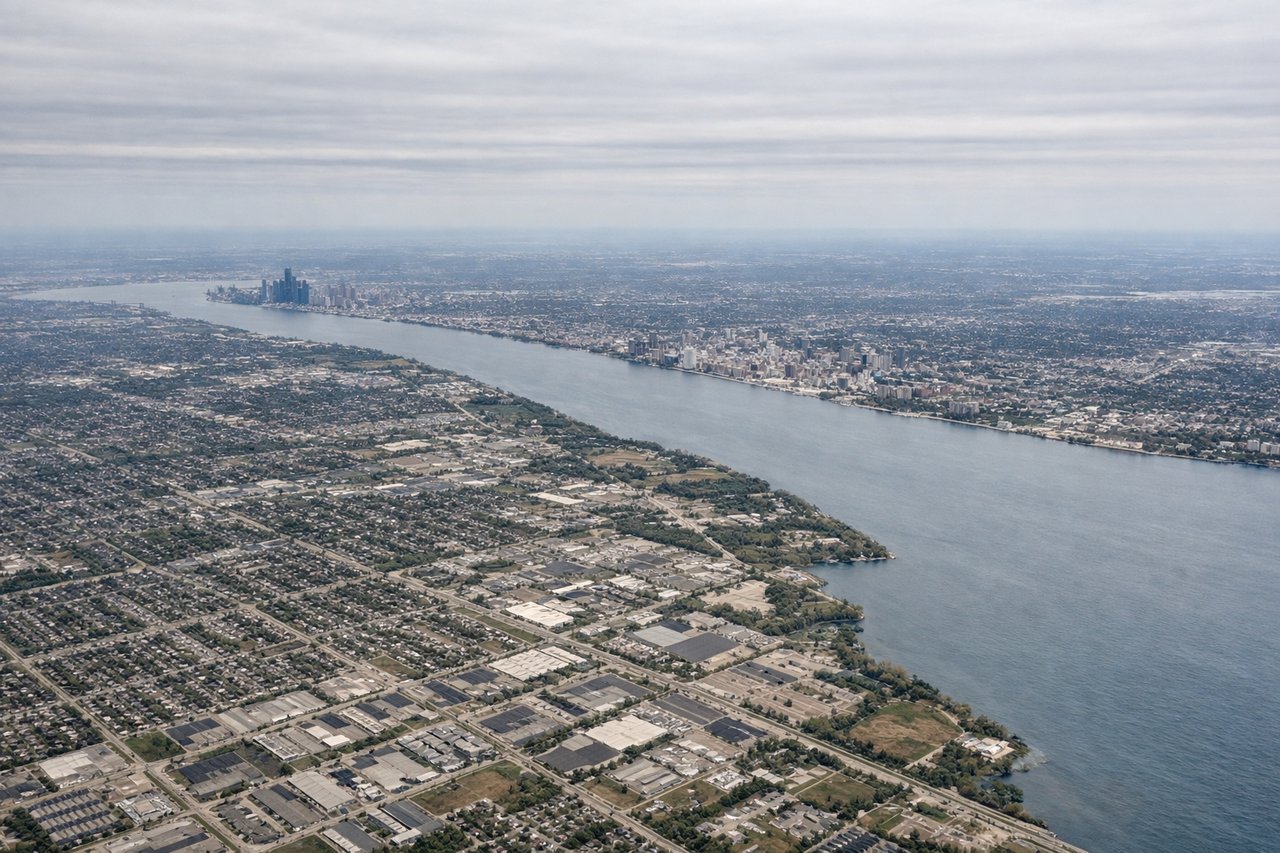
Takeoff from DTW
RIGHTDTW typically departs runways 03L/03R or 21L/21R. Right-side seats offer views of Lake St. Clair and the Detroit River system during northeasterly departures, or the sprawling suburban grid and occasional glimpses of Lake Erie during westerly departures. Left side shows industrial areas and inland terrain with less geographic interest.

Landing at EZE
LEFTApproaching EZE typically uses runways 09 or 27 depending on wind. Left-side seats during descent offer views of the Río de la Plata estuary, the Buenos Aires waterfront, and the city's distinctive neighborhoods. Right side shows inland terrain with less dramatic geography.
Landmarks on this routeAll landmarks →
Will your flight be in sunlight?
See exactly which side of the plane gets sun and shade at your departure time.
About This Route
Which side of the plane should I sit on flying from Detroit Metro Wayne Co (DTW) to Ezeiza Ministro Pistarini (EZE)?
Sit on the Left side of the plane for the best views on flights from Detroit to Buenos Aires. While takeoff offers some Great Lakes interest on the right, the landing approach into Buenos Aires provides far more dramatic and distinctive geography—the massive Río de la Plata estuary, the Tigre Delta, and the city itself are visually compelling. Left-side seats capture these features best.
What can I see during takeoff from Detroit Metro Wayne Co in Detroit?
During takeoff from Detroit Metro Wayne Co (DTW), sit on the Right side for the best views. DTW typically departs runways 03L/03R or 21L/21R. Right-side seats offer views of Lake St. Clair and the Detroit River system during northeasterly departures, or the sprawling suburban grid and occasional glimpses of Lake Erie during westerly departures. Left side shows industrial areas and inland terrain with less geographic interest. Notable sights include: Lake St. Clair (northeast of airport), Detroit River, Lake Erie (southern horizon on certain departure routes), suburban Detroit sprawl extending toward Pontiac.
What can I see when landing at Ezeiza Ministro Pistarini in Buenos Aires?
When landing at Ezeiza Ministro Pistarini (EZE), sit on the Left side for the best views. Approaching EZE typically uses runways 09 or 27 depending on wind. Left-side seats during descent offer views of the Río de la Plata estuary, the Buenos Aires waterfront, and the city's distinctive neighborhoods. Right side shows inland terrain with less dramatic geography. Notable sights include: Río de la Plata estuary (massive muddy-brown water body), Buenos Aires city grid with distinctive neighborhoods, Aeroparque Jorge Newbery (smaller airport visible on approach), Tigre Delta region (northern approach).
How long is the flight from Detroit to Buenos Aires?
The flight from Detroit Metro Wayne Co (DTW) to Ezeiza Ministro Pistarini (EZE) takes Approximately 9.5 to 10.5 hours.
What does the Detroit to Buenos Aires flight path pass over?
The flight path crosses the Atlantic Ocean for roughly 6-7 hours. Notable geographic features along the route include: the Appalachian Mountains (visible during initial eastbound climb if departing on runway 03), the Atlantic coastline near the Carolinas or Mid-Atlantic states (depending on exact routing), then open ocean. As the aircraft approaches South America, the southern coast of Brazil becomes visible on the horizon, followed by the convergence of the Paraná River system and the Río de la Plata estuary. The flight typically passes over or near the Misiones Province of Argentina (jungle terrain) before descending toward Buenos Aires. No major mountain ranges are visible from cruise altitude on this route, but the transition from ocean to continental landmass is geographically significant.