While takeoff offers good water views on the right, the landing approach over Tuscany's dramatic landscape and the approach to Florence itself provides the more memorable and visually distinctive experience. Left-side seats capture the heart of the approach corridor.
Flown DTW to FLR? Did we get it right?
Flight Path
Detroit to Firenze is 4,491 miles (7,227 km), a flight of about 10 hours.
The flight path crosses the Atlantic, passing north of the Azores (if visible at cruise altitude around 35,000 feet, they appear as small dark specks on the ocean). Over the Atlantic, you'll see only open ocean and cloud formations. As you approach Europe, the Iberian Peninsula becomes visible on the southern horizon, then the flight tracks northeast toward the Alps. The Alps themselves are visible during descent into Italy—the snow-capped peaks of Mont Blanc and Gran Paradiso appear as a dramatic white ridge on the northern horizon during the final 90 minutes of flight. The Po River valley in northern Italy becomes visible before turning south toward Tuscany.
Great circle distance and headings ›


Phase by phase
Takeoff from DTW
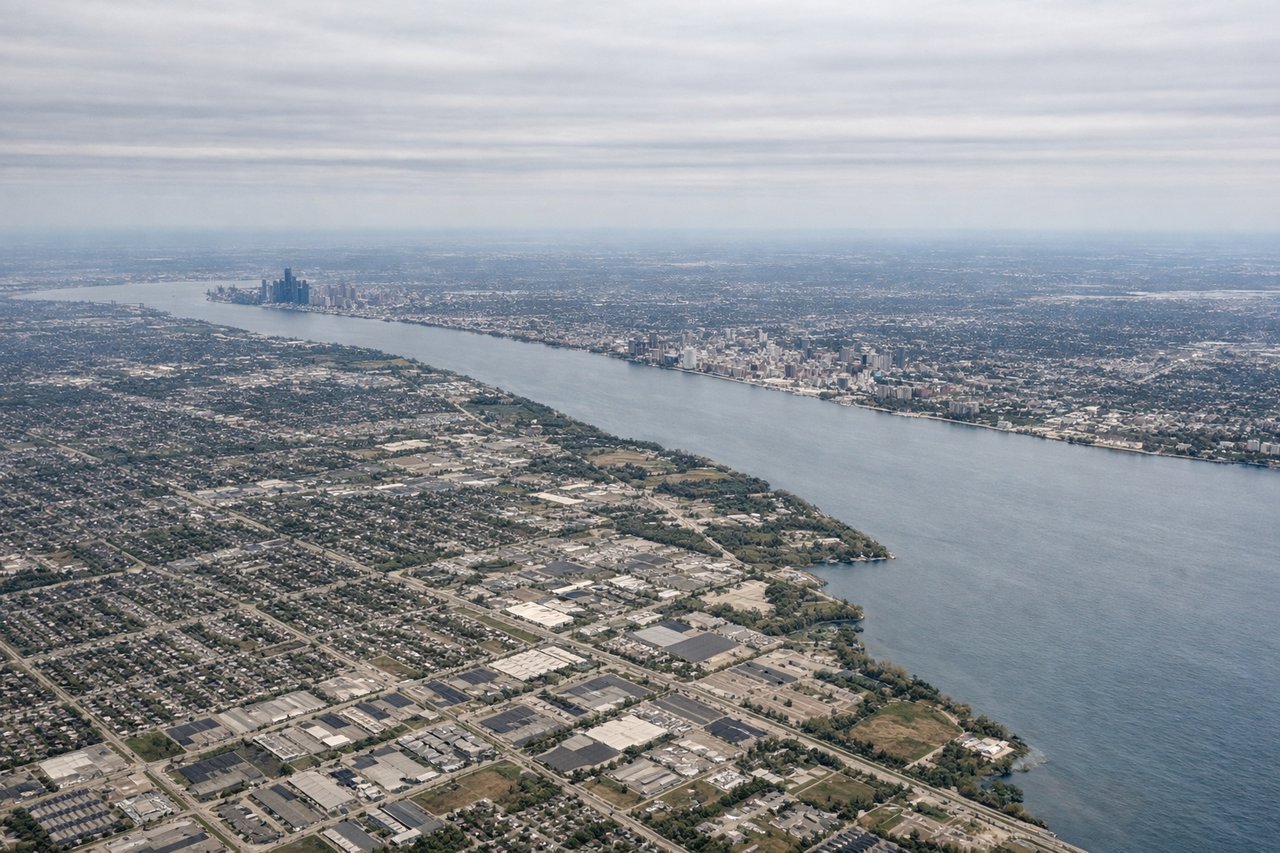
RIGHTDTW typically departs eastbound (runways 03L/03R or 21L/21R depending on wind). Right-side seats offer views of Lake St. Clair and the Detroit River delta as you climb out over southeastern Michigan, with the urban sprawl of Detroit visible to the left. The water features are more dramatic than the inland terrain.
Landing at FLR
LEFTApproaching FLR from the west, you'll descend over Tuscany's characteristic rolling hills and vineyards. Left-side seats capture the Arno River valley and the approach to Florence itself, with the Apennine Mountains visible to the north. The city's dome and urban layout become visible during final descent.
Will your flight be in sunlight?
Pick a date and time in the Sun Map to watch the sun move across your whole flight.
About This Route
Which side of the plane should I sit on flying from Detroit Metro Wayne Co (DTW) to Peretola (FLR)?
Sit on the Left side of the plane for the best views on flights from Detroit to Firenze. While takeoff offers good water views on the right, the landing approach over Tuscany's dramatic landscape and the approach to Florence itself provides the more memorable and visually distinctive experience. Left-side seats capture the heart of the approach corridor.
What can I see during takeoff from Detroit Metro Wayne Co in Detroit?
During takeoff from Detroit Metro Wayne Co (DTW), sit on the Right side for the best views. DTW typically departs eastbound (runways 03L/03R or 21L/21R depending on wind). Right-side seats offer views of Lake St. Clair and the Detroit River delta as you climb out over southeastern Michigan, with the urban sprawl of Detroit visible to the left. The water features are more dramatic than the inland terrain. Notable sights include: Lake St. Clair, Detroit River, Lake Erie (distant southern horizon), Windsor Ontario across the river.
What can I see when landing at Peretola in Firenze?
When landing at Peretola (FLR), sit on the Left side for the best views. Approaching FLR from the west, you'll descend over Tuscany's characteristic rolling hills and vineyards. Left-side seats capture the Arno River valley and the approach to Florence itself, with the Apennine Mountains visible to the north. The city's dome and urban layout become visible during final descent. Notable sights include: Arno River valley, Tuscan hills and cypress-lined valleys, Apennine Mountains (northern horizon), Florence city center with Duomo.
How long is the flight from Detroit to Firenze?
The flight from Detroit Metro Wayne Co (DTW) to Peretola (FLR) takes about 10 hours. The shortest flight path between them is 4,491 miles (7,227 km); winds and air traffic control usually add a few percent.
What does the Detroit to Firenze flight path pass over?
The flight path crosses the Atlantic, passing north of the Azores (if visible at cruise altitude around 35,000 feet, they appear as small dark specks on the ocean). Over the Atlantic, you'll see only open ocean and cloud formations. As you approach Europe, the Iberian Peninsula becomes visible on the southern horizon, then the flight tracks northeast toward the Alps. The Alps themselves are visible during descent into Italy—the snow-capped peaks of Mont Blanc and Gran Paradiso appear as a dramatic white ridge on the northern horizon during the final 90 minutes of flight. The Po River valley in northern Italy becomes visible before turning south toward Tuscany.