Detroit to Great Falls is 1,411 miles (2,271 km), a flight of about 3 hours 15 minutes.
While takeoff favors the right for Detroit area water features, the landing approach into Great Falls offers superior views of the Rocky Mountain Front and Missouri River valley from the left side, and this is the more dramatic and geographically distinctive portion of the flight.
Flight Path
The flight path crosses the Upper Peninsula of Michigan (visible shortly after takeoff), then traverses Wisconsin and Minnesota with scattered lakes and forests. Over Iowa and South Dakota, the landscape transitions from forested terrain to agricultural plains. The Missouri River becomes visible in the final descent phase near Great Falls. The Rocky Mountain Front is the most dramatic feature, appearing as a distinct topographic break between the High Plains and mountain terrain approximately 50-80 miles before landing.
Great circle distance and headings ›

Phase by phase
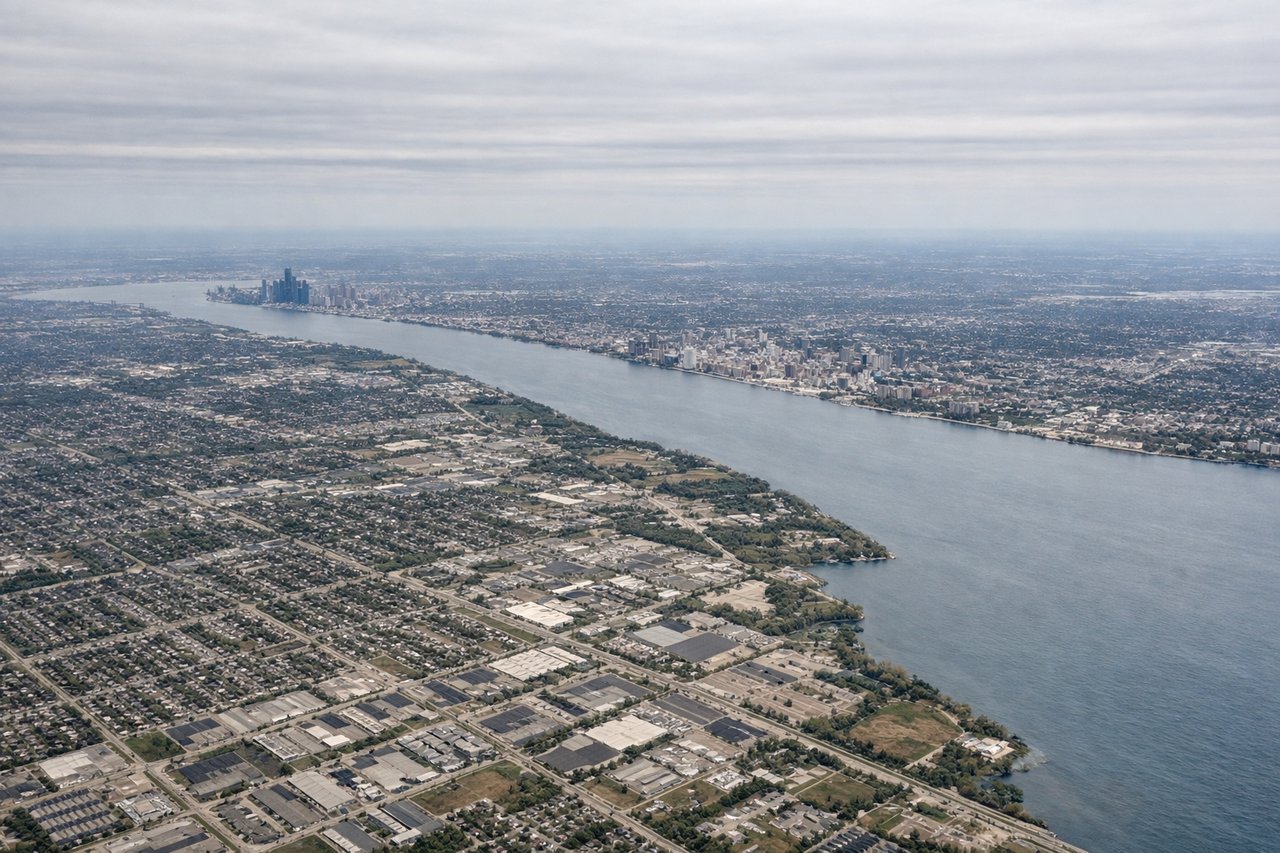
Takeoff from DTW
RIGHTDTW typically departs eastbound (Runways 03L/03R or 21L/21R depending on wind). Right-side seats offer views of Lake St. Clair and the Detroit River delta as you climb out over southeastern Michigan, with the urban sprawl of Detroit visible to the left.
Landing at GTF
LEFTGTF typically lands westbound (Runway 02 or 20 depending on conditions). Left-side seats provide views of the Missouri River valley and the Rocky Mountain Front as you descend into Great Falls, with the Sun River visible to the north and the High Plains stretching eastward.
Landmarks on this routeAll landmarks →
Will your flight be in sunlight?
Pick a date and time in the Sun Map to watch the sun move across your whole flight.
About This Route
Which side of the plane should I sit on flying from Detroit Metro Wayne Co (DTW) to Great Falls International (GTF)?
Sit on the Left side of the plane for the best views on flights from Detroit to Great Falls. While takeoff favors the right for Detroit area water features, the landing approach into Great Falls offers superior views of the Rocky Mountain Front and Missouri River valley from the left side, and this is the more dramatic and geographically distinctive portion of the flight.
What can I see during takeoff from Detroit Metro Wayne Co in Detroit?
During takeoff from Detroit Metro Wayne Co (DTW), sit on the Right side for the best views. DTW typically departs eastbound (Runways 03L/03R or 21L/21R depending on wind). Right-side seats offer views of Lake St. Clair and the Detroit River delta as you climb out over southeastern Michigan, with the urban sprawl of Detroit visible to the left. Notable sights include: Lake St. Clair, Detroit River, Lake Erie (distant southern horizon), Detroit metropolitan area.
What can I see when landing at Great Falls International in Great Falls?
When landing at Great Falls International (GTF), sit on the Left side for the best views. GTF typically lands westbound (Runway 02 or 20 depending on conditions). Left-side seats provide views of the Missouri River valley and the Rocky Mountain Front as you descend into Great Falls, with the Sun River visible to the north and the High Plains stretching eastward. Notable sights include: Missouri River, Rocky Mountain Front, Sun River, High Plains grassland.
How long is the flight from Detroit to Great Falls?
The flight from Detroit Metro Wayne Co (DTW) to Great Falls International (GTF) takes about 3 hours 15 minutes. The shortest flight path between them is 1,411 miles (2,271 km); winds and air traffic control usually add a few percent.
What does the Detroit to Great Falls flight path pass over?
The flight path crosses the Upper Peninsula of Michigan (visible shortly after takeoff), then traverses Wisconsin and Minnesota with scattered lakes and forests. Over Iowa and South Dakota, the landscape transitions from forested terrain to agricultural plains. The Missouri River becomes visible in the final descent phase near Great Falls. The Rocky Mountain Front is the most dramatic feature, appearing as a distinct topographic break between the High Plains and mountain terrain approximately 50-80 miles before landing.