While takeoff is fairly even over flat Midwest terrain, the left side dominates during the western half of the flight and especially on approach, with views of Rocky Mountain ranges, the Colorado Plateau, and the dramatic desert mountains and skyline surrounding Las Vegas.
Flight Path
Great Plains of Nebraska and Colorado, the Rocky Mountain Front Range near Denver, and the high desert plateaus of Utah and Colorado before descending into the Mojave Desert basin
Great circle distance and headings ›

.jpg?width=600)
.jpg?width=600)

.jpeg?width=600)


Phase by phase
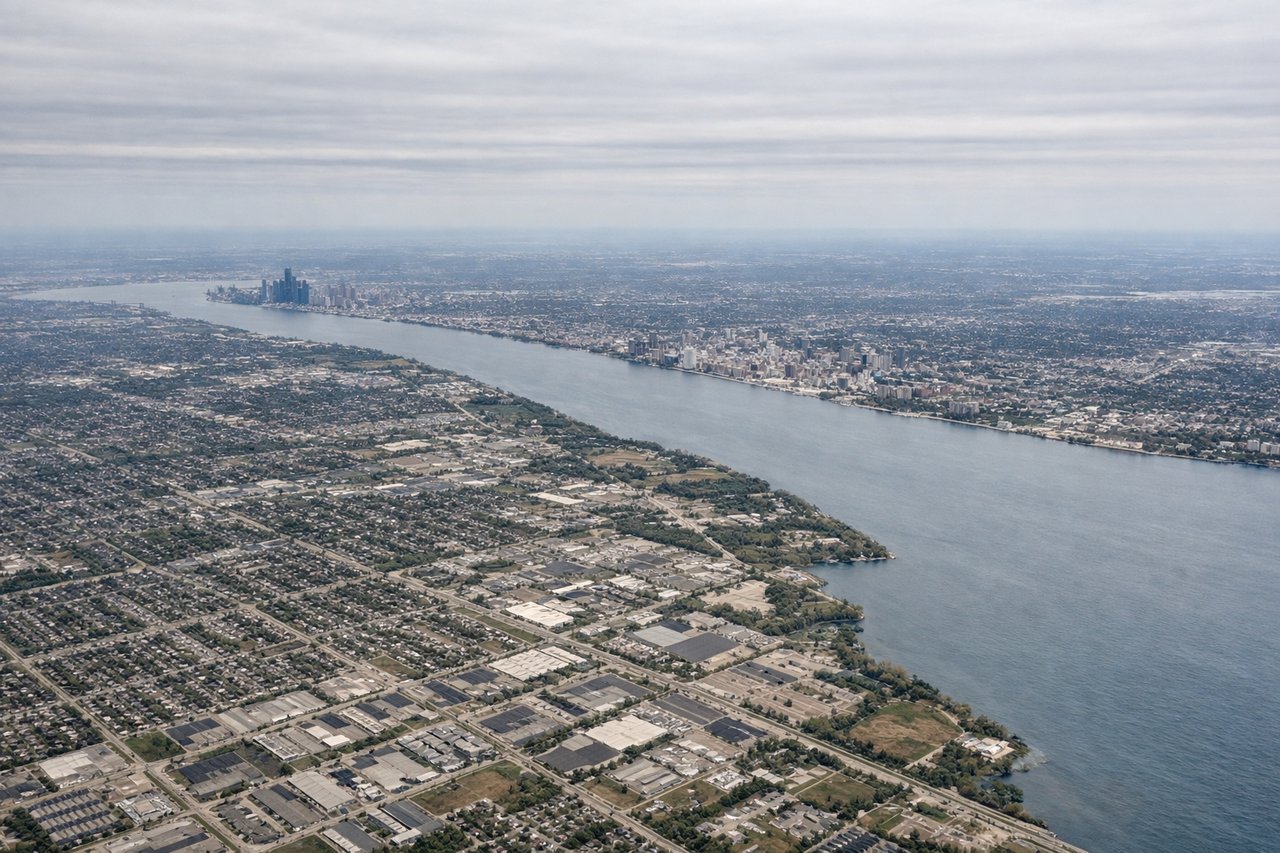
Takeoff from DTW
RIGHTDeparting DTW westbound, the right side offers glimpses of Detroit's suburbs and the Ann Arbor area before the flight settles over flat Midwest farmland. It's a modest edge since neither side has dramatic terrain at this stage.

Landing at LAS
LEFTOn approach to LAS from the east, the left side reveals the dramatic Rocky Mountain foothills giving way to the Colorado Plateau, then the stark desert ranges surrounding Las Vegas including Sunrise Mountain. Final descent showcases the Las Vegas Strip skyline and surrounding desert basin dramatically.
Landmarks on this routeAll landmarks →
Will your flight be in sunlight?
See exactly which side of the plane gets sun and shade at your departure time.
About This Route
Which side of the plane should I sit on flying from Detroit Metro Wayne Co (DTW) to Mc Carran International (LAS)?
Sit on the Left side of the plane for the best views on flights from Detroit to Las Vegas. While takeoff is fairly even over flat Midwest terrain, the left side dominates during the western half of the flight and especially on approach, with views of Rocky Mountain ranges, the Colorado Plateau, and the dramatic desert mountains and skyline surrounding Las Vegas.
What can I see during takeoff from Detroit Metro Wayne Co in Detroit?
During takeoff from Detroit Metro Wayne Co (DTW), sit on the Right side for the best views. Departing DTW westbound, the right side offers glimpses of Detroit's suburbs and the Ann Arbor area before the flight settles over flat Midwest farmland. It's a modest edge since neither side has dramatic terrain at this stage. Notable sights include: Detroit western suburbs, Huron River valley, checkerboard farmland patterns.
What can I see when landing at Mc Carran International in Las Vegas?
When landing at Mc Carran International (LAS), sit on the Left side for the best views. On approach to LAS from the east, the left side reveals the dramatic Rocky Mountain foothills giving way to the Colorado Plateau, then the stark desert ranges surrounding Las Vegas including Sunrise Mountain. Final descent showcases the Las Vegas Strip skyline and surrounding desert basin dramatically. Notable sights include: Sunrise Mountain, Lake Mead (distant), Las Vegas Strip skyline, Spring Mountains.
How long is the flight from Detroit to Las Vegas?
The flight from Detroit Metro Wayne Co (DTW) to Mc Carran International (LAS) takes 3h 45m.
What does the Detroit to Las Vegas flight path pass over?
Great Plains of Nebraska and Colorado, the Rocky Mountain Front Range near Denver, and the high desert plateaus of Utah and Colorado before descending into the Mojave Desert basin