While takeoff favors the right for Detroit's water features, the landing view from the left—approaching Philadelphia's downtown and river system—is more visually distinctive and memorable. The left side captures the city's iconic skyline and geographic setting, making it the better overall choice for this route.
Flown DTW to PHL? Did we get it right?
Flight Path
Detroit to Philadelphia is 452 miles (728 km), a flight of about 2 hours 15 minutes.
The flight path crosses central Ohio, passing east of Columbus and west of the Appalachian foothills. At cruise altitude (around 30,000 feet), you'll see the Ohio River valley emerging in the second half of the flight, with the Appalachian plateau becoming visible as a series of ridges and valleys on the eastern horizon as you approach Pennsylvania. The landscape transitions from flat Midwestern farmland to increasingly rolling terrain with forest cover.
Great circle distance and headings ›Phase by phase
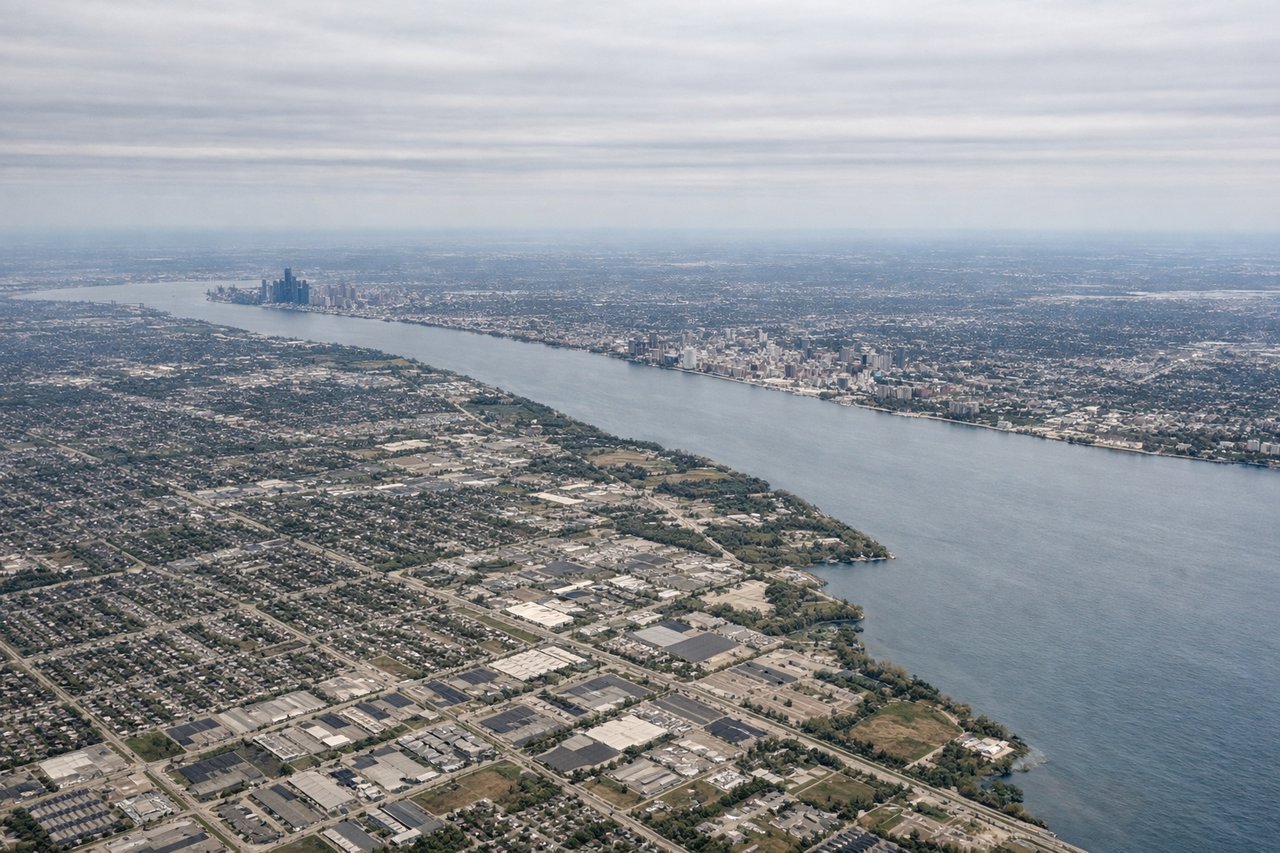
Takeoff from DTW
RIGHTRight-side seats offer views of the Detroit River and Windsor, Ontario immediately after departure. DTW typically departs runways 3L/3R or 22L/22R; northbound departures (runways 3L/3R) provide the clearest view of the river corridor and Lake St. Clair as you climb northeast.
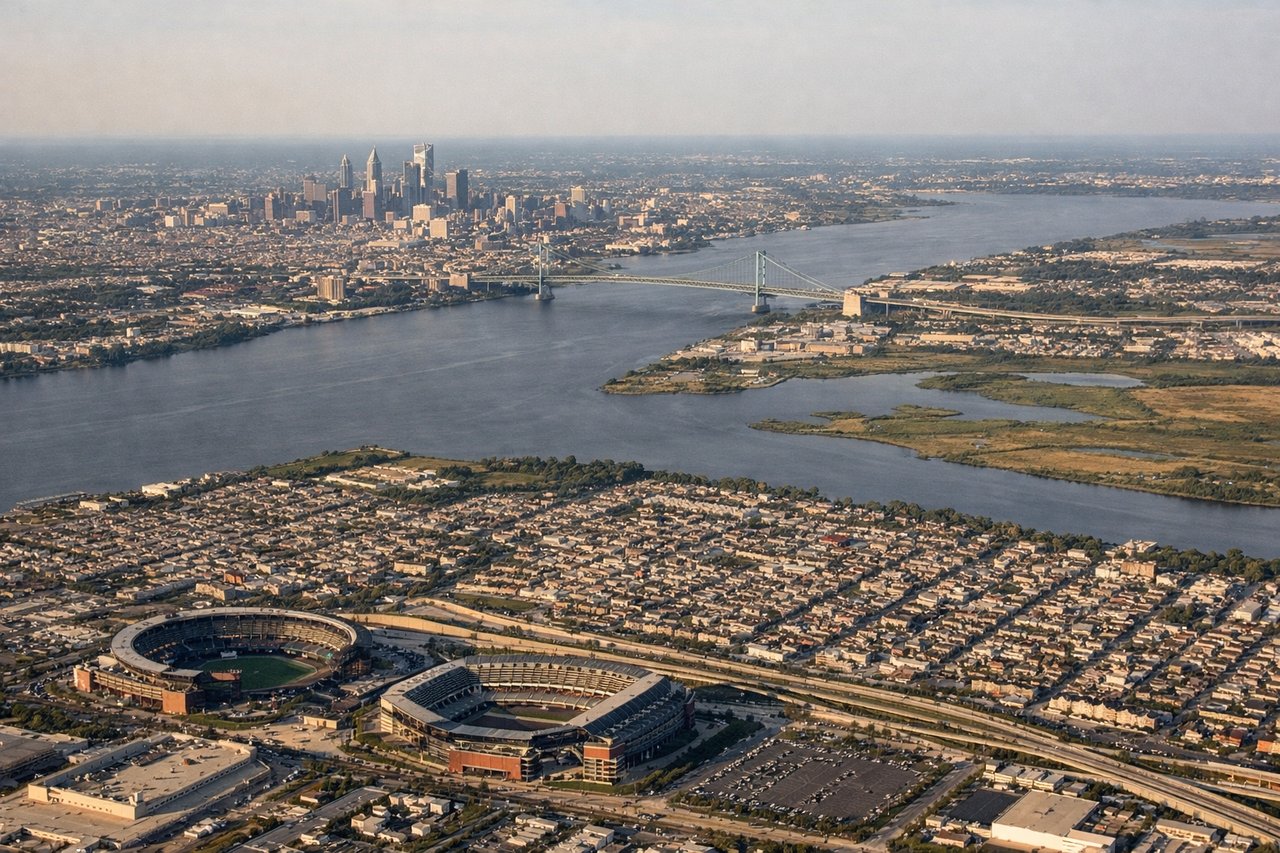
Landing at PHL
LEFTLeft-side seats capture the Schuylkill River, Philadelphia's downtown skyline, and the approach over the city proper. PHL typically lands runways 9L/9R or 27L/27R; eastbound approaches (runways 9L/9R) bring you in from the northwest, making the left side ideal for viewing the city center and river valley.
Will your flight be in sunlight?
Pick a date and time in the Sun Map to watch the sun move across your whole flight.
About This Route
Which side of the plane should I sit on flying from Detroit Metro Wayne Co (DTW) to Philadelphia International (PHL)?
Sit on the Left side of the plane for the best views on flights from Detroit to Philadelphia. While takeoff favors the right for Detroit's water features, the landing view from the left—approaching Philadelphia's downtown and river system—is more visually distinctive and memorable. The left side captures the city's iconic skyline and geographic setting, making it the better overall choice for this route.
What can I see during takeoff from Detroit Metro Wayne Co in Detroit?
During takeoff from Detroit Metro Wayne Co (DTW), sit on the Right side for the best views. Right-side seats offer views of the Detroit River and Windsor, Ontario immediately after departure. DTW typically departs runways 3L/3R or 22L/22R; northbound departures (runways 3L/3R) provide the clearest view of the river corridor and Lake St. Clair as you climb northeast. Notable sights include: Detroit River, Windsor Ontario skyline, Lake St. Clair, Belle Isle.
What can I see when landing at Philadelphia International in Philadelphia?
When landing at Philadelphia International (PHL), sit on the Left side for the best views. Left-side seats capture the Schuylkill River, Philadelphia's downtown skyline, and the approach over the city proper. PHL typically lands runways 9L/9R or 27L/27R; eastbound approaches (runways 9L/9R) bring you in from the northwest, making the left side ideal for viewing the city center and river valley. Notable sights include: Schuylkill River, Philadelphia downtown skyline, Benjamin Franklin Bridge, Delaware River.
How long is the flight from Detroit to Philadelphia?
The flight from Detroit Metro Wayne Co (DTW) to Philadelphia International (PHL) takes about 2 hours 15 minutes. The shortest flight path between them is 452 miles (728 km); winds and air traffic control usually add a few percent.
What does the Detroit to Philadelphia flight path pass over?
The flight path crosses central Ohio, passing east of Columbus and west of the Appalachian foothills. At cruise altitude (around 30,000 feet), you'll see the Ohio River valley emerging in the second half of the flight, with the Appalachian plateau becoming visible as a series of ridges and valleys on the eastern horizon as you approach Pennsylvania. The landscape transitions from flat Midwestern farmland to increasingly rolling terrain with forest cover.