The right side offers sustained mountain scenery through the cruise phase — the northern Rocky Mountain Front near Glacier National Park and the North Cascades — giving it more consistent visual interest than the flatter Great Plains views on the left, even though the left edges ahead briefly during the Rainier approach.
Flown DTW to SEA? Did we get it right?
Flight Path
Detroit to Seattle is 1,922 miles (3,093 km), a flight of about 4 hours 35 minutes.
Northern Rocky Mountain Front near Glacier National Park, Flathead Valley in Montana, and the Missouri River basin crossing North Dakota's plains
Great circle distance and headings ›


Phase by phase
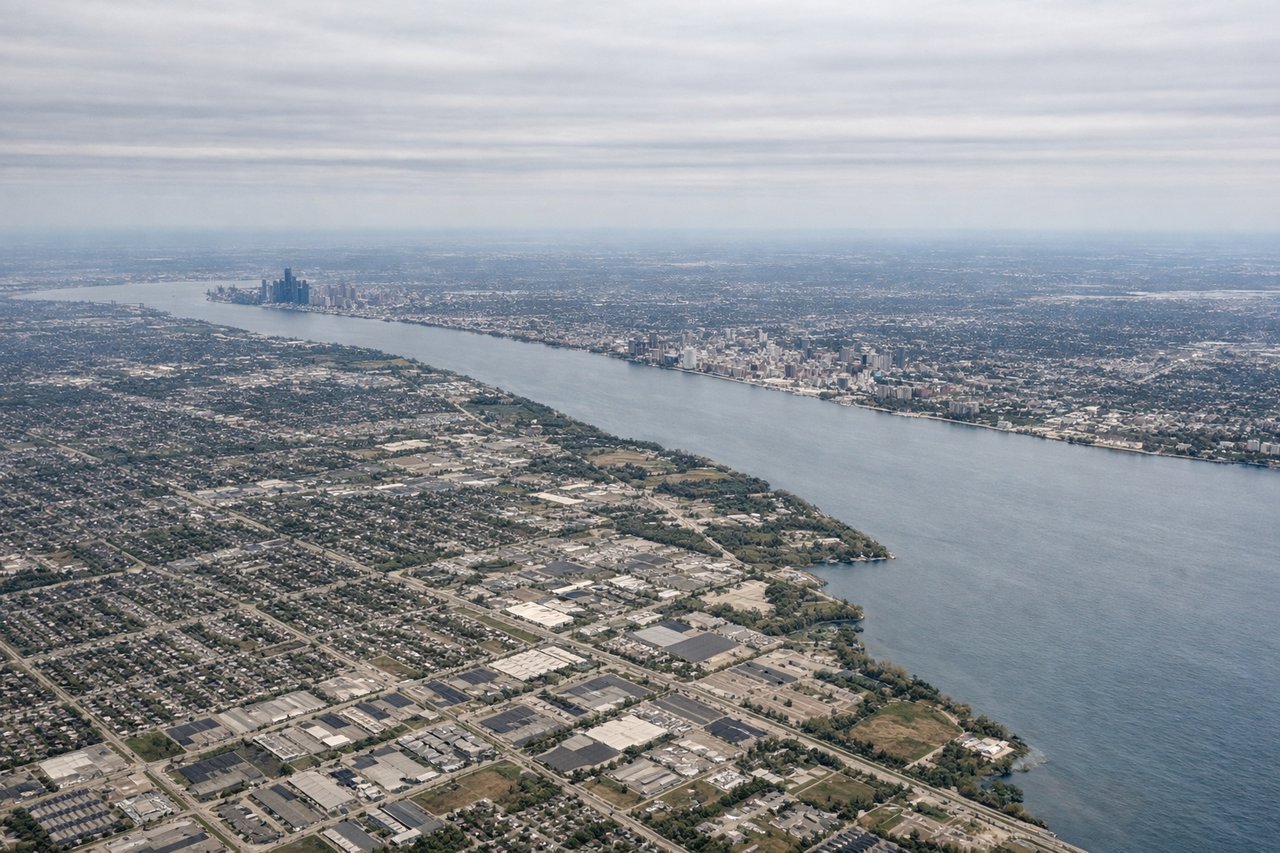
Takeoff from DTW
RIGHTDeparting DTW and turning onto the northwest heading toward Seattle, the right side briefly catches the Detroit skyline, the Detroit River, and Lake St. Clair before the aircraft climbs over flat Michigan farmland.
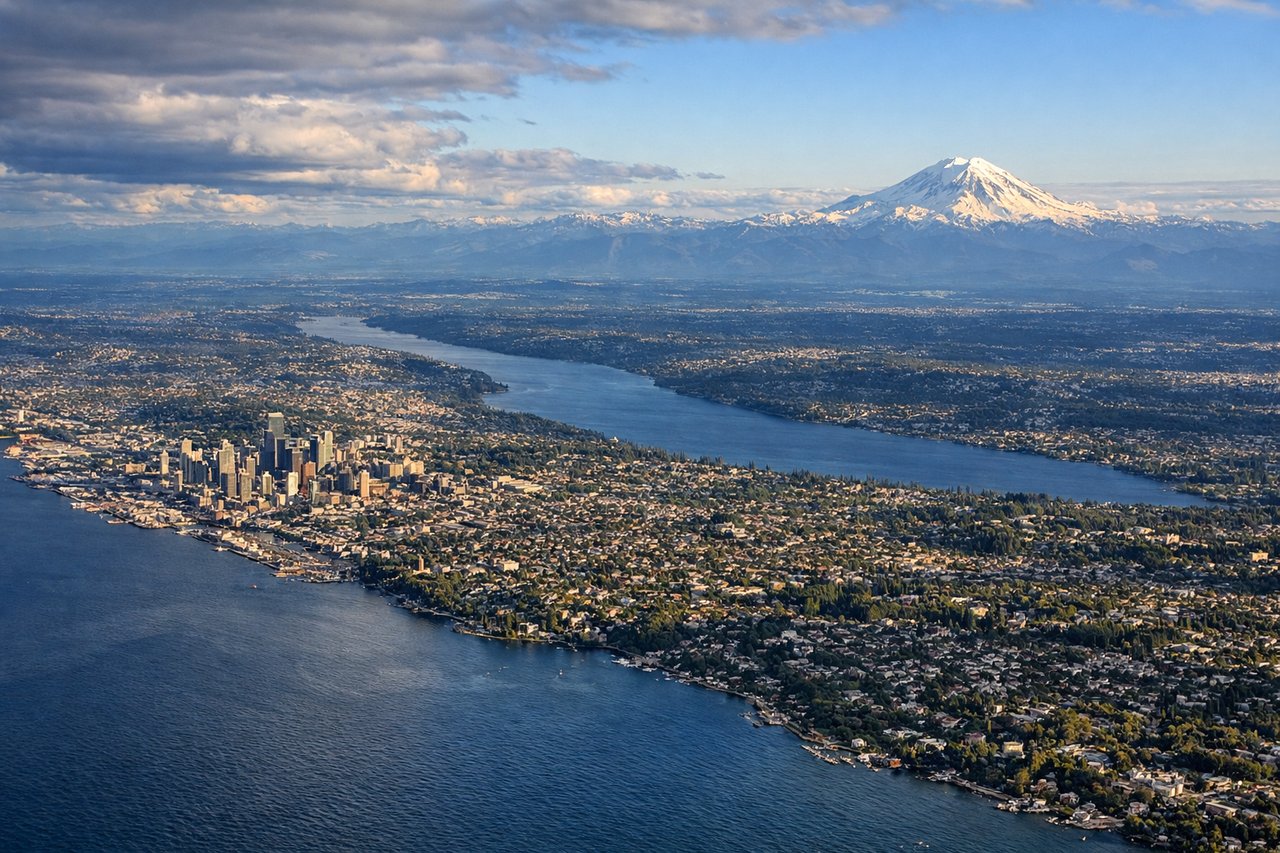
Landing at SEA
LEFTOn the descent into SEA from the east, the left side faces south, giving a clear view of Mount Rainier's snow-capped summit rising above Puget Sound, along with the Seattle skyline and the Olympic Mountains beyond.
Will your flight be in sunlight?
Pick a date and time in the Sun Map to watch the sun move across your whole flight.
About This Route
Which side of the plane should I sit on flying from Detroit Metro Wayne Co (DTW) to Seattle Tacoma International (SEA)?
Sit on the Right side of the plane for the best views on flights from Detroit to Seattle. The right side offers sustained mountain scenery through the cruise phase — the northern Rocky Mountain Front near Glacier National Park and the North Cascades — giving it more consistent visual interest than the flatter Great Plains views on the left, even though the left edges ahead briefly during the Rainier approach.
What can I see during takeoff from Detroit Metro Wayne Co in Detroit?
During takeoff from Detroit Metro Wayne Co (DTW), sit on the Right side for the best views. Departing DTW and turning onto the northwest heading toward Seattle, the right side briefly catches the Detroit skyline, the Detroit River, and Lake St. Clair before the aircraft climbs over flat Michigan farmland. Notable sights include: Detroit skyline, Detroit River, Lake St. Clair, Michigan farmland patchwork.
What can I see when landing at Seattle Tacoma International in Seattle?
When landing at Seattle Tacoma International (SEA), sit on the Left side for the best views. On the descent into SEA from the east, the left side faces south, giving a clear view of Mount Rainier's snow-capped summit rising above Puget Sound, along with the Seattle skyline and the Olympic Mountains beyond. Notable sights include: Mount Rainier, Puget Sound, Seattle skyline, Olympic Mountains.
How long is the flight from Detroit to Seattle?
The flight from Detroit Metro Wayne Co (DTW) to Seattle Tacoma International (SEA) takes about 4 hours 35 minutes. The shortest flight path between them is 1,922 miles (3,093 km); winds and air traffic control usually add a few percent.
What does the Detroit to Seattle flight path pass over?
Northern Rocky Mountain Front near Glacier National Park, Flathead Valley in Montana, and the Missouri River basin crossing North Dakota's plains