Right-side seats capture the most dramatic scenery: the Irish coastline and Dublin Bay during departure, then the Mediterranean-like seascapes over southern Europe, North Africa, and the Indian Ocean during the long cruise. Left offers better landing views but right dominates the majority of this ultra-long flight.
Flown DUB to ADL? Did we get it right?
Flight Path
Dublin to Adelaide is 10,310 miles (16,592 km), a flight of about 22 hours.
The flight path typically crosses the English Channel, then the Alps (visible as a white ridge if flying south of direct routing), the Mediterranean Sea, North Africa (Sahara Desert with its distinctive tan coloration and occasional wadi patterns), the Red Sea, the Arabian Peninsula, and the Indian Ocean. If routing via Middle East hub, you'll see the Persian Gulf and Arabian deserts. The Indian Ocean crossing dominates the longest segment—typically 8-10 hours of open water with occasional island clusters visible (Maldives, Chagos Archipelago, or Mauritius depending on routing). The final approach crosses the Australian outback with its rust-red terrain and sparse vegetation before reaching Adelaide's coastal plains.
Great circle distance and headings ›


Phase by phase

Takeoff from DUB
RIGHTRight-side seats offer views of Dublin Bay and the Irish coastline as the aircraft climbs eastward over the Irish Sea. You'll see the distinctive curve of the bay and the Wicklow Mountains inland to the south.
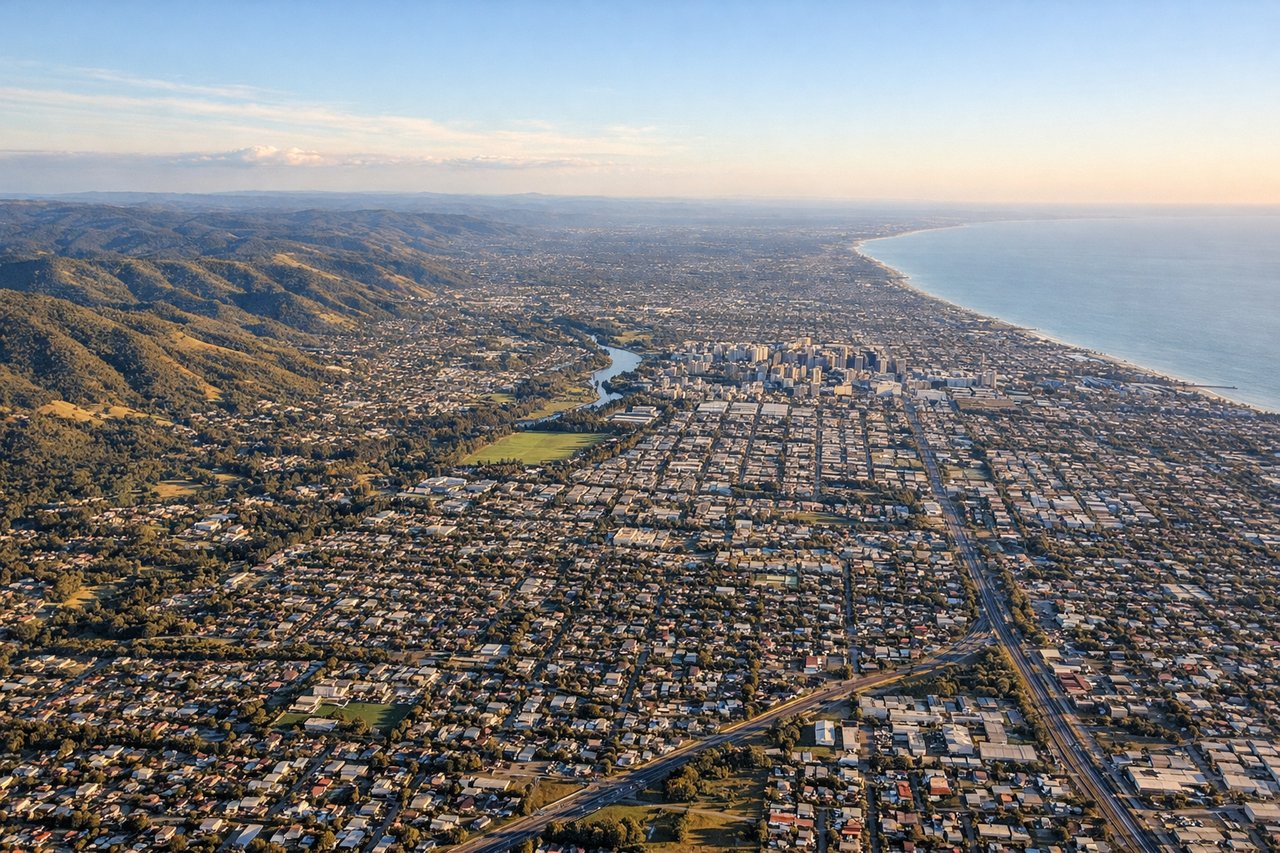
Landing at ADL
LEFTLeft-side seats provide views of the Adelaide Hills and Mount Lofty Ranges as the aircraft descends westward toward Adelaide International. The terrain becomes increasingly visible with the city sprawl and surrounding parklands coming into view.
Will your flight be in sunlight?
Pick a date and time in the Sun Map to watch the sun move across your whole flight.
About This Route
Which side of the plane should I sit on flying from Dublin (DUB) to Adelaide International (ADL)?
Sit on the Right side of the plane for the best views on flights from Dublin to Adelaide. Right-side seats capture the most dramatic scenery: the Irish coastline and Dublin Bay during departure, then the Mediterranean-like seascapes over southern Europe, North Africa, and the Indian Ocean during the long cruise. Left offers better landing views but right dominates the majority of this ultra-long flight.
What can I see during takeoff from Dublin in Dublin?
During takeoff from Dublin (DUB), sit on the Right side for the best views. Right-side seats offer views of Dublin Bay and the Irish coastline as the aircraft climbs eastward over the Irish Sea. You'll see the distinctive curve of the bay and the Wicklow Mountains inland to the south. Notable sights include: Dublin Bay, Irish Sea, Wicklow Mountains, Howth Peninsula.
What can I see when landing at Adelaide International in Adelaide?
When landing at Adelaide International (ADL), sit on the Left side for the best views. Left-side seats provide views of the Adelaide Hills and Mount Lofty Ranges as the aircraft descends westward toward Adelaide International. The terrain becomes increasingly visible with the city sprawl and surrounding parklands coming into view. Notable sights include: Mount Lofty Ranges, Adelaide Hills, Barossa Valley foothills, Gulf St. Vincent coastline.
How long is the flight from Dublin to Adelaide?
The flight from Dublin (DUB) to Adelaide International (ADL) takes about 22 hours. The shortest flight path between them is 10,310 miles (16,592 km); winds and air traffic control usually add a few percent.
What does the Dublin to Adelaide flight path pass over?
The flight path typically crosses the English Channel, then the Alps (visible as a white ridge if flying south of direct routing), the Mediterranean Sea, North Africa (Sahara Desert with its distinctive tan coloration and occasional wadi patterns), the Red Sea, the Arabian Peninsula, and the Indian Ocean. If routing via Middle East hub, you'll see the Persian Gulf and Arabian deserts. The Indian Ocean crossing dominates the longest segment—typically 8-10 hours of open water with occasional island clusters visible (Maldives, Chagos Archipelago, or Mauritius depending on routing). The final approach crosses the Australian outback with its rust-red terrain and sparse vegetation before reaching Adelaide's coastal plains.