The left side delivers the most memorable moments of the flight — Dublin Bay and the Wicklow Mountains on departure, and the Ria Formosa lagoon with its barrier islands on arrival — while the right side spends much of the cruise over open Atlantic and Bay of Biscay water with fewer standout features.
Flight Path
The route crosses the open waters of the Bay of Biscay, passes near the Galician coastline around Santiago de Compostela, and continues south over Portugal's Douro and Tagus river valleys near Porto and Lisbon before reaching the Algarve coast.
Great circle distance and headings ›Phase by phase
Takeoff from DUB
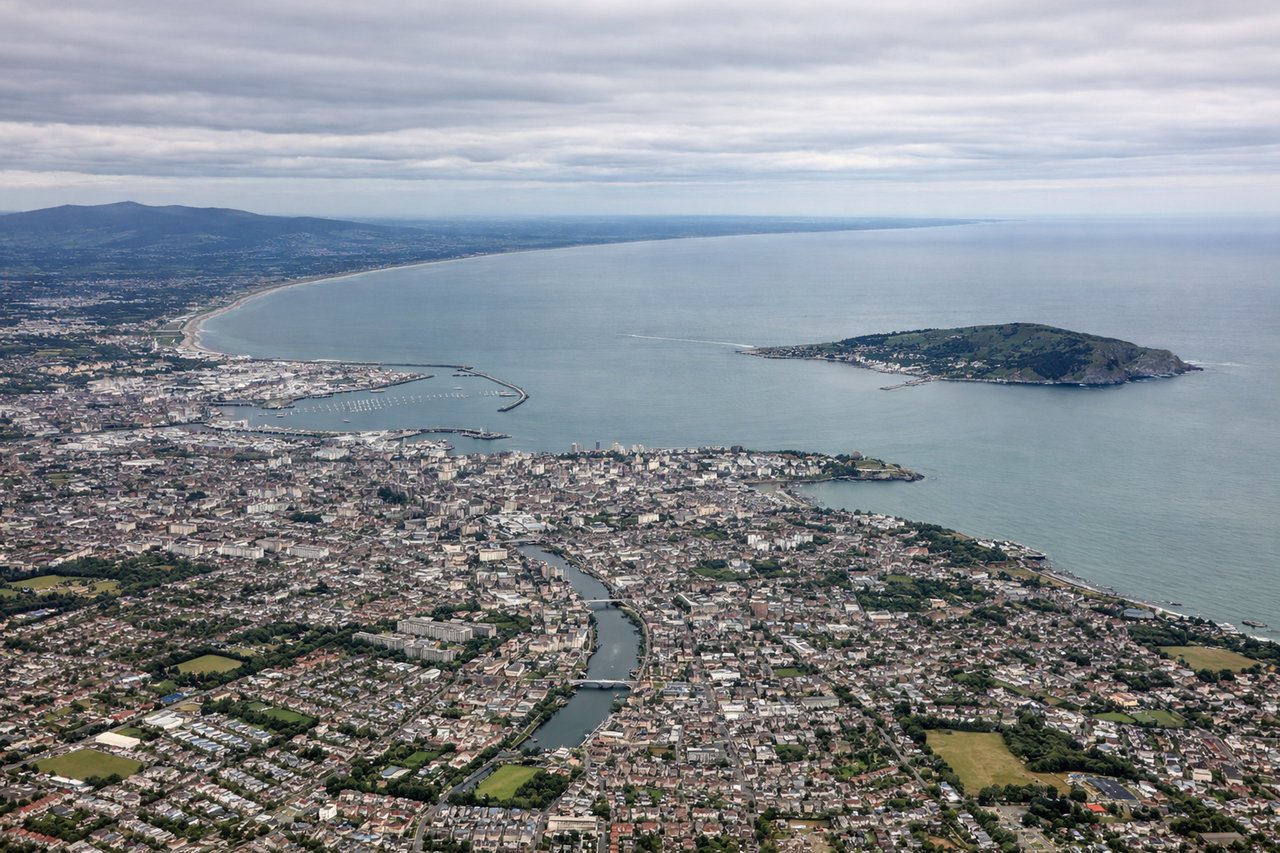
LEFTDublin's predominant westerly departure (runway 28) is followed by a left turn onto the southbound track toward Faro, swinging Dublin Bay, the city center, and the Wicklow Mountains into view on the left side of the aircraft.
Landing at FAO
LEFTFaro's preferred runway 28 approach comes in from the east along the Algarve coast, and with the aircraft heading west, the Ria Formosa lagoon, its barrier islands, and the open Atlantic sit on the left side of the cabin.
Will your flight be in sunlight?
See exactly which side of the plane gets sun and shade at your departure time.
About This Route
Which side of the plane should I sit on flying from Dublin (DUB) to Faro (FAO)?
Sit on the Left side of the plane for the best views on flights from Dublin to Faro. The left side delivers the most memorable moments of the flight — Dublin Bay and the Wicklow Mountains on departure, and the Ria Formosa lagoon with its barrier islands on arrival — while the right side spends much of the cruise over open Atlantic and Bay of Biscay water with fewer standout features.
What can I see during takeoff from Dublin in Dublin?
During takeoff from Dublin (DUB), sit on the Left side for the best views. Dublin's predominant westerly departure (runway 28) is followed by a left turn onto the southbound track toward Faro, swinging Dublin Bay, the city center, and the Wicklow Mountains into view on the left side of the aircraft. Notable sights include: Dublin Bay and Poolbeg towers, Dublin city skyline, Wicklow Mountains (Sugarloaf, Lugnaquilla), Irish Sea coastline.
What can I see when landing at Faro in Faro?
When landing at Faro (FAO), sit on the Left side for the best views. Faro's preferred runway 28 approach comes in from the east along the Algarve coast, and with the aircraft heading west, the Ria Formosa lagoon, its barrier islands, and the open Atlantic sit on the left side of the cabin. Notable sights include: Ria Formosa lagoon and barrier islands, Faro old town waterfront, Atlantic coastline, Algarve salt marshes.
How long is the flight from Dublin to Faro?
The flight from Dublin (DUB) to Faro (FAO) takes 2h 55m.
What does the Dublin to Faro flight path pass over?
The route crosses the open waters of the Bay of Biscay, passes near the Galician coastline around Santiago de Compostela, and continues south over Portugal's Douro and Tagus river valleys near Porto and Lisbon before reaching the Algarve coast.