Right side scores higher due to superior landing views at Haneda. While both sides offer modest takeoff scenery from Dublin, the right side's approach to Tokyo Bay—with its distinctive urban waterfront, Rainbow Bridge, and potential Mount Fuji sighting—provides significantly more memorable and recognizable landmarks than the left side's view of Tokyo's inland districts and suburbs.
Flown DUB to HND? Did we get it right?
Flight Path
Dublin to Tokyo is 5,962 miles (9,594 km), a flight of about 11 hours 15 minutes.
The flight crosses the North Atlantic with minimal scenic features for approximately 6 hours (open ocean, occasional cloud formations). Over Greenland's southern coast, the right side may glimpse ice sheets and fjords if flying a northern polar route. Crossing into Russian airspace, the flight passes over the Siberian taiga (vast forested plains with limited visual distinction). The route then crosses the Kamchatka Peninsula (volcanic terrain, mountains) before descending toward Japan. The right side generally offers better views of Kamchatka's volcanic peaks and the transition into Japanese airspace over the Sea of Okhotsk.
Great circle distance and headings ›


Phase by phase

Takeoff from DUB
RIGHTRight side captures Dublin Bay and the Irish coastline during initial climb. The bay's distinctive shape, coastal towns along the Irish Sea, and the Wicklow Mountains to the south provide immediate visual interest as the aircraft climbs westward over water.
Landing at HND
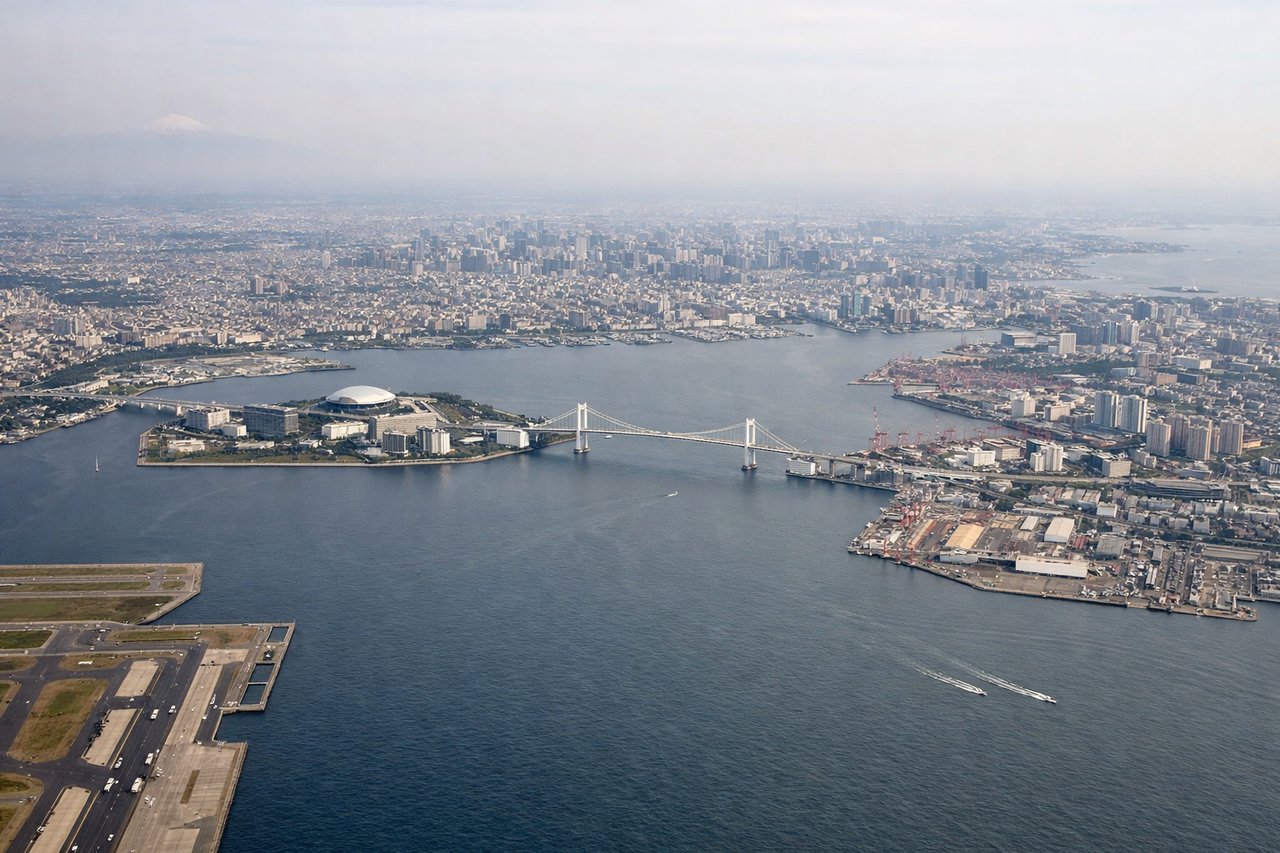
RIGHTRight side offers superior views during approach to Haneda. In typical daytime south-wind conditions, aircraft descend over Tokyo Bay from the south, providing views of the bay's industrial waterfront, Rainbow Bridge, Tokyo's urban sprawl, and Mount Fuji on clear days. Even in north-wind conditions with approaches from the north, the right side captures the city's eastern districts and Tokyo Bay's eastern shore.
Will your flight be in sunlight?
Pick a date and time in the Sun Map to watch the sun move across your whole flight.
About This Route
Which side of the plane should I sit on flying from Dublin (DUB) to Tokyo International (HND)?
Sit on the Right side of the plane for the best views on flights from Dublin to Tokyo. Right side scores higher due to superior landing views at Haneda. While both sides offer modest takeoff scenery from Dublin, the right side's approach to Tokyo Bay—with its distinctive urban waterfront, Rainbow Bridge, and potential Mount Fuji sighting—provides significantly more memorable and recognizable landmarks than the left side's view of Tokyo's inland districts and suburbs.
What can I see during takeoff from Dublin in Dublin?
During takeoff from Dublin (DUB), sit on the Right side for the best views. Right side captures Dublin Bay and the Irish coastline during initial climb. The bay's distinctive shape, coastal towns along the Irish Sea, and the Wicklow Mountains to the south provide immediate visual interest as the aircraft climbs westward over water. Notable sights include: Dublin Bay, Irish Sea coastline, Wicklow Mountains (south), Howth Peninsula.
What can I see when landing at Tokyo International in Tokyo?
When landing at Tokyo International (HND), sit on the Right side for the best views. Right side offers superior views during approach to Haneda. In typical daytime south-wind conditions, aircraft descend over Tokyo Bay from the south, providing views of the bay's industrial waterfront, Rainbow Bridge, Tokyo's urban sprawl, and Mount Fuji on clear days. Even in north-wind conditions with approaches from the north, the right side captures the city's eastern districts and Tokyo Bay's eastern shore. Notable sights include: Tokyo Bay, Rainbow Bridge, Tokyo metropolitan skyline, Mount Fuji (on clear days, visible to the west).
How long is the flight from Dublin to Tokyo?
The flight from Dublin (DUB) to Tokyo International (HND) takes about 11 hours 15 minutes. The shortest flight path between them is 5,962 miles (9,594 km); winds and air traffic control usually add a few percent.
What does the Dublin to Tokyo flight path pass over?
The flight crosses the North Atlantic with minimal scenic features for approximately 6 hours (open ocean, occasional cloud formations). Over Greenland's southern coast, the right side may glimpse ice sheets and fjords if flying a northern polar route. Crossing into Russian airspace, the flight passes over the Siberian taiga (vast forested plains with limited visual distinction). The route then crosses the Kamchatka Peninsula (volcanic terrain, mountains) before descending toward Japan. The right side generally offers better views of Kamchatka's volcanic peaks and the transition into Japanese airspace over the Sea of Okhotsk.