While the left side offers a brief mountain view at departure, the right side benefits from possible glimpses of Newfoundland's coastline during the North Atlantic crossing plus a strong, clear approach over the Delaware River and Philadelphia's skyline, giving it more consistent scenic value across the flight.
Flight Path
North Atlantic Ocean, with the flight path passing south of Greenland and near the Newfoundland coast before continuing over the Gulf of Maine and New England en route to the mid-Atlantic seaboard
Great circle distance and headings ›.jpg?width=600)
.jpg?width=600)
Phase by phase
Takeoff from DUB
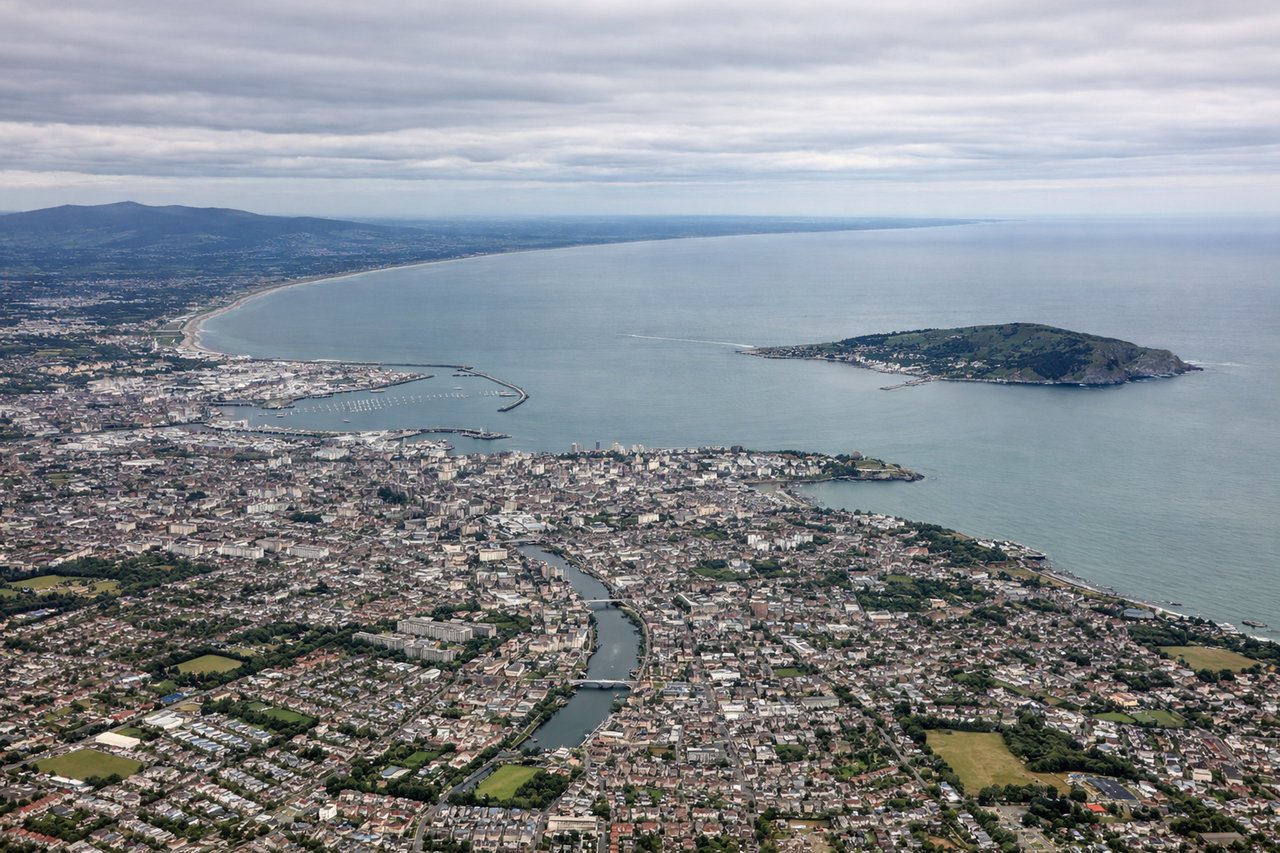
LEFTDeparting Dublin on runway 28, aircraft typically bank south-southwest toward the Atlantic track, bringing the Wicklow Mountains and Dublin Bay's coastline into view on the left side during initial climb.

Landing at PHL
RIGHTArrivals into PHL from the transatlantic track typically approach from the northeast and land westbound on runway 27, putting the Philadelphia skyline and the Delaware River on the right side of the aircraft during final descent.
Landmarks on this routeAll landmarks →
Will your flight be in sunlight?
See exactly which side of the plane gets sun and shade at your departure time.
About This Route
Which side of the plane should I sit on flying from Dublin (DUB) to Philadelphia International (PHL)?
Sit on the Right side of the plane for the best views on flights from Dublin to Philadelphia. While the left side offers a brief mountain view at departure, the right side benefits from possible glimpses of Newfoundland's coastline during the North Atlantic crossing plus a strong, clear approach over the Delaware River and Philadelphia's skyline, giving it more consistent scenic value across the flight.
What can I see during takeoff from Dublin in Dublin?
During takeoff from Dublin (DUB), sit on the Left side for the best views. Departing Dublin on runway 28, aircraft typically bank south-southwest toward the Atlantic track, bringing the Wicklow Mountains and Dublin Bay's coastline into view on the left side during initial climb. Notable sights include: Wicklow Mountains, Dublin Bay, Irish Sea coastline, Dublin city outskirts.
What can I see when landing at Philadelphia International in Philadelphia?
When landing at Philadelphia International (PHL), sit on the Right side for the best views. Arrivals into PHL from the transatlantic track typically approach from the northeast and land westbound on runway 27, putting the Philadelphia skyline and the Delaware River on the right side of the aircraft during final descent. Notable sights include: Philadelphia skyline, Delaware River, Camden waterfront, South Jersey suburbs.
How long is the flight from Dublin to Philadelphia?
The flight from Dublin (DUB) to Philadelphia International (PHL) takes 7h 20m.
What does the Dublin to Philadelphia flight path pass over?
North Atlantic Ocean, with the flight path passing south of Greenland and near the Newfoundland coast before continuing over the Gulf of Maine and New England en route to the mid-Atlantic seaboard