While Dublin's departure offers a nice but modest urban and coastal glimpse, the approach into Calgary delivers a genuine mountain spectacle with the Rockies dominating the horizon, making the right side the stronger overall choice.
Flight Path
Southern tip of Greenland's ice sheet, Davis Strait, Labrador coastline, Hudson Bay, and the vast Canadian Shield and prairie farmland before the Rockies come into view
Great circle distance and headings ›Phase by phase
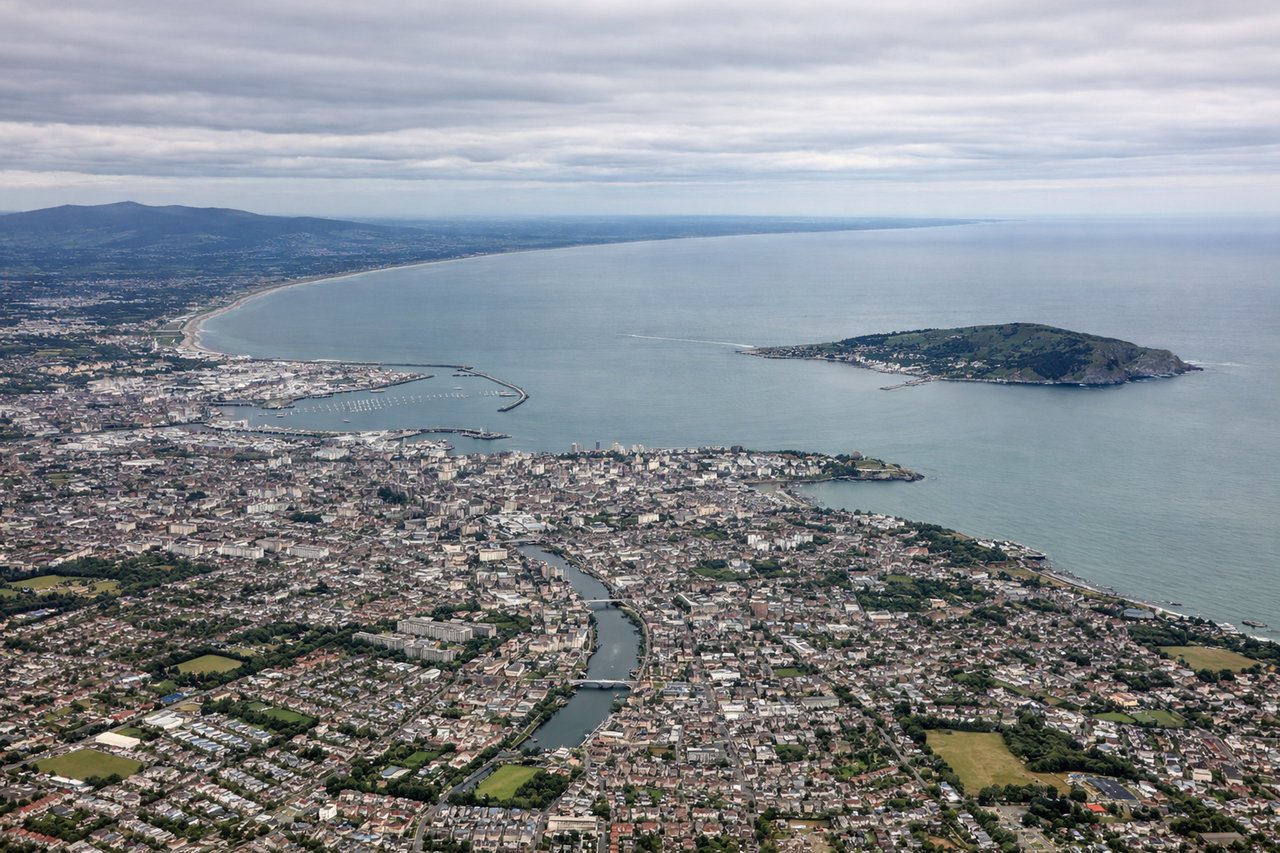
Takeoff from DUB
LEFTDeparting west off runway 28, the aircraft's slight right turn towards its transatlantic heading briefly opens up the left side to Dublin city, Dublin Bay, and the Wicklow Mountains rising to the south. It's a compact but genuine landmark cluster before the climb over the Irish midlands.
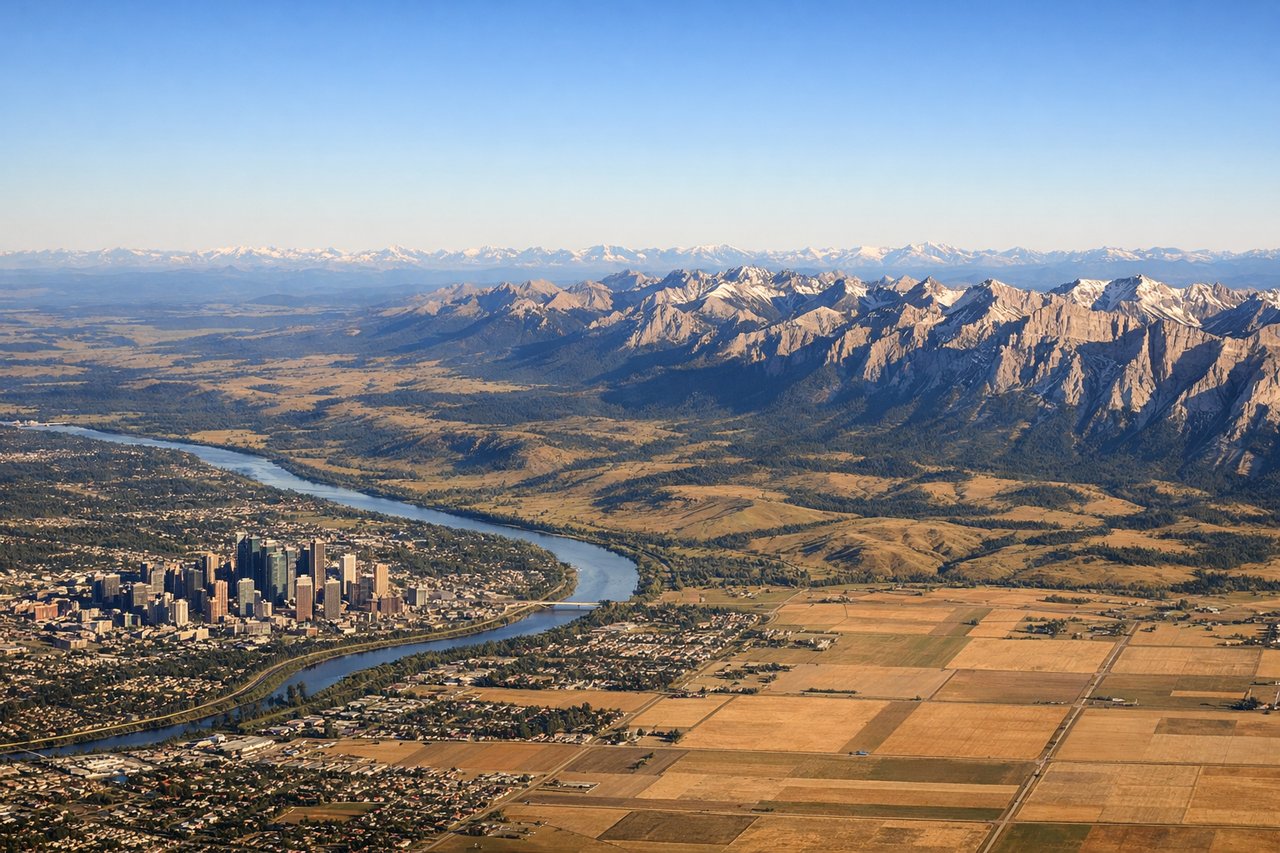
Landing at YYC
RIGHTArriving from the north on the typical southbound approach to runway 17, the descent tracks down the eastern edge of the Rockies, putting the jagged snow-capped peaks squarely on the right side of the aircraft. This is the flight's standout scenic moment.
Landmarks on this routeAll landmarks →
Will your flight be in sunlight?
See exactly which side of the plane gets sun and shade at your departure time.
About This Route
Which side of the plane should I sit on flying from Dublin (DUB) to Calgary International (YYC)?
Sit on the Right side of the plane for the best views on flights from Dublin to Calgary. While Dublin's departure offers a nice but modest urban and coastal glimpse, the approach into Calgary delivers a genuine mountain spectacle with the Rockies dominating the horizon, making the right side the stronger overall choice.
What can I see during takeoff from Dublin in Dublin?
During takeoff from Dublin (DUB), sit on the Left side for the best views. Departing west off runway 28, the aircraft's slight right turn towards its transatlantic heading briefly opens up the left side to Dublin city, Dublin Bay, and the Wicklow Mountains rising to the south. It's a compact but genuine landmark cluster before the climb over the Irish midlands. Notable sights include: Dublin city center and docklands, Dublin Bay, Wicklow Mountains, Irish Sea coastline.
What can I see when landing at Calgary International in Calgary?
When landing at Calgary International (YYC), sit on the Right side for the best views. Arriving from the north on the typical southbound approach to runway 17, the descent tracks down the eastern edge of the Rockies, putting the jagged snow-capped peaks squarely on the right side of the aircraft. This is the flight's standout scenic moment. Notable sights include: Canadian Rocky Mountains foothills, Bow River valley, Calgary skyline, prairie-to-mountain transition zone.
How long is the flight from Dublin to Calgary?
The flight from Dublin (DUB) to Calgary International (YYC) takes 8h 50m.
What does the Dublin to Calgary flight path pass over?
Southern tip of Greenland's ice sheet, Davis Strait, Labrador coastline, Hudson Bay, and the vast Canadian Shield and prairie farmland before the Rockies come into view