Dubai to Seattle is 7,406 miles (11,919 km), a flight of about 16 hours 30 minutes.
While takeoff offers interesting coastal views, the landing approach into Seattle provides more dramatic and iconic scenery with Mount Rainier and the Cascade Range. Left-side seats capture the mountain views that make this route visually distinctive.
Flight Path
This route crosses the Caspian Sea, southern Russia (Caucasus Mountains visible from altitude), Kazakhstan steppe, and eventually enters North American airspace over Canada. The flight typically passes over or near the Ural Mountains, crosses into Siberia, and eventually descends across the Canadian Rockies before reaching the Pacific Northwest. Notable midpoint landmarks include the Caucasus Mountains (early flight), the vast Siberian plains (mid-flight), and the Canadian Rockies (final approach to North America).
Great circle distance and headings ›.jpg?width=600)
_and_the_Dubai_skyline_(25781049892).jpg?width=600)
.jpg?width=600)


Phase by phase

Takeoff from DXB
RIGHTRight-side seats offer views of the Persian Gulf coastline and Dubai's waterfront development as the aircraft climbs northwestward. You'll see the contrast between the urban sprawl and open water clearly during the initial climb.
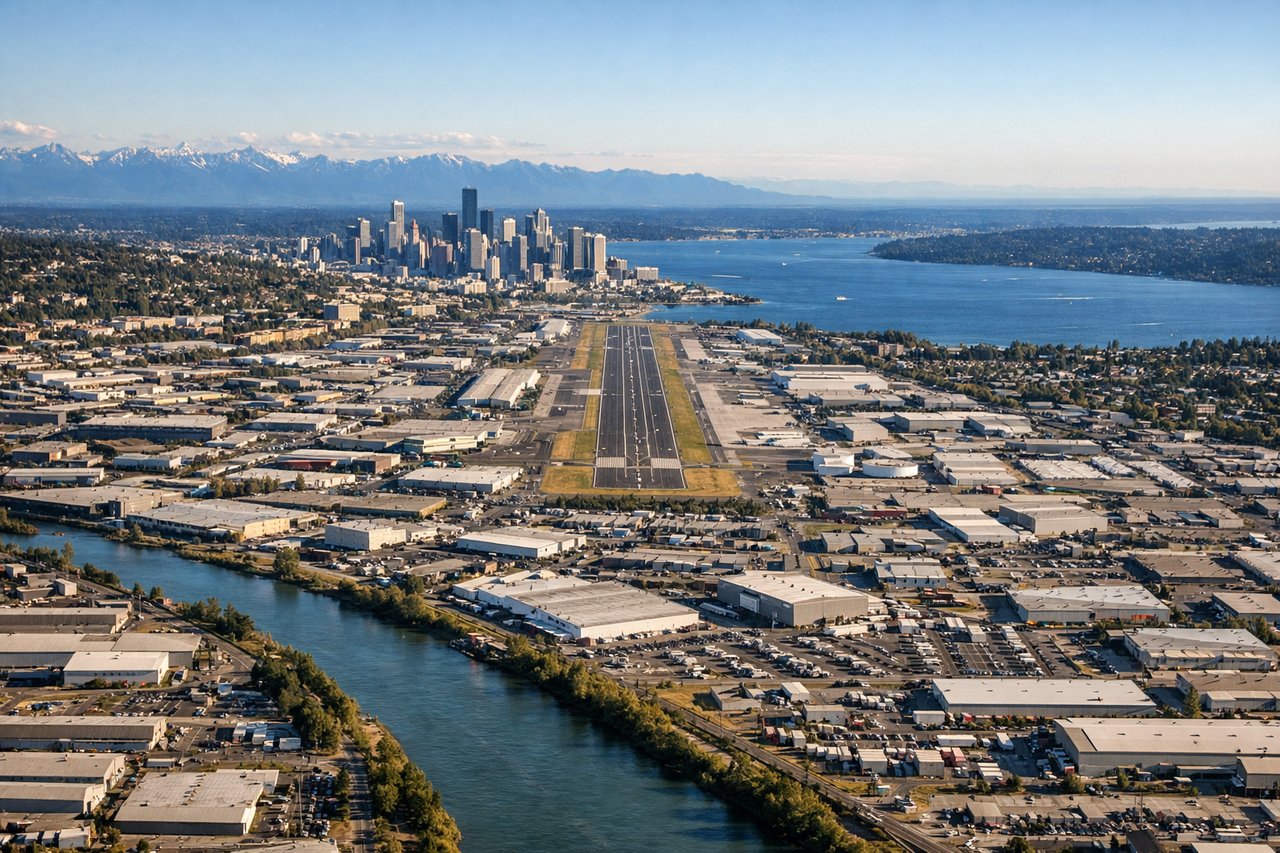
Landing at BFI
LEFTLeft-side seats provide excellent views of the Cascade Range and Mount Rainier during the descent into Seattle. The mountain is typically visible 40-50 miles southeast of the airport and dominates the landscape during final approach from the east.
Landmarks on this routeAll landmarks →
Will your flight be in sunlight?
Pick a date and time in the Sun Map to watch the sun move across your whole flight.
About This Route
Which side of the plane should I sit on flying from Dubai International (DXB) to Boeing Fld King Co International (BFI)?
Sit on the Left side of the plane for the best views on flights from Dubai to Seattle. While takeoff offers interesting coastal views, the landing approach into Seattle provides more dramatic and iconic scenery with Mount Rainier and the Cascade Range. Left-side seats capture the mountain views that make this route visually distinctive.
What can I see during takeoff from Dubai International in Dubai?
During takeoff from Dubai International (DXB), sit on the Right side for the best views. Right-side seats offer views of the Persian Gulf coastline and Dubai's waterfront development as the aircraft climbs northwestward. You'll see the contrast between the urban sprawl and open water clearly during the initial climb. Notable sights include: Persian Gulf, Dubai Marina and Palm Jumeirah, Jebel Ali Port, Arabian Desert inland.
What can I see when landing at Boeing Fld King Co International in Seattle?
When landing at Boeing Fld King Co International (BFI), sit on the Left side for the best views. Left-side seats provide excellent views of the Cascade Range and Mount Rainier during the descent into Seattle. The mountain is typically visible 40-50 miles southeast of the airport and dominates the landscape during final approach from the east. Notable sights include: Mount Rainier, Cascade Range, Puget Sound, Lake Washington.
How long is the flight from Dubai to Seattle?
The flight from Dubai International (DXB) to Boeing Fld King Co International (BFI) takes about 16 hours 30 minutes. The shortest flight path between them is 7,406 miles (11,919 km); winds and air traffic control usually add a few percent.
What does the Dubai to Seattle flight path pass over?
This route crosses the Caspian Sea, southern Russia (Caucasus Mountains visible from altitude), Kazakhstan steppe, and eventually enters North American airspace over Canada. The flight typically passes over or near the Ural Mountains, crosses into Siberia, and eventually descends across the Canadian Rockies before reaching the Pacific Northwest. Notable midpoint landmarks include the Caucasus Mountains (early flight), the vast Siberian plains (mid-flight), and the Canadian Rockies (final approach to North America).