Dubai to Bologna is 2,787 miles (4,485 km), a flight of about 6 hours 15 minutes.
While the takeoff offers coastal interest, the landing approach provides more dramatic and varied scenery—the Po Valley's agricultural geometry, the Apennine Mountains, and Bologna's historic urban core all visible in sequence. Right side captures the most visually distinctive features of the destination region.
Flight Path
The flight path crosses the eastern Mediterranean, passing over southern Greece (Peloponnese visible from altitude), then the Ionian Sea. You'll see the Greek islands scattered across the sea, the Albanian and Greek coastlines, then transition over the Balkans (mountains of Albania and Macedonia visible), before crossing into central Europe. The Adriatic Sea lies to the left (west) for much of the central portion. As you approach Italy, the Alps become visible on the horizon, and the landscape transitions from Balkan mountains to the pre-Alpine foothills and eventually the flat Po Valley. The entire route offers water, mountain ranges, and the gradual shift from Mediterranean to temperate European geography.
Great circle distance and headings ›_and_the_Dubai_skyline_(25781049892).jpg?width=600)
.jpg?width=600)


Phase by phase
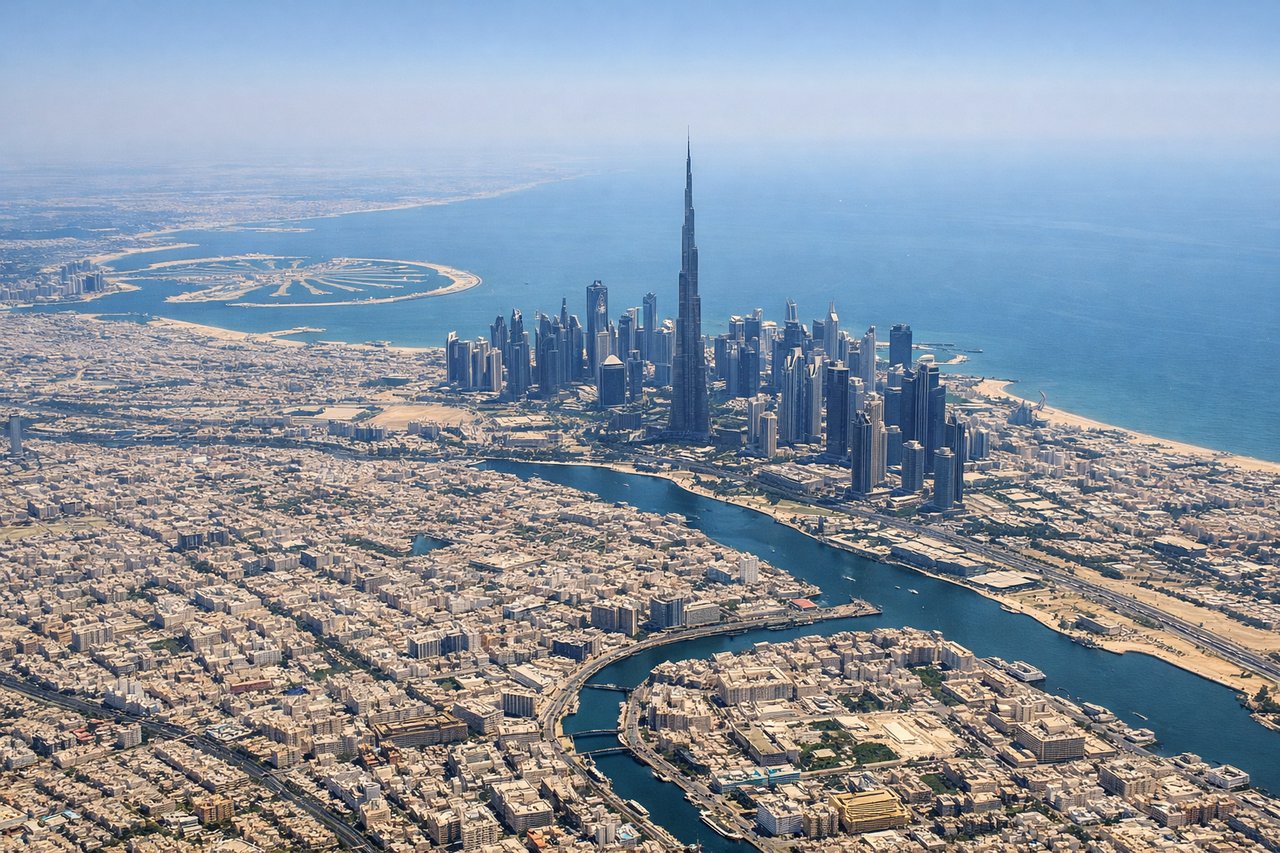
Takeoff from DXB
LEFTLeft side offers views of the Persian Gulf coastline and the Dubai urban sprawl extending northward. You'll see the contrast between developed areas and desert inland, plus the curve of the coast as the aircraft climbs northwestward.
Landing at BLQ
RIGHTRight side provides excellent views during descent into Bologna. You'll see the Po River valley, the Apennine Mountains to the south, and the transition from Alpine foothills to the flat Emilia-Romagna plain where Bologna sits.
Landmarks on this routeAll landmarks →
Will your flight be in sunlight?
Pick a date and time in the Sun Map to watch the sun move across your whole flight.
About This Route
Which side of the plane should I sit on flying from Dubai International (DXB) to Bologna (BLQ)?
Sit on the Right side of the plane for the best views on flights from Dubai to Bologna. While the takeoff offers coastal interest, the landing approach provides more dramatic and varied scenery—the Po Valley's agricultural geometry, the Apennine Mountains, and Bologna's historic urban core all visible in sequence. Right side captures the most visually distinctive features of the destination region.
What can I see during takeoff from Dubai International in Dubai?
During takeoff from Dubai International (DXB), sit on the Left side for the best views. Left side offers views of the Persian Gulf coastline and the Dubai urban sprawl extending northward. You'll see the contrast between developed areas and desert inland, plus the curve of the coast as the aircraft climbs northwestward. Notable sights include: Persian Gulf (immediate coastline), Dubai city grid and marina developments, Jebel Ali port complex, inland desert transitioning to haze.
What can I see when landing at Bologna in Bologna?
When landing at Bologna (BLQ), sit on the Right side for the best views. Right side provides excellent views during descent into Bologna. You'll see the Po River valley, the Apennine Mountains to the south, and the transition from Alpine foothills to the flat Emilia-Romagna plain where Bologna sits. Notable sights include: Po River (wide, meandering through flat terrain), Apennine Mountains (southern horizon, running east-west), Bologna city center with its distinctive medieval towers, flat agricultural plain of the Po Valley.
How long is the flight from Dubai to Bologna?
The flight from Dubai International (DXB) to Bologna (BLQ) takes about 6 hours 15 minutes. The shortest flight path between them is 2,787 miles (4,485 km); winds and air traffic control usually add a few percent.
What does the Dubai to Bologna flight path pass over?
The flight path crosses the eastern Mediterranean, passing over southern Greece (Peloponnese visible from altitude), then the Ionian Sea. You'll see the Greek islands scattered across the sea, the Albanian and Greek coastlines, then transition over the Balkans (mountains of Albania and Macedonia visible), before crossing into central Europe. The Adriatic Sea lies to the left (west) for much of the central portion. As you approach Italy, the Alps become visible on the horizon, and the landscape transitions from Balkan mountains to the pre-Alpine foothills and eventually the flat Po Valley. The entire route offers water, mountain ranges, and the gradual shift from Mediterranean to temperate European geography.