While the takeoff from Dubai offers coastal interest, the landing approach into Christchurch provides more dramatic and visually distinctive scenery with the Southern Alps and Canterbury Plains. Left-side seats capture the most iconic geographical features of the destination.
Flight Path
The flight path crosses the Indian Ocean for approximately 7-8 hours. Notable waypoints include the Arabian Sea, passage near the Maldives or Sri Lanka region (depending on routing), the Bay of Bengal, Southeast Asian airspace (often via Malaysia or Indonesia), and then the long southern crossing over the Indian Ocean toward Australia and New Zealand. The Coral Sea and Tasman Sea are crossed during the final approach to New Zealand. Most of the midpoint flight occurs over open ocean with limited landmark visibility.
Great circle distance and headings ›.jpg?width=600)
_and_the_Dubai_skyline_(25781049892).jpg?width=600)


.JPG?width=600)


Phase by phase

Takeoff from DXB
RIGHTRight-side seats offer views of the Persian Gulf coastline and the Dubai urban sprawl extending eastward. The aircraft climbs over the coastal plain, giving clear sightlines to the water and developed areas before turning south toward the Indian Ocean.
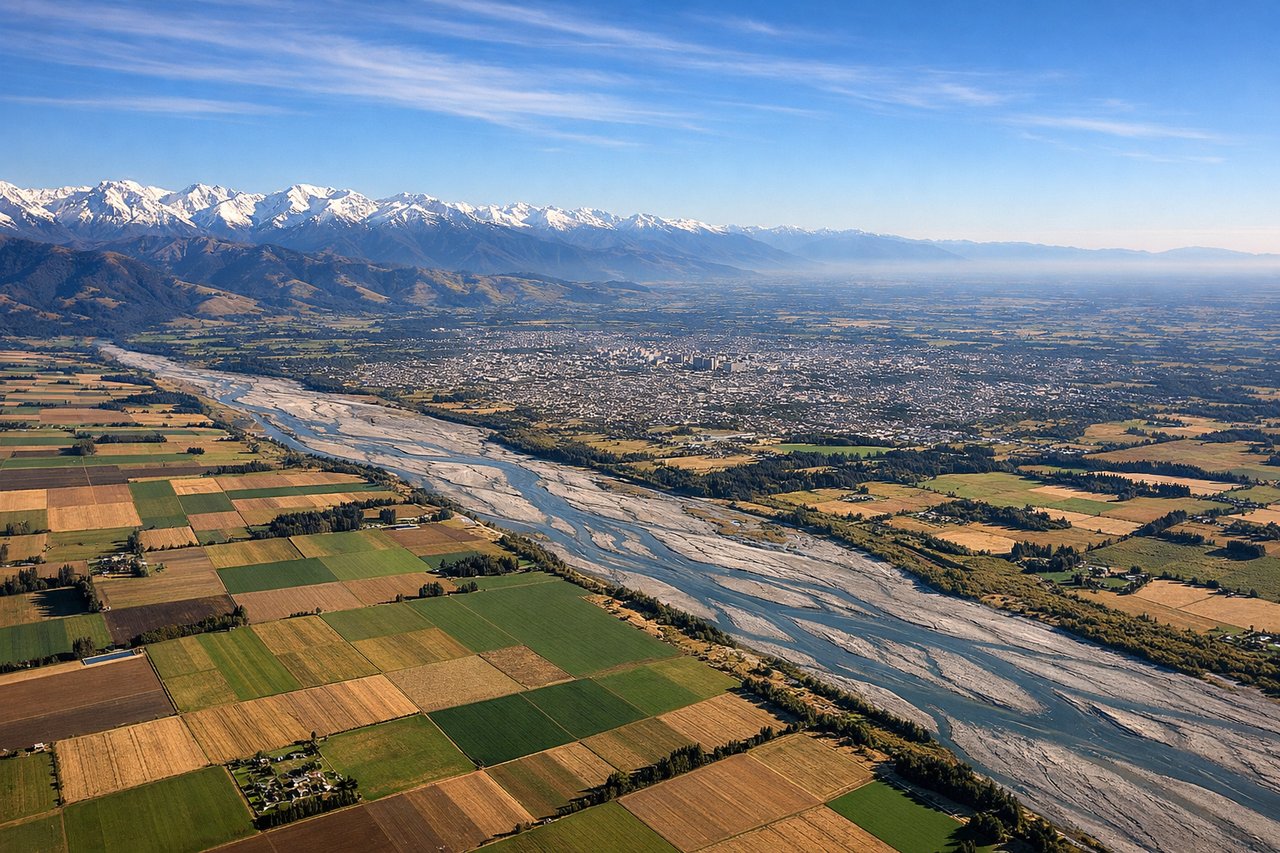
Landing at CHC
LEFTLeft-side seats provide views of the Southern Alps and Canterbury Plains during descent into Christchurch. The aircraft approaches from the northeast, and left-side windows capture the dramatic mountain range and the flat agricultural plains that define the region's geography.
Landmarks on this routeAll landmarks →
Will your flight be in sunlight?
See exactly which side of the plane gets sun and shade at your departure time.
About This Route
Which side of the plane should I sit on flying from Dubai International (DXB) to Christchurch International (CHC)?
Sit on the Left side of the plane for the best views on flights from Dubai to Christchurch. While the takeoff from Dubai offers coastal interest, the landing approach into Christchurch provides more dramatic and visually distinctive scenery with the Southern Alps and Canterbury Plains. Left-side seats capture the most iconic geographical features of the destination.
What can I see during takeoff from Dubai International in Dubai?
During takeoff from Dubai International (DXB), sit on the Right side for the best views. Right-side seats offer views of the Persian Gulf coastline and the Dubai urban sprawl extending eastward. The aircraft climbs over the coastal plain, giving clear sightlines to the water and developed areas before turning south toward the Indian Ocean. Notable sights include: Persian Gulf (immediate offshore), Dubai city grid and marina developments, Jebel Ali Port, Arabian Desert extending inland to the southwest.
What can I see when landing at Christchurch International in Christchurch?
When landing at Christchurch International (CHC), sit on the Left side for the best views. Left-side seats provide views of the Southern Alps and Canterbury Plains during descent into Christchurch. The aircraft approaches from the northeast, and left-side windows capture the dramatic mountain range and the flat agricultural plains that define the region's geography. Notable sights include: Southern Alps (Mount Cook region visible on clear days), Canterbury Plains (extensive flat farmland), Banks Peninsula (distinctive rounded landform southeast of Christchurch), Pegasus Bay coastline.
How long is the flight from Dubai to Christchurch?
The flight from Dubai International (DXB) to Christchurch International (CHC) takes Approximately 17-18 hours (including one stop, typically in Southeast Asia or the Middle East; direct routing would be 16-17 hours).
What does the Dubai to Christchurch flight path pass over?
The flight path crosses the Indian Ocean for approximately 7-8 hours. Notable waypoints include the Arabian Sea, passage near the Maldives or Sri Lanka region (depending on routing), the Bay of Bengal, Southeast Asian airspace (often via Malaysia or Indonesia), and then the long southern crossing over the Indian Ocean toward Australia and New Zealand. The Coral Sea and Tasman Sea are crossed during the final approach to New Zealand. Most of the midpoint flight occurs over open ocean with limited landmark visibility.