Dubai to Rome is 2,681 miles (4,315 km), a flight of about 5 hours 45 minutes.
Left side wins at both ends of the flight. During the cruise over the Middle East and Mediterranean, the left side also tracks closer to the Anatolian coast of Turkey and the Greek islands as the route arcs northwest, offering more consistent geographic interest than the right side which faces open sea for longer stretches.
Flight Path
The route crosses the Arabian Peninsula briefly before entering the Persian Gulf region, then tracks northwest over Iran or southern Turkey depending on routing. Key features include the Zagros Mountains of Iran, the Anatolian plateau of Turkey, the Aegean Sea with Greek island chains (Cyclades, Dodecanese), and the Greek mainland before crossing the Adriatic Sea into Italy.
Great circle distance and headings ›_and_the_Dubai_skyline_(25781049892).jpg?width=600)
.jpg?width=600)


Phase by phase
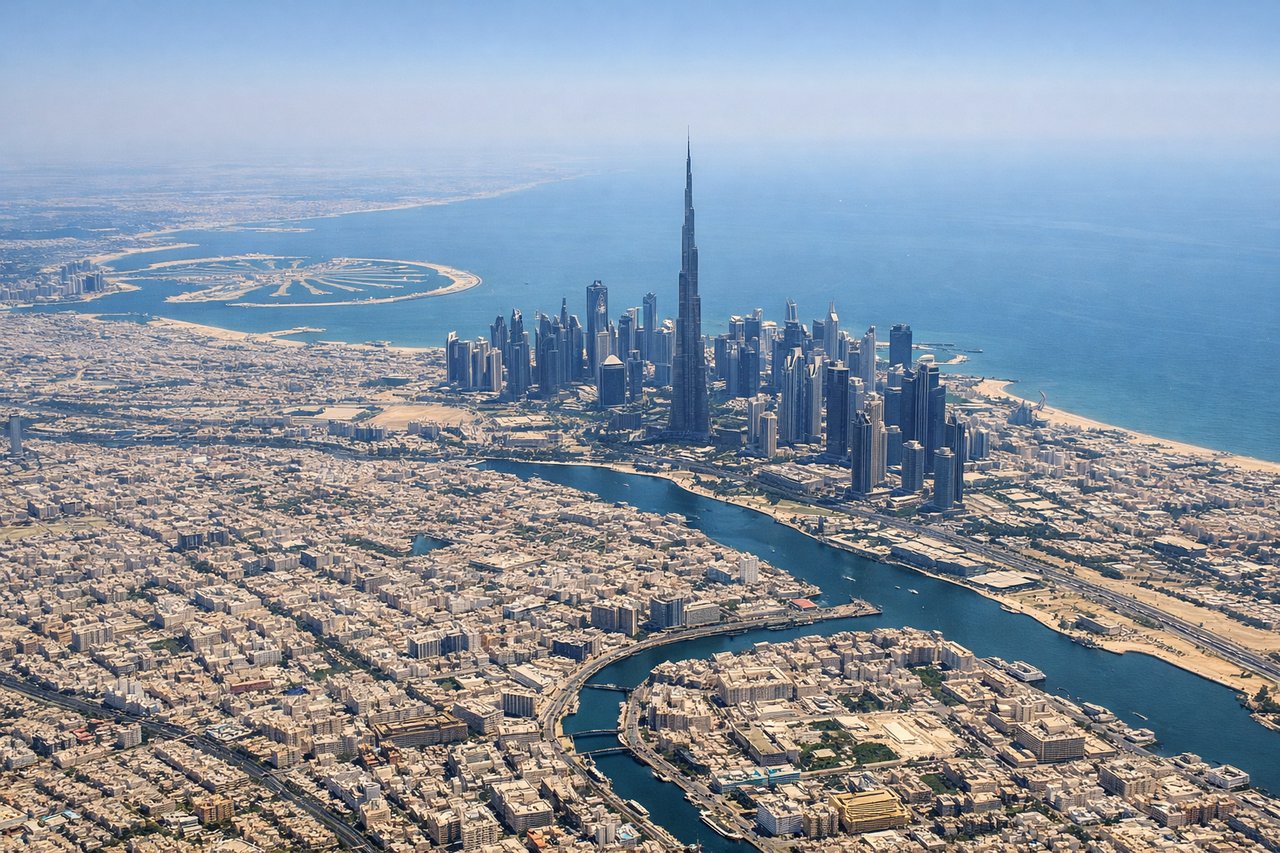
Takeoff from DXB
LEFTDubai International's primary departure runway 30L/30R sends aircraft northwest over the city. The left side captures the Dubai skyline including Downtown Dubai and the creek district as the aircraft climbs out over the urban core before heading over the Arabian Gulf shoreline.
Landing at CIA
LEFTCiampino typically uses runway 15 for southerly arrivals, with the approach coming from the north over the Alban Hills. The left side gives views over central Rome including the Tiber River bends and the historic city center as the aircraft descends from the northeast.
Landmarks on this routeAll landmarks →
Will your flight be in sunlight?
Pick a date and time in the Sun Map to watch the sun move across your whole flight.
About This Route
Which side of the plane should I sit on flying from Dubai International (DXB) to Ciampino (CIA)?
Sit on the Left side of the plane for the best views on flights from Dubai to Rome. Left side wins at both ends of the flight. During the cruise over the Middle East and Mediterranean, the left side also tracks closer to the Anatolian coast of Turkey and the Greek islands as the route arcs northwest, offering more consistent geographic interest than the right side which faces open sea for longer stretches.
What can I see during takeoff from Dubai International in Dubai?
During takeoff from Dubai International (DXB), sit on the Left side for the best views. Dubai International's primary departure runway 30L/30R sends aircraft northwest over the city. The left side captures the Dubai skyline including Downtown Dubai and the creek district as the aircraft climbs out over the urban core before heading over the Arabian Gulf shoreline. Notable sights include: Downtown Dubai skyline (Burj Khalifa visible), Dubai Creek and Deira district, Palm Jumeirah artificial island, Arabian Gulf coastline.
What can I see when landing at Ciampino in Rome?
When landing at Ciampino (CIA), sit on the Left side for the best views. Ciampino typically uses runway 15 for southerly arrivals, with the approach coming from the north over the Alban Hills. The left side gives views over central Rome including the Tiber River bends and the historic city center as the aircraft descends from the northeast. Notable sights include: Alban Hills (Castelli Romani volcanic complex), Tiber River winding through Rome, Rome's historic city center grid, Lake Albano crater lake.
How long is the flight from Dubai to Rome?
The flight from Dubai International (DXB) to Ciampino (CIA) takes about 5 hours 45 minutes. The shortest flight path between them is 2,681 miles (4,315 km); winds and air traffic control usually add a few percent.
What does the Dubai to Rome flight path pass over?
The route crosses the Arabian Peninsula briefly before entering the Persian Gulf region, then tracks northwest over Iran or southern Turkey depending on routing. Key features include the Zagros Mountains of Iran, the Anatolian plateau of Turkey, the Aegean Sea with Greek island chains (Cyclades, Dodecanese), and the Greek mainland before crossing the Adriatic Sea into Italy.