The right side delivers the most dramatic single moment of the flight — the Tian Shan on approach into Bishkek is genuinely spectacular. The left side has good urban views on departure but the right side wins on the strength of the mountain scenery at landing.
Flight Path
The route crosses the Strait of Hormuz and southern Iran, then tracks northeast over the rugged Zagros Mountains of central Iran, crosses the Elburz range near Tehran, then traverses the flat Caspian lowlands and the Karakum Desert of Turkmenistan before entering Uzbekistan and the Fergana Valley approaches. The Aral Sea basin, now largely dry, may be visible to the north. The final descent crosses the Kazakh steppe before the Tian Shan appears dramatically on approach to Bishkek.
Great circle distance and headings ›.jpg?width=600)
_and_the_Dubai_skyline_(25781049892).jpg?width=600)
.jpg?width=600)


Phase by phase
Takeoff from DXB
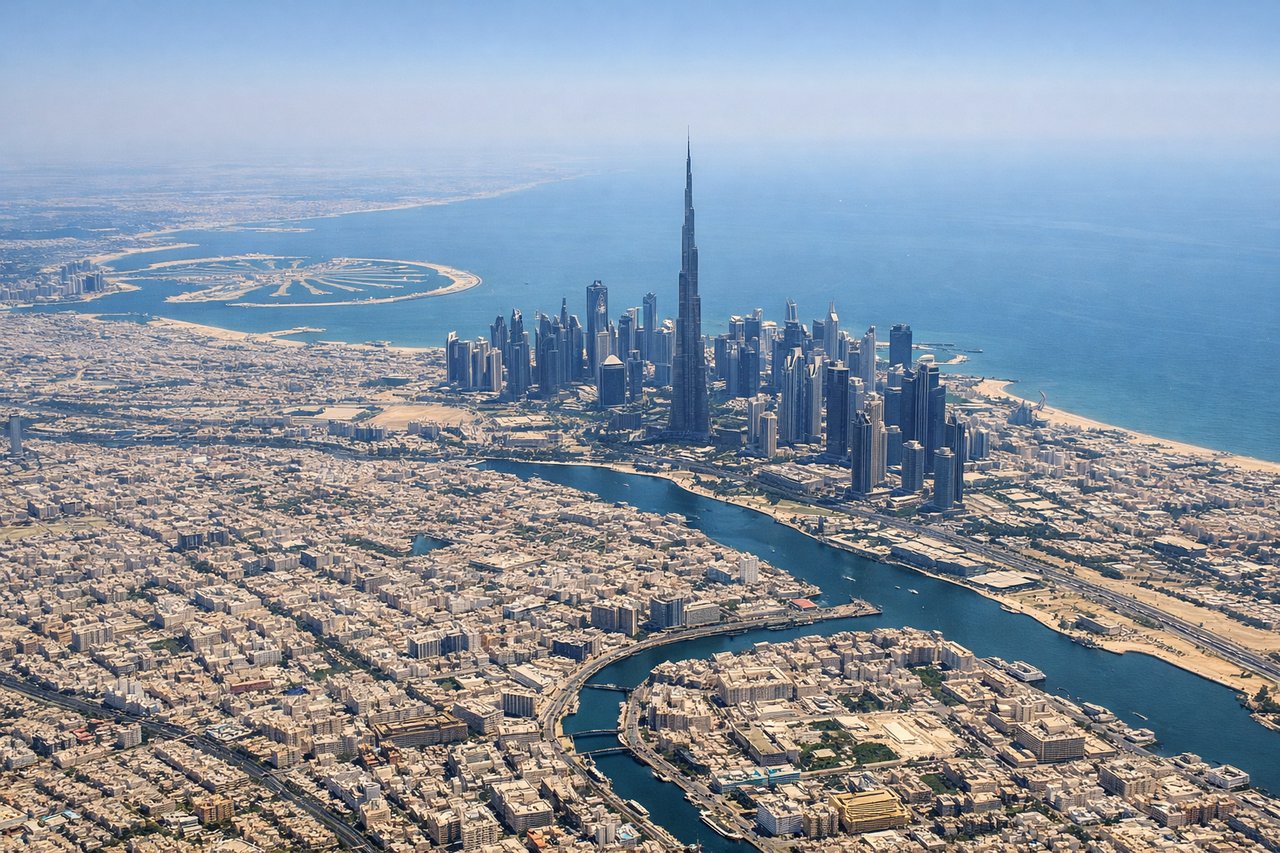
LEFTDubai International's primary departure runway 30L/30R sends aircraft northwest over the city. The left side captures Dubai Creek, Deira's dense urban grid, and the coastline curving toward Sharjah. You get a clear look at the older historic districts before the aircraft turns northeast.
Landing at BSZ
RIGHTManas Airport sits just northwest of Bishkek, and aircraft typically approach from the north or west on runway 26, meaning the right side faces south toward the Kyrgyz Ala-Too range of the Tian Shan. This gives a dramatic view of the snow-capped peaks rising abruptly from the Chuy Valley floor on final approach.
Landmarks on this routeAll landmarks →
Will your flight be in sunlight?
See exactly which side of the plane gets sun and shade at your departure time.
About This Route
Which side of the plane should I sit on flying from Dubai International (DXB) to Manas International Airport (BSZ)?
Sit on the Right side of the plane for the best views on flights from Dubai to Bishkek. The right side delivers the most dramatic single moment of the flight — the Tian Shan on approach into Bishkek is genuinely spectacular. The left side has good urban views on departure but the right side wins on the strength of the mountain scenery at landing.
What can I see during takeoff from Dubai International in Dubai?
During takeoff from Dubai International (DXB), sit on the Left side for the best views. Dubai International's primary departure runway 30L/30R sends aircraft northwest over the city. The left side captures Dubai Creek, Deira's dense urban grid, and the coastline curving toward Sharjah. You get a clear look at the older historic districts before the aircraft turns northeast. Notable sights include: Dubai Creek and Deira waterfront, Sharjah urban sprawl to the north, the Arabian Gulf coastline, Dubai International Airport terminal complex below.
What can I see when landing at Manas International Airport in Bishkek?
When landing at Manas International Airport (BSZ), sit on the Right side for the best views. Manas Airport sits just northwest of Bishkek, and aircraft typically approach from the north or west on runway 26, meaning the right side faces south toward the Kyrgyz Ala-Too range of the Tian Shan. This gives a dramatic view of the snow-capped peaks rising abruptly from the Chuy Valley floor on final approach. Notable sights include: Kyrgyz Ala-Too range (Tian Shan) with snow-capped peaks, Bishkek city grid in the Chuy Valley, Ala-Archa gorge cutting into the mountains, flat steppe of the Chuy Valley stretching north.
How long is the flight from Dubai to Bishkek?
The flight from Dubai International (DXB) to Manas International Airport (BSZ) takes Approximately 4 hours 15 minutes.
What does the Dubai to Bishkek flight path pass over?
The route crosses the Strait of Hormuz and southern Iran, then tracks northeast over the rugged Zagros Mountains of central Iran, crosses the Elburz range near Tehran, then traverses the flat Caspian lowlands and the Karakum Desert of Turkmenistan before entering Uzbekistan and the Fergana Valley approaches. The Aral Sea basin, now largely dry, may be visible to the north. The final descent crosses the Kazakh steppe before the Tian Shan appears dramatically on approach to Bishkek.