Left side wins at both ends of the flight. During the cruise over Turkey, the Black Sea coast, Eastern Europe, and the North Sea, the left side also tends to face south giving better light angles and views of populated terrain rather than open ocean. Consistent advantage throughout.
Flight Path
The route tracks northwest over the Persian Gulf briefly, then crosses Iran and eastern Turkey including the Anatolian plateau, passes near the Black Sea coast, crosses Bulgaria and Romania, transits over Central Europe through Germany or the Netherlands, then crosses the North Sea before descending over northern England and into Scotland. The Alps may be visible to the south as distant peaks depending on exact routing.
Great circle distance and headings ›_and_the_Dubai_skyline_(25781049892).jpg?width=600)
.jpg?width=600)


Phase by phase
Takeoff from DXB
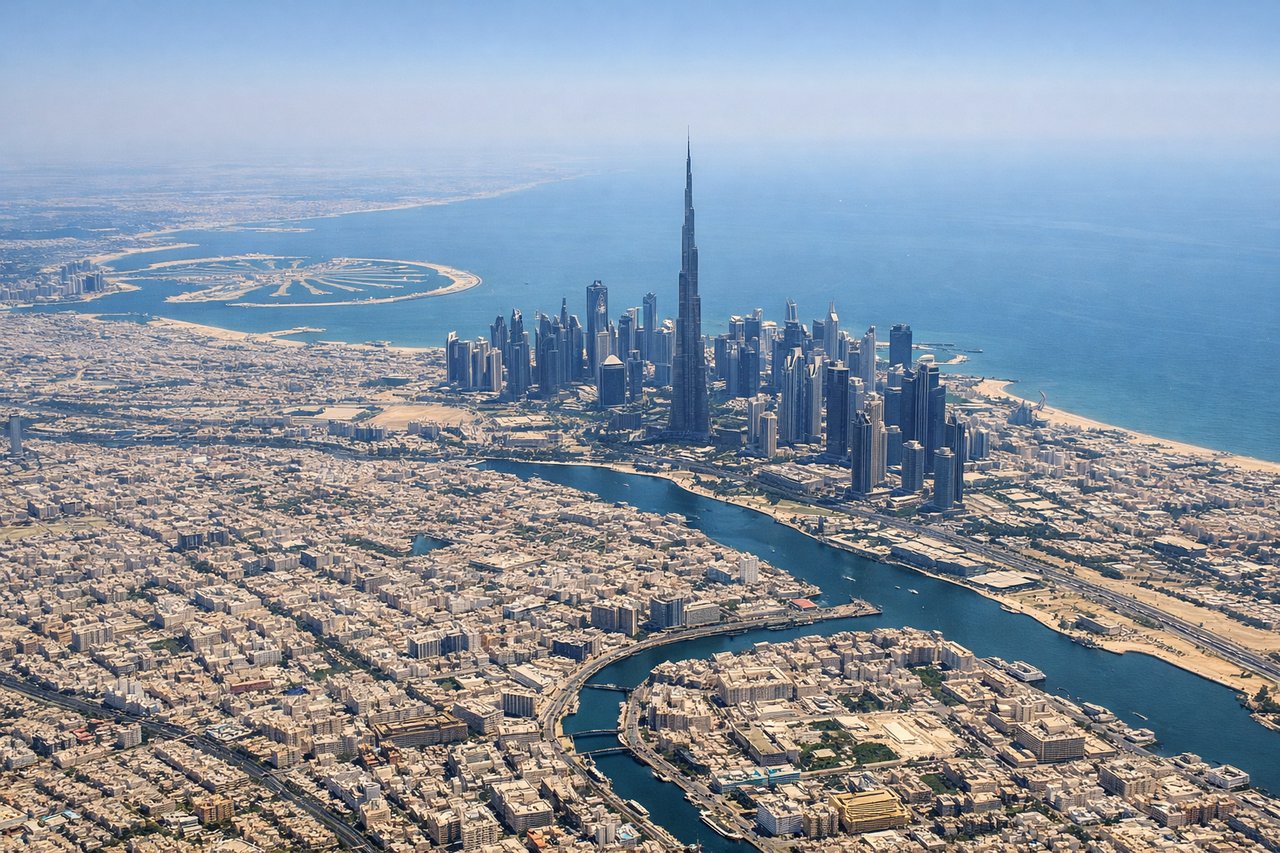
LEFTDubai International's primary departure runway 30L/30R sends aircraft northwest over the city. The left side gets the Dubai Creek, Deira district, and the older urban core as you climb out, with the Arabian Gulf coastline visible shortly after. The right side faces inland desert.
Landing at GLA
LEFTGlasgow Airport typically uses runway 23 for westerly approaches, meaning the aircraft tracks in from the northeast over central Scotland. The left side faces south toward the Firth of Clyde, Loch Lomond, and the city of Glasgow itself spread across the valley. The right side looks north toward open moorland.
Landmarks on this routeAll landmarks →
Will your flight be in sunlight?
See exactly which side of the plane gets sun and shade at your departure time.
About This Route
Which side of the plane should I sit on flying from Dubai International (DXB) to Glasgow (GLA)?
Sit on the Left side of the plane for the best views on flights from Dubai to Glasgow. Left side wins at both ends of the flight. During the cruise over Turkey, the Black Sea coast, Eastern Europe, and the North Sea, the left side also tends to face south giving better light angles and views of populated terrain rather than open ocean. Consistent advantage throughout.
What can I see during takeoff from Dubai International in Dubai?
During takeoff from Dubai International (DXB), sit on the Left side for the best views. Dubai International's primary departure runway 30L/30R sends aircraft northwest over the city. The left side gets the Dubai Creek, Deira district, and the older urban core as you climb out, with the Arabian Gulf coastline visible shortly after. The right side faces inland desert. Notable sights include: Dubai Creek and Deira district below, Arabian Gulf coastline to the northwest, Palm Jumeirah visible in the distance to the southwest, downtown Dubai skyline receding behind.
What can I see when landing at Glasgow in Glasgow?
When landing at Glasgow (GLA), sit on the Left side for the best views. Glasgow Airport typically uses runway 23 for westerly approaches, meaning the aircraft tracks in from the northeast over central Scotland. The left side faces south toward the Firth of Clyde, Loch Lomond, and the city of Glasgow itself spread across the valley. The right side looks north toward open moorland. Notable sights include: Firth of Clyde estuary to the southwest, Loch Lomond visible to the north-northeast, Glasgow city center grid and River Clyde, Renfrewshire hills.
How long is the flight from Dubai to Glasgow?
The flight from Dubai International (DXB) to Glasgow (GLA) takes Approximately 7 hours 30 minutes to 8 hours.
What does the Dubai to Glasgow flight path pass over?
The route tracks northwest over the Persian Gulf briefly, then crosses Iran and eastern Turkey including the Anatolian plateau, passes near the Black Sea coast, crosses Bulgaria and Romania, transits over Central Europe through Germany or the Netherlands, then crosses the North Sea before descending over northern England and into Scotland. The Alps may be visible to the south as distant peaks depending on exact routing.