The left side offers the scenic bookends of the flight — Dubai's coastline and Palm Jumeirah at takeoff, and a dramatic Himalayan approach into Kathmandu — while the right side faces mostly flat desert, the Arabian Sea, and the plains of Pakistan and northern India with little topographic interest.
Flight Path
The route crosses the Gulf of Oman, the arid Makran coast of southern Pakistan, the Thar Desert fringe, and the flat agricultural plains of the Indus and Ganges basins before rising terrain announces the approach to the Himalayan foothills.
Great circle distance and headings ›.jpg?width=600)
_and_the_Dubai_skyline_(25781049892).jpg?width=600)


.jpeg?width=600)
.jpg?width=600)
Phase by phase
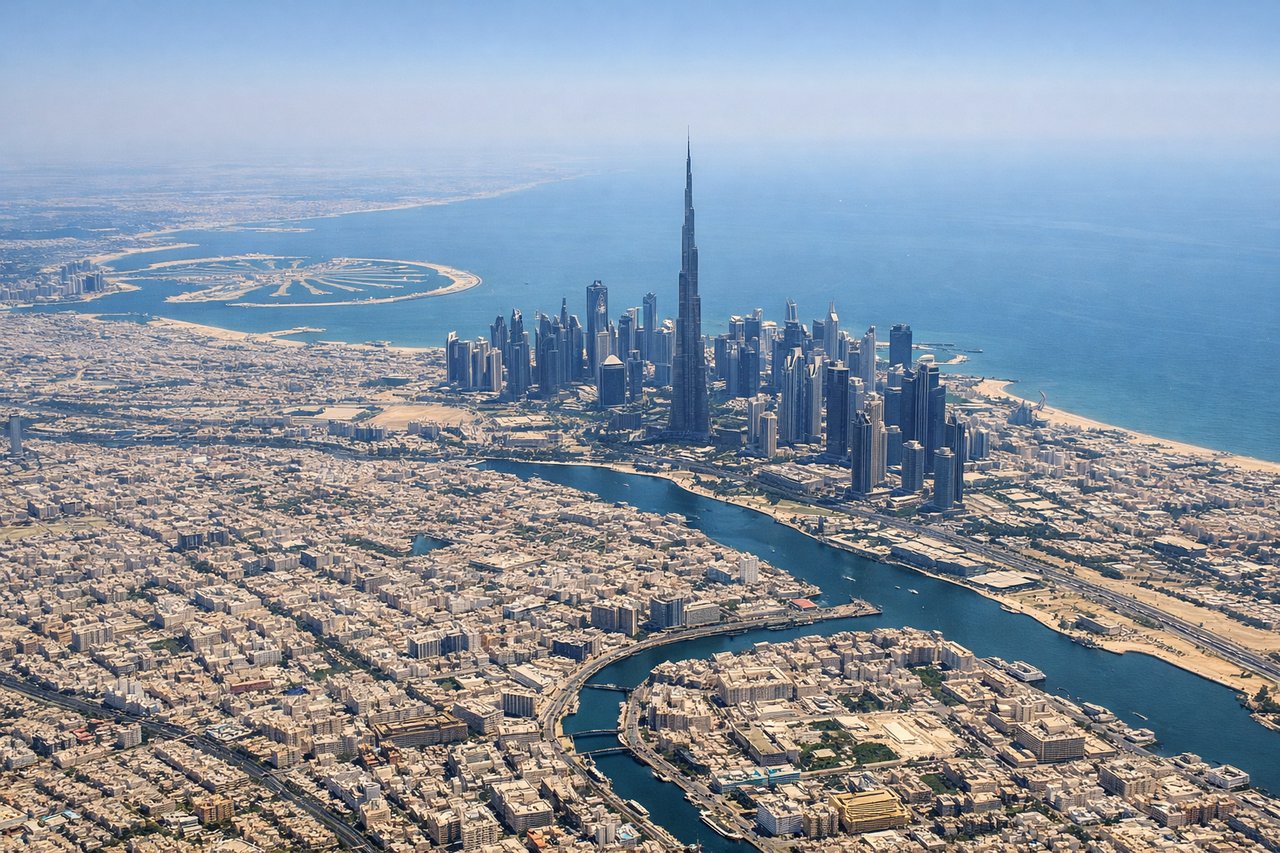
Takeoff from DXB
LEFTDeparting DXB to the east, the left side faces north toward Dubai's coastline, giving passengers a clear view of Palm Jumeirah, the Dubai Marina skyline, and the turquoise Gulf waters as the aircraft climbs out. The right side mostly shows flat desert and industrial sprawl inland.
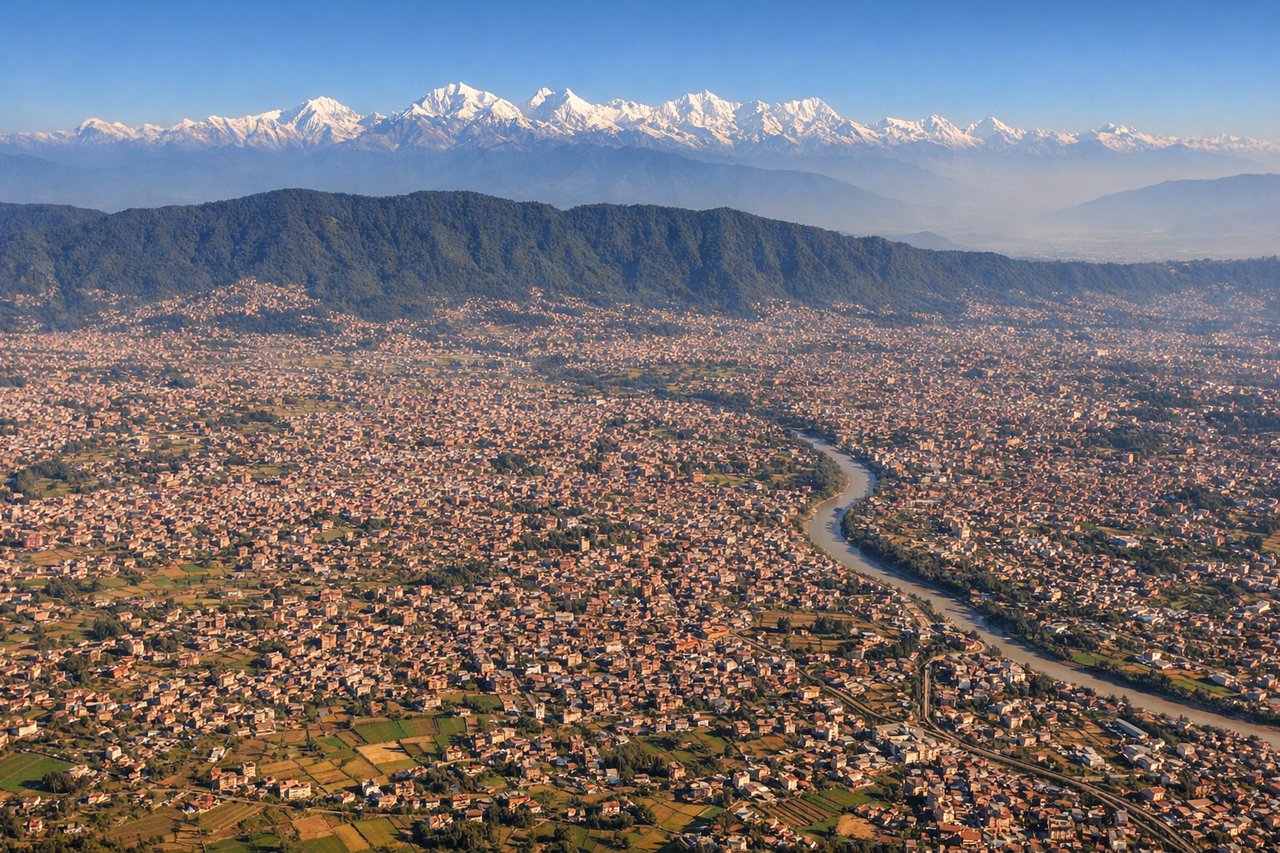
Landing at KTM
LEFTOn approach into Kathmandu from the south, the northern horizon opens up to reveal the snow-capped Himalayan range, often including distant high peaks, rising sharply beyond the terraced green hills of the Kathmandu Valley. The right side during descent mostly faces south toward lower, less dramatic hill country.
Landmarks on this routeAll landmarks →
Will your flight be in sunlight?
See exactly which side of the plane gets sun and shade at your departure time.
About This Route
Which side of the plane should I sit on flying from Dubai International (DXB) to Tribhuvan International (KTM)?
Sit on the Left side of the plane for the best views on flights from Dubai to Kathmandu. The left side offers the scenic bookends of the flight — Dubai's coastline and Palm Jumeirah at takeoff, and a dramatic Himalayan approach into Kathmandu — while the right side faces mostly flat desert, the Arabian Sea, and the plains of Pakistan and northern India with little topographic interest.
What can I see during takeoff from Dubai International in Dubai?
During takeoff from Dubai International (DXB), sit on the Left side for the best views. Departing DXB to the east, the left side faces north toward Dubai's coastline, giving passengers a clear view of Palm Jumeirah, the Dubai Marina skyline, and the turquoise Gulf waters as the aircraft climbs out. The right side mostly shows flat desert and industrial sprawl inland. Notable sights include: Palm Jumeirah, Dubai Marina skyline, Persian Gulf coastline, Burj Al Arab.
What can I see when landing at Tribhuvan International in Kathmandu?
When landing at Tribhuvan International (KTM), sit on the Left side for the best views. On approach into Kathmandu from the south, the northern horizon opens up to reveal the snow-capped Himalayan range, often including distant high peaks, rising sharply beyond the terraced green hills of the Kathmandu Valley. The right side during descent mostly faces south toward lower, less dramatic hill country. Notable sights include: Himalayan foothills, terraced Kathmandu Valley, snow-capped high peaks on the horizon, Bagmati river valley.
How long is the flight from Dubai to Kathmandu?
The flight from Dubai International (DXB) to Tribhuvan International (KTM) takes 4h 45m.
What does the Dubai to Kathmandu flight path pass over?
The route crosses the Gulf of Oman, the arid Makran coast of southern Pakistan, the Thar Desert fringe, and the flat agricultural plains of the Indus and Ganges basins before rising terrain announces the approach to the Himalayan foothills.