Dubai to Muscat is 216 miles (347 km), a flight of about 1 hour 10 minutes.
Left side wins both ends of the flight. During cruise the left side also faces south toward the Omani coast and the Musandam Peninsula's dramatic fjord landscape as the route tracks southeast over the Gulf of Oman, making it the consistently better side for the entire journey.
Flight Path
The flight tracks southeast from Dubai across the southern Arabian Gulf, passing over or near the Musandam Peninsula (Oman's exclave) with its deeply incised fjords and limestone ridges visible on clear days. The route then crosses the Gulf of Oman, with the Batinah coastal plain of northern Oman coming into view on descent. The Al Hajar Mountains run parallel to the coast throughout the approach phase and are the dominant geographic feature of the second half of the flight.
Great circle distance and headings ›.jpg?width=600)
_and_the_Dubai_skyline_(25781049892).jpg?width=600)
Phase by phase
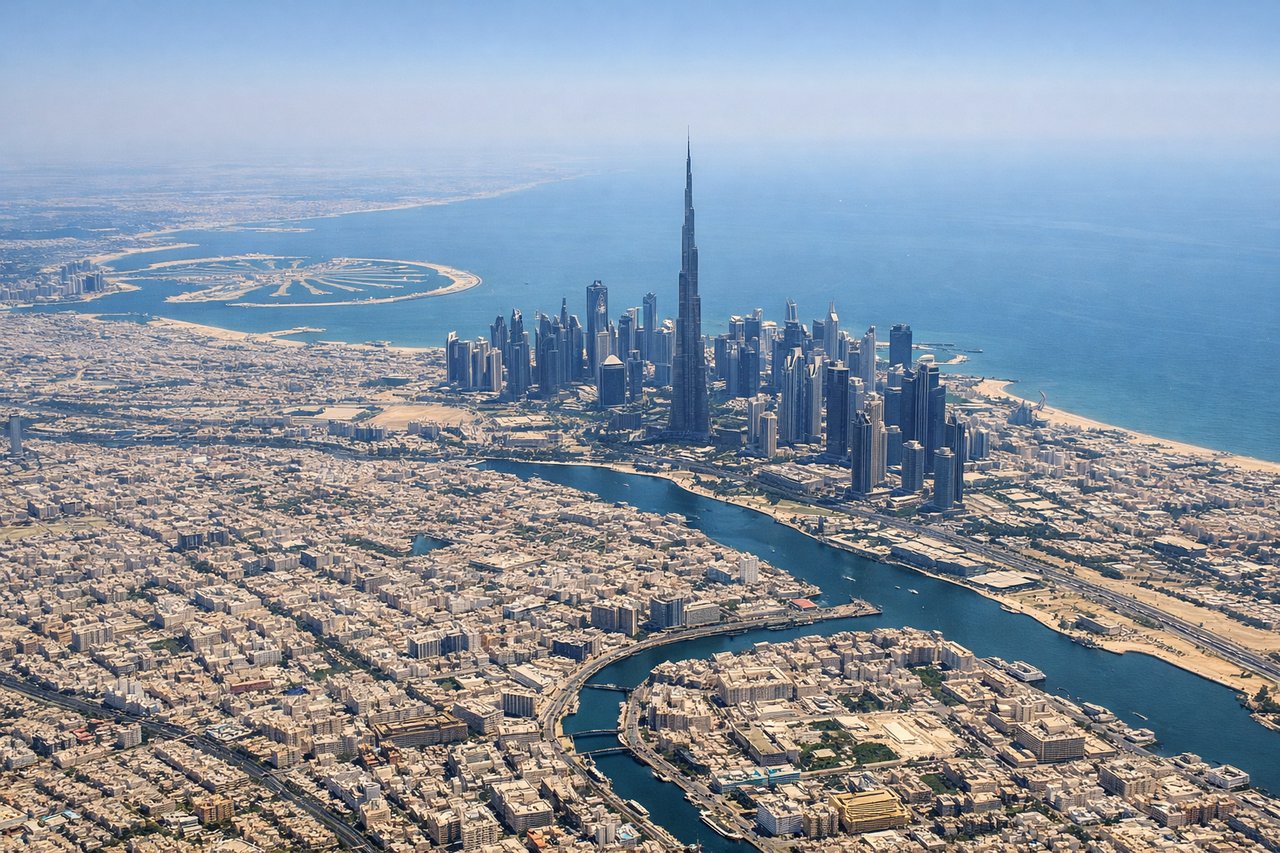
Takeoff from DXB
LEFTDubai International's primary departure runway 30L/30R sends aircraft northwest before turning southeast toward Muscat. A left-side seat captures the Dubai Creek, Deira district, and the Gulf coastline as the aircraft banks right over the city. The Palm Jumeirah and Downtown Dubai skyline are visible to the south on the left side during the turn.
Landing at MCT
LEFTMuscat's Seeb International typically uses runway 26 for arrivals from the west, meaning the aircraft approaches from the east over the Gulf of Oman before turning inland. A left-side seat on approach gives a clear view of the Al Hajar Mountains rising sharply from the coastal plain, with Muscat's urban sprawl visible between the mountains and the sea.
Landmarks on this routeAll landmarks →
Will your flight be in sunlight?
Pick a date and time in the Sun Map to watch the sun move across your whole flight.
About This Route
Which side of the plane should I sit on flying from Dubai International (DXB) to Seeb International (MCT)?
Sit on the Left side of the plane for the best views on flights from Dubai to Muscat. Left side wins both ends of the flight. During cruise the left side also faces south toward the Omani coast and the Musandam Peninsula's dramatic fjord landscape as the route tracks southeast over the Gulf of Oman, making it the consistently better side for the entire journey.
What can I see during takeoff from Dubai International in Dubai?
During takeoff from Dubai International (DXB), sit on the Left side for the best views. Dubai International's primary departure runway 30L/30R sends aircraft northwest before turning southeast toward Muscat. A left-side seat captures the Dubai Creek, Deira district, and the Gulf coastline as the aircraft banks right over the city. The Palm Jumeirah and Downtown Dubai skyline are visible to the south on the left side during the turn. Notable sights include: Dubai Creek and Deira district, Palm Jumeirah (distant), Downtown Dubai skyline with Burj Khalifa, Dubai coastline along the Arabian Gulf.
What can I see when landing at Seeb International in Muscat?
When landing at Seeb International (MCT), sit on the Left side for the best views. Muscat's Seeb International typically uses runway 26 for arrivals from the west, meaning the aircraft approaches from the east over the Gulf of Oman before turning inland. A left-side seat on approach gives a clear view of the Al Hajar Mountains rising sharply from the coastal plain, with Muscat's urban sprawl visible between the mountains and the sea. Notable sights include: Al Hajar Mountains (Western Hajar range), Gulf of Oman coastline, Muscat urban corridor along the coastal plain, Batinah coastal plain.
How long is the flight from Dubai to Muscat?
The flight from Dubai International (DXB) to Seeb International (MCT) takes about 1 hour 10 minutes. The shortest flight path between them is 216 miles (347 km); winds and air traffic control usually add a few percent.
What does the Dubai to Muscat flight path pass over?
The flight tracks southeast from Dubai across the southern Arabian Gulf, passing over or near the Musandam Peninsula (Oman's exclave) with its deeply incised fjords and limestone ridges visible on clear days. The route then crosses the Gulf of Oman, with the Batinah coastal plain of northern Oman coming into view on descent. The Al Hajar Mountains run parallel to the coast throughout the approach phase and are the dominant geographic feature of the second half of the flight.