While the takeoff favors the right side for a brief Manhattan skyline view, the left side wins overall thanks to expansive desert and mountain terrain during the southern transcontinental cruise track and the dramatic Hawaiian volcanic coastline on approach into Honolulu.
Flight Path
Southern Rocky Mountains, high desert basins of New Mexico and Arizona, and the open Pacific Ocean west of the California coast
Great circle distance and headings ›.jpg?width=600)
.jpeg?width=600)


.jpg?width=600)


Phase by phase

Takeoff from EWR
RIGHTDeparting EWR on the southwest-facing runway 22, the initial climb and right turn put Manhattan's skyline, the Hudson River, and New York Harbor on the north-facing (right) side of the aircraft before the flight settles onto its westbound track.
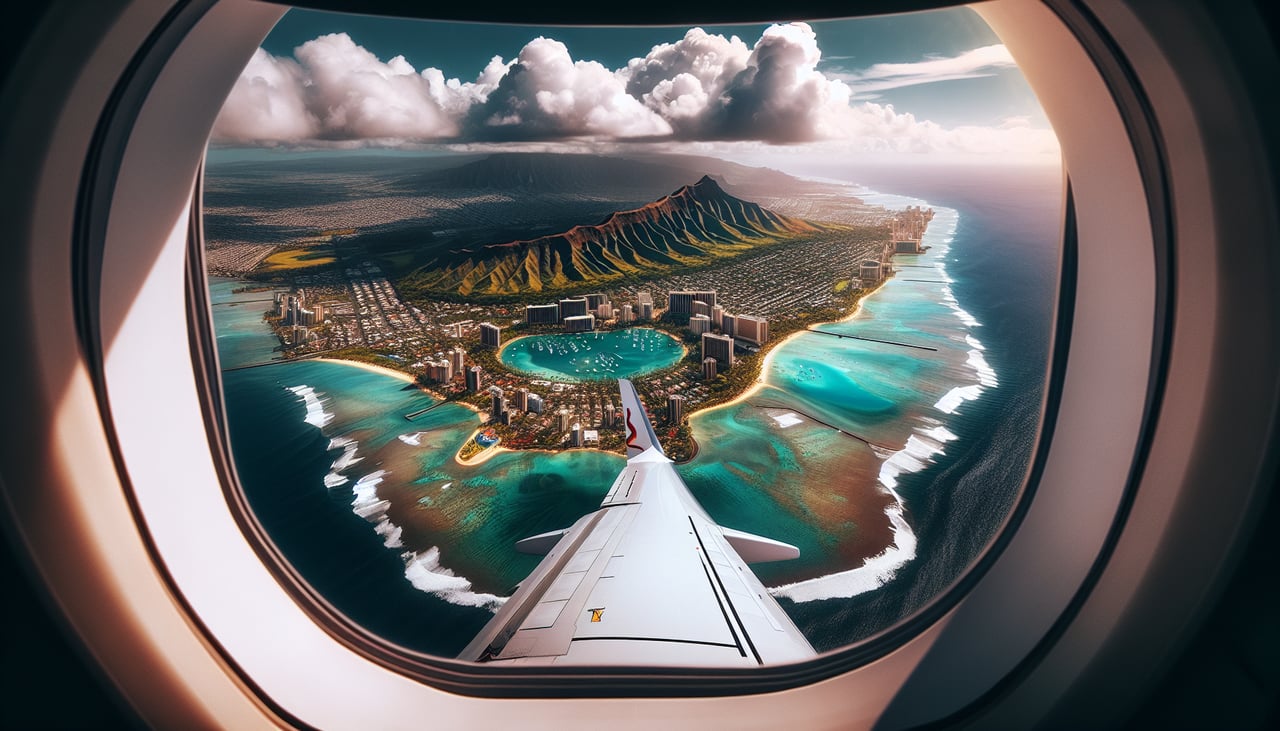
Landing at HNL
LEFTArriving flights from the mainland typically fly past the south shore of Oahu before turning to land into the trade winds, giving left-side passengers a sweeping view of Diamond Head, Waikiki Beach, and the Honolulu skyline before touchdown.
Landmarks on this routeAll landmarks →
Will your flight be in sunlight?
See exactly which side of the plane gets sun and shade at your departure time.
About This Route
Which side of the plane should I sit on flying from Newark Liberty International (EWR) to Honolulu International (HNL)?
Sit on the Left side of the plane for the best views on flights from Newark to Honolulu. While the takeoff favors the right side for a brief Manhattan skyline view, the left side wins overall thanks to expansive desert and mountain terrain during the southern transcontinental cruise track and the dramatic Hawaiian volcanic coastline on approach into Honolulu.
What can I see during takeoff from Newark Liberty International in Newark?
During takeoff from Newark Liberty International (EWR), sit on the Right side for the best views. Departing EWR on the southwest-facing runway 22, the initial climb and right turn put Manhattan's skyline, the Hudson River, and New York Harbor on the north-facing (right) side of the aircraft before the flight settles onto its westbound track. Notable sights include: Manhattan skyline, Hudson River, Statue of Liberty, Newark Bay.
What can I see when landing at Honolulu International in Honolulu?
When landing at Honolulu International (HNL), sit on the Left side for the best views. Arriving flights from the mainland typically fly past the south shore of Oahu before turning to land into the trade winds, giving left-side passengers a sweeping view of Diamond Head, Waikiki Beach, and the Honolulu skyline before touchdown. Notable sights include: Diamond Head crater, Waikiki Beach, Honolulu skyline, Pearl Harbor.
How long is the flight from Newark to Honolulu?
The flight from Newark Liberty International (EWR) to Honolulu International (HNL) takes 11h 00m.
What does the Newark to Honolulu flight path pass over?
Southern Rocky Mountains, high desert basins of New Mexico and Arizona, and the open Pacific Ocean west of the California coast