The right side captures the two most dramatic moments of the flight: the New York skyline and harbor during departure, and the Las Vegas Strip during final approach, while cruise-phase terrain is roughly equal on both sides.
Flight Path
Appalachian ridgelines of Pennsylvania and West Virginia, the Ohio River valley, the Great Plains of Kansas, the Rocky Mountains near Colorado's Front Range, and the high desert basins of Utah and Nevada
Great circle distance and headings ›.jpg?width=600)
.jpeg?width=600)

.jpg?width=600)
.jpg?width=600)
.jpeg?width=600)


Phase by phase
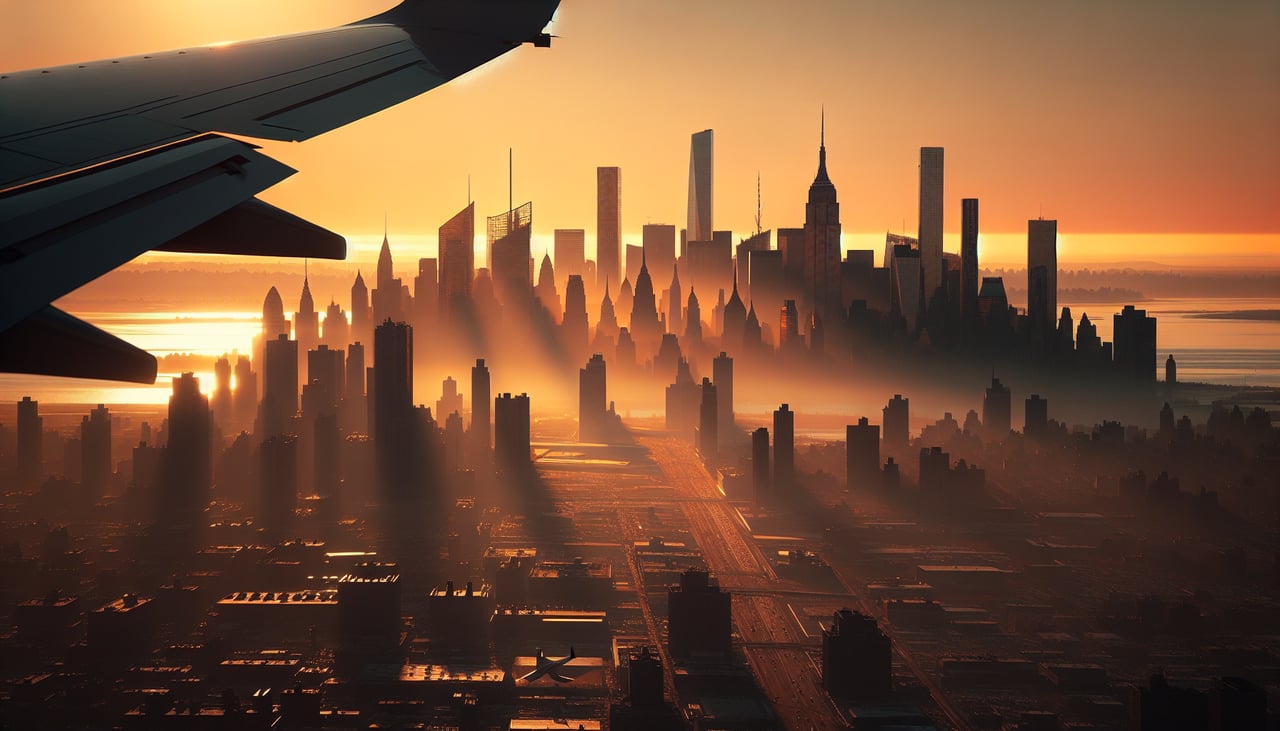
Takeoff from EWR
RIGHTDepartures from EWR commonly climb out over Newark Bay and Staten Island before banking toward the west, putting Lower Manhattan, the Statue of Liberty, and Upper New York Bay squarely on the right side of the aircraft. The left side during this turn mostly shows industrial New Jersey with no comparable landmarks.
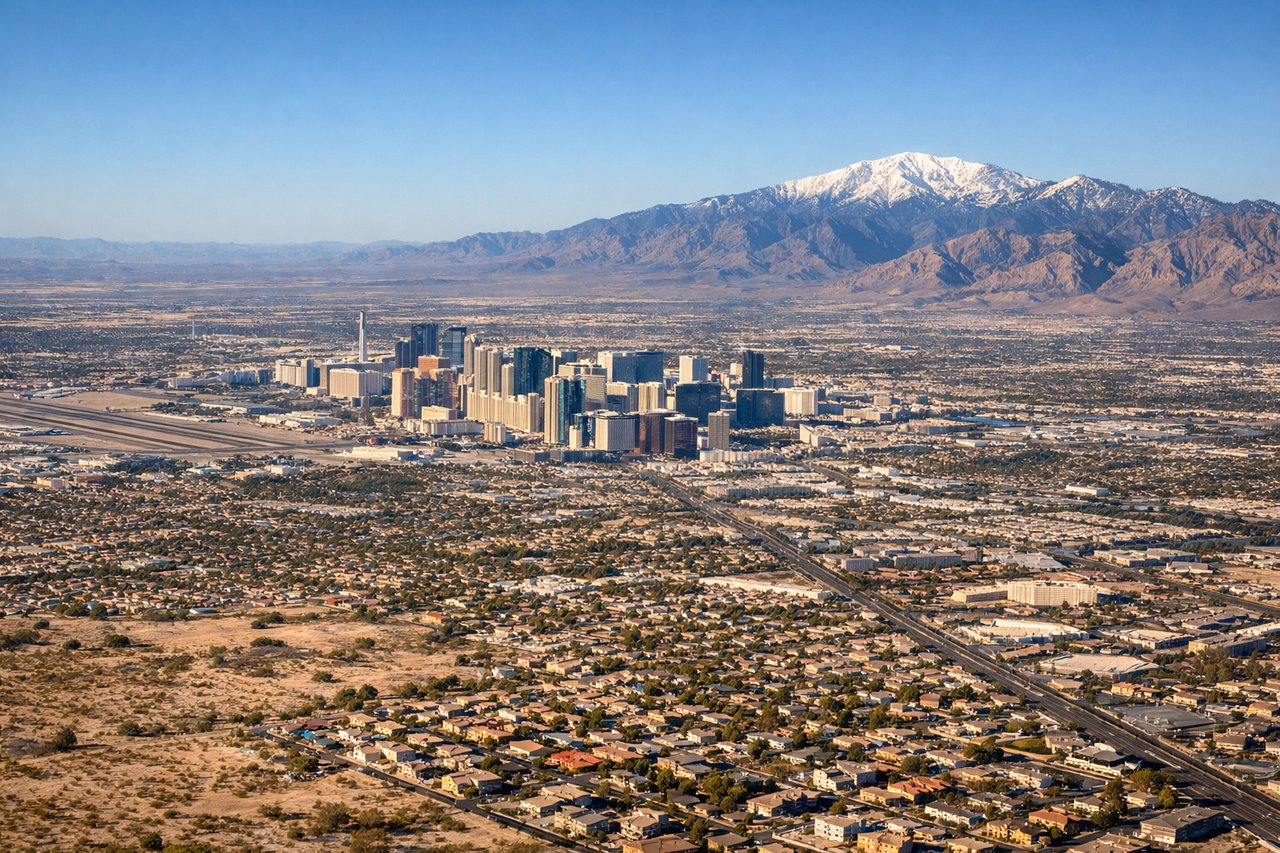
Landing at LAS
RIGHTOn the standard approach to LAS runways 26L/26R from the east, the aircraft flies just south of the Strip, meaning the hotel towers and skyline of Las Vegas Boulevard appear on the right side of the cabin during final descent. The left side faces open desert and the Spring Mountains further away, with less immediate detail.
Landmarks on this routeAll landmarks →
Will your flight be in sunlight?
See exactly which side of the plane gets sun and shade at your departure time.
About This Route
Which side of the plane should I sit on flying from Newark Liberty International (EWR) to Mc Carran International (LAS)?
Sit on the Right side of the plane for the best views on flights from Newark to Las Vegas. The right side captures the two most dramatic moments of the flight: the New York skyline and harbor during departure, and the Las Vegas Strip during final approach, while cruise-phase terrain is roughly equal on both sides.
What can I see during takeoff from Newark Liberty International in Newark?
During takeoff from Newark Liberty International (EWR), sit on the Right side for the best views. Departures from EWR commonly climb out over Newark Bay and Staten Island before banking toward the west, putting Lower Manhattan, the Statue of Liberty, and Upper New York Bay squarely on the right side of the aircraft. The left side during this turn mostly shows industrial New Jersey with no comparable landmarks. Notable sights include: Lower Manhattan skyline, Statue of Liberty, Verrazzano-Narrows Bridge, Upper New York Bay.
What can I see when landing at Mc Carran International in Las Vegas?
When landing at Mc Carran International (LAS), sit on the Right side for the best views. On the standard approach to LAS runways 26L/26R from the east, the aircraft flies just south of the Strip, meaning the hotel towers and skyline of Las Vegas Boulevard appear on the right side of the cabin during final descent. The left side faces open desert and the Spring Mountains further away, with less immediate detail. Notable sights include: Las Vegas Strip hotel towers, Spring Mountains, Las Vegas Valley desert basin, McCarran/Harry Reid runway complex.
How long is the flight from Newark to Las Vegas?
The flight from Newark Liberty International (EWR) to Mc Carran International (LAS) takes 5h 15m.
What does the Newark to Las Vegas flight path pass over?
Appalachian ridgelines of Pennsylvania and West Virginia, the Ohio River valley, the Great Plains of Kansas, the Rocky Mountains near Colorado's Front Range, and the high desert basins of Utah and Nevada