While left offers excellent takeoff views of Buenos Aires and the estuary, right dominates the longer flight with superior Himalayan scenery on approach to Kathmandu—the primary visual reward for this route.
Flight Path
This route typically transits over the Middle East (Persian Gulf, Oman, or Arabian Sea), then crosses into South Asia over Pakistan or northwestern India. Notable midpoint features include the Thar Desert (visible as tan/brown terrain), the Indus River valley in Pakistan (green agricultural corridor), and the Hindu Kush or Karakoram ranges if the flight path routes through Afghanistan/northern Pakistan. The transition from Arabian Peninsula to South Asian monsoon-influenced terrain is visually striking, with the color shift from desert tan to green valleys.
Great circle distance and headings ›_(cropped).jpg?width=600)


Phase by phase

Takeoff from EZE
LEFTLeft side seats face northwest on departure from EZE, offering views of the Río de la Plata estuary and the Buenos Aires metropolitan sprawl. Right side faces inland toward flat pampas with minimal visual interest.
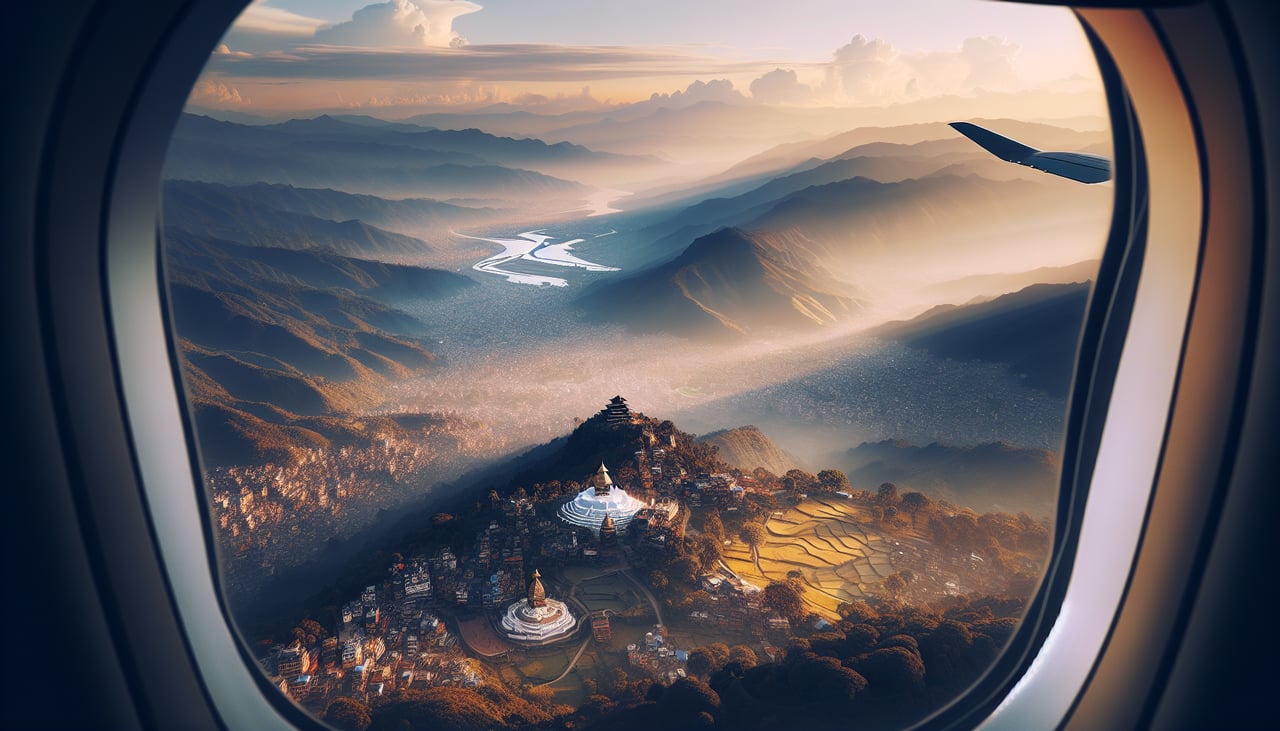
Landing at KTM
RIGHTRight side seats face south-southwest on approach to KTM, providing direct views of the Kathmandu Valley rim and the Mahabharat Range foothills. Left side faces toward the Tibetan plateau with less dramatic terrain.
Landmarks on this routeAll landmarks →
Will your flight be in sunlight?
See exactly which side of the plane gets sun and shade at your departure time.
About This Route
Which side of the plane should I sit on flying from Ezeiza Ministro Pistarini (EZE) to Tribhuvan International (KTM)?
Sit on the Right side of the plane for the best views on flights from Buenos Aires to Kathmandu. While left offers excellent takeoff views of Buenos Aires and the estuary, right dominates the longer flight with superior Himalayan scenery on approach to Kathmandu—the primary visual reward for this route.
What can I see during takeoff from Ezeiza Ministro Pistarini in Buenos Aires?
During takeoff from Ezeiza Ministro Pistarini (EZE), sit on the Left side for the best views. Left side seats face northwest on departure from EZE, offering views of the Río de la Plata estuary and the Buenos Aires metropolitan sprawl. Right side faces inland toward flat pampas with minimal visual interest. Notable sights include: Río de la Plata (wide brown estuary), Buenos Aires city grid and port facilities, Tigre Delta wetlands to the north.
What can I see when landing at Tribhuvan International in Kathmandu?
When landing at Tribhuvan International (KTM), sit on the Right side for the best views. Right side seats face south-southwest on approach to KTM, providing direct views of the Kathmandu Valley rim and the Mahabharat Range foothills. Left side faces toward the Tibetan plateau with less dramatic terrain. Notable sights include: Mahabharat Range (outer Himalayan foothills), Kathmandu Valley floor with terraced agriculture, Bagmati River valley, Kathmandu city sprawl.
How long is the flight from Buenos Aires to Kathmandu?
The flight from Ezeiza Ministro Pistarini (EZE) to Tribhuvan International (KTM) takes Approximately 18-20 hours (including typical routing via Middle East or Africa).
What does the Buenos Aires to Kathmandu flight path pass over?
This route typically transits over the Middle East (Persian Gulf, Oman, or Arabian Sea), then crosses into South Asia over Pakistan or northwestern India. Notable midpoint features include the Thar Desert (visible as tan/brown terrain), the Indus River valley in Pakistan (green agricultural corridor), and the Hindu Kush or Karakoram ranges if the flight path routes through Afghanistan/northern Pakistan. The transition from Arabian Peninsula to South Asian monsoon-influenced terrain is visually striking, with the color shift from desert tan to green valleys.