Rome to Brindisi is 306 miles (493 km), a flight of about 1 hour 15 minutes.
Right seats dominate both segments. Takeoff offers the Alban Hills and Tiber valley relief, while landing showcases the Salento Peninsula's distinctive flat limestone plateau and Adriatic coastline. The left side is mostly open water or featureless plain.
Flight Path
The flight path crosses the Apennine Mountains' southern reaches (visible as a distant ridge around midpoint), then descends over the Basilicata and Calabria regions. The Ionian Sea lies to the east, while the Tyrrhenian coast remains visible to the west during the first half. The landscape transitions from volcanic hills to the flat Salento limestone plateau as you approach Brindisi.
Great circle distance and headings ›
_-_75_(50558355441).jpg?width=600)
Phase by phase
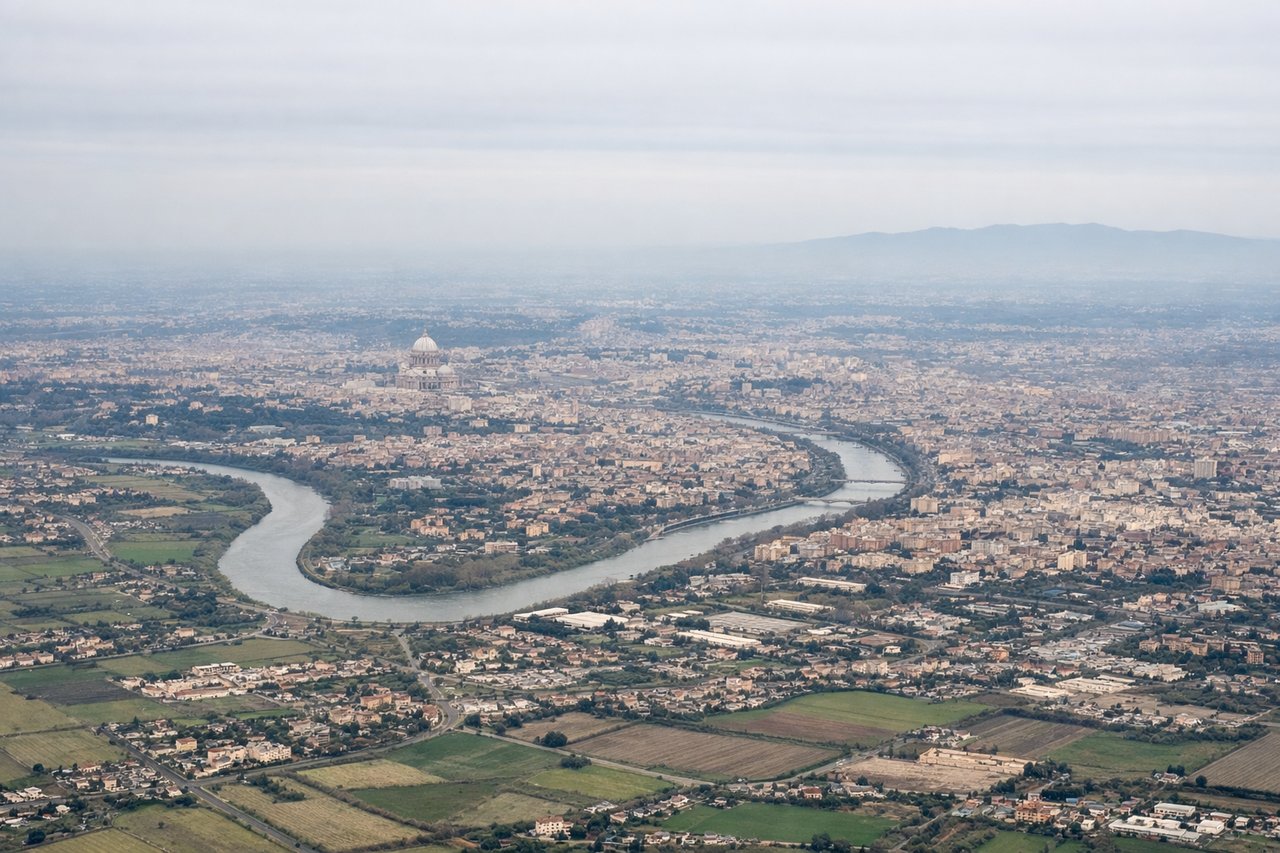
Takeoff from FCO
RIGHTRight seats offer views of the Tiber River valley and the Alban Hills as you climb southeast from Fiumicino. The terrain rises gradually inland, creating visible relief that's absent to the left over the Tyrrhenian Sea.
Landing at BDS
RIGHTRight seats provide views of the Salento Peninsula's distinctive geography—the flat, agricultural landscape and the Adriatic coast—as you descend toward Brindisi. The terrain is visually distinctive with its characteristic limestone plateau and coastal features.
Landmarks on this routeAll landmarks →
Will your flight be in sunlight?
Pick a date and time in the Sun Map to watch the sun move across your whole flight.
About This Route
Which side of the plane should I sit on flying from Fiumicino (FCO) to Casale (BDS)?
Sit on the Right side of the plane for the best views on flights from Rome to Brindisi. Right seats dominate both segments. Takeoff offers the Alban Hills and Tiber valley relief, while landing showcases the Salento Peninsula's distinctive flat limestone plateau and Adriatic coastline. The left side is mostly open water or featureless plain.
What can I see during takeoff from Fiumicino in Rome?
During takeoff from Fiumicino (FCO), sit on the Right side for the best views. Right seats offer views of the Tiber River valley and the Alban Hills as you climb southeast from Fiumicino. The terrain rises gradually inland, creating visible relief that's absent to the left over the Tyrrhenian Sea. Notable sights include: Tiber River (winding south from Rome), Alban Hills (low volcanic ridge southeast of the airport), Castelli Romani towns (scattered on hillsides), Mediterranean coast receding westward.
What can I see when landing at Casale in Brindisi?
When landing at Casale (BDS), sit on the Right side for the best views. Right seats provide views of the Salento Peninsula's distinctive geography—the flat, agricultural landscape and the Adriatic coast—as you descend toward Brindisi. The terrain is visually distinctive with its characteristic limestone plateau and coastal features. Notable sights include: Salento Peninsula (flat limestone plateau), Adriatic Sea (eastern coastline), Brindisi harbor (visible as a distinct inlet), Itria Valley (white trulli towns visible inland to the northwest).
How long is the flight from Rome to Brindisi?
The flight from Fiumicino (FCO) to Casale (BDS) takes about 1 hour 15 minutes. The shortest flight path between them is 306 miles (493 km); winds and air traffic control usually add a few percent.
What does the Rome to Brindisi flight path pass over?
The flight path crosses the Apennine Mountains' southern reaches (visible as a distant ridge around midpoint), then descends over the Basilicata and Calabria regions. The Ionian Sea lies to the east, while the Tyrrhenian coast remains visible to the west during the first half. The landscape transitions from volcanic hills to the flat Salento limestone plateau as you approach Brindisi.