Rome to Bristol is 968 miles (1,557 km), a flight of about 2 hours 45 minutes.
While takeoff favors the right for Rome views, the landing approach into Bristol is significantly more visually rewarding on the left, and landing views typically dominate passenger memory on westbound European routes.
Flight Path
The flight path crosses the Alps' northern foothills (visible around 45 minutes out), then the Bay of Biscay (featureless ocean), before reaching the English Channel and Dorset's Jurassic Coast (limestone cliffs visible on approach). The Cotswolds and Severn Estuary dominate the final descent.
Great circle distance and headings ›


_Panoramica_del_centro_della_citt%C3%A0_dal_lago.jpg?width=600)
.jpg?width=600)
Phase by phase
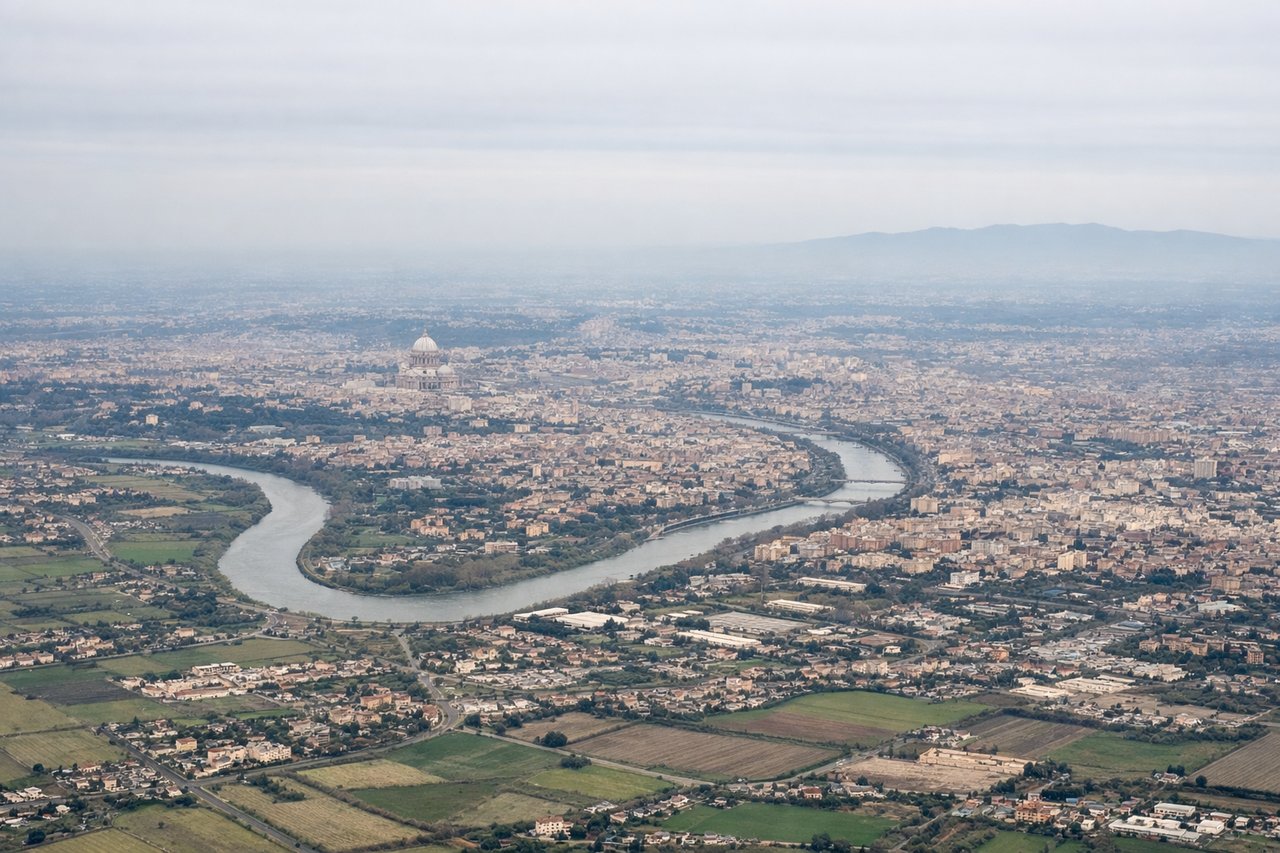
Takeoff from FCO
RIGHTRight-side seats capture the Tiber River winding through Rome's urban sprawl immediately after departure, plus the Alban Hills rising to the southeast. Left side faces the flat Pontine Marshes with minimal visual interest.
Landing at BRS
LEFTLeft-side seats offer views of the Cotswolds' rolling terrain and the Severn Estuary during descent into Bristol. Right side faces the flatter Somerset Levels with less distinctive topography.
Landmarks on this routeAll landmarks →
Will your flight be in sunlight?
Pick a date and time in the Sun Map to watch the sun move across your whole flight.
About This Route
Which side of the plane should I sit on flying from Fiumicino (FCO) to Bristol (BRS)?
Sit on the Left side of the plane for the best views on flights from Rome to Bristol. While takeoff favors the right for Rome views, the landing approach into Bristol is significantly more visually rewarding on the left, and landing views typically dominate passenger memory on westbound European routes.
What can I see during takeoff from Fiumicino in Rome?
During takeoff from Fiumicino (FCO), sit on the Right side for the best views. Right-side seats capture the Tiber River winding through Rome's urban sprawl immediately after departure, plus the Alban Hills rising to the southeast. Left side faces the flat Pontine Marshes with minimal visual interest. Notable sights include: Tiber River (visible as a silvery thread through the city), Alban Hills (volcanic ridge southeast of the airport), Rome's urban grid extending north, Mediterranean Sea to the west.
What can I see when landing at Bristol in Bristol?
When landing at Bristol (BRS), sit on the Left side for the best views. Left-side seats offer views of the Cotswolds' rolling terrain and the Severn Estuary during descent into Bristol. Right side faces the flatter Somerset Levels with less distinctive topography. Notable sights include: Severn Estuary (wide tidal mudflats and water), Cotswolds escarpment (limestone hills to the east), Forest of Dean (forested plateau to the north), Bristol's urban area in the valley.
How long is the flight from Rome to Bristol?
The flight from Fiumicino (FCO) to Bristol (BRS) takes about 2 hours 45 minutes. The shortest flight path between them is 968 miles (1,557 km); winds and air traffic control usually add a few percent.
What does the Rome to Bristol flight path pass over?
The flight path crosses the Alps' northern foothills (visible around 45 minutes out), then the Bay of Biscay (featureless ocean), before reaching the English Channel and Dorset's Jurassic Coast (limestone cliffs visible on approach). The Cotswolds and Severn Estuary dominate the final descent.