While left offers good Rome departure views, right side captures the more dramatic and visually distinctive Ligurian coast and Apennine approach into Genoa. The landing sequence is more scenic overall.
Flight Path
The flight path runs roughly north-northwest from Rome to Genoa, passing over the Apennine Mountains spine of central Italy. Notable midpoint features include the Tyrrhenian Sea coast visible to the west, the Apennine ridge itself (running north-south), and the transition from the volcanic plateaus of Latium to the limestone and metamorphic mountains of Tuscany and Liguria. The Arno River valley (near Florence) may be visible to the east depending on exact routing. The flight stays inland, never crossing open sea, with continuous mountain and valley terrain visible throughout the journey.
Great circle distance and headings ›Phase by phase
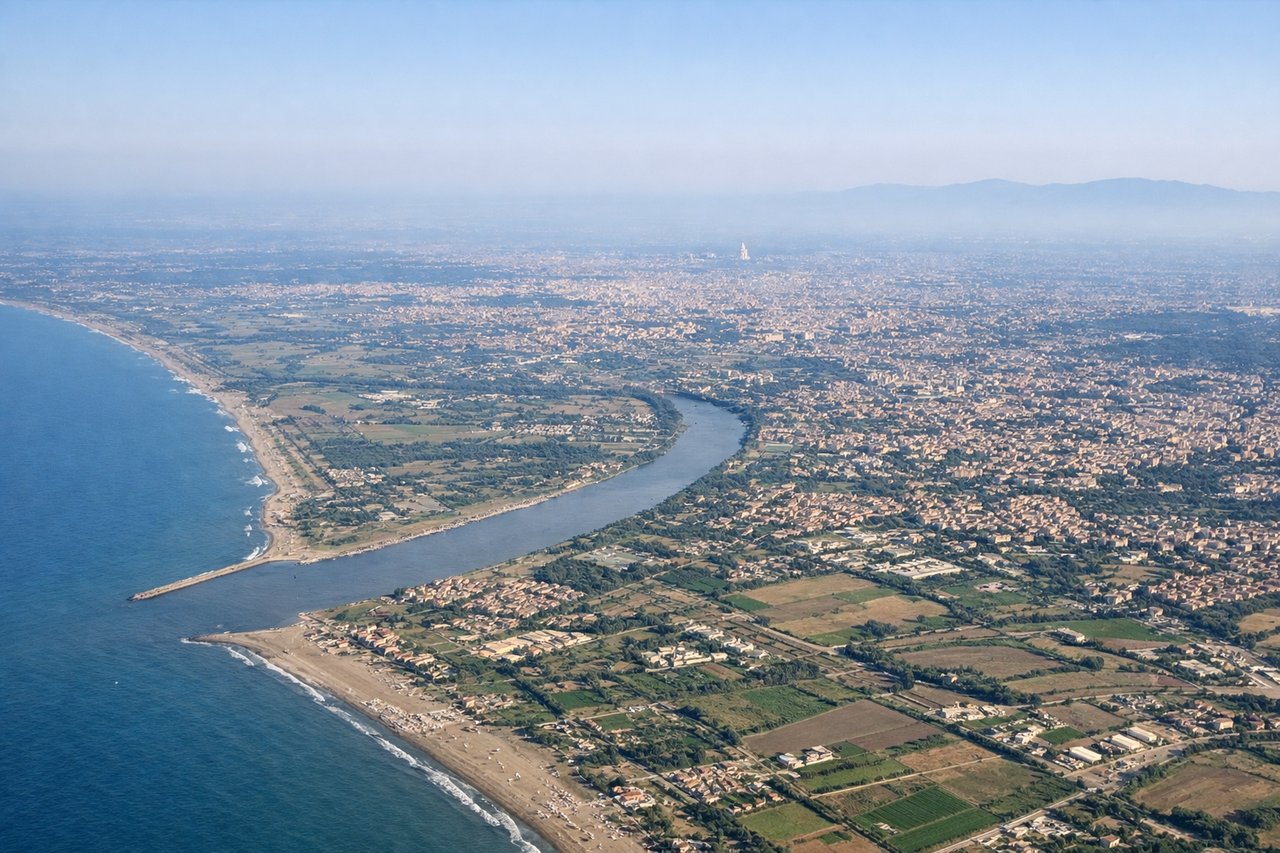
Takeoff from FCO
LEFTLeft side offers views of the Tiber River valley and the Alban Hills as you climb northwest out of Rome. The terrain rises progressively, giving good perspective on the volcanic plateau south of the city.
Landing at GOA
RIGHTRight side provides views of the Ligurian coast and the Apennine Mountains as you descend toward Genoa from the southeast. You'll see the coastline approaching and the city nestled between mountains and sea.
Landmarks on this routeAll landmarks →
Will your flight be in sunlight?
See exactly which side of the plane gets sun and shade at your departure time.
About This Route
Which side of the plane should I sit on flying from Fiumicino (FCO) to Genova Sestri (GOA)?
Sit on the Right side of the plane for the best views on flights from Rome to Genoa. While left offers good Rome departure views, right side captures the more dramatic and visually distinctive Ligurian coast and Apennine approach into Genoa. The landing sequence is more scenic overall.
What can I see during takeoff from Fiumicino in Rome?
During takeoff from Fiumicino (FCO), sit on the Left side for the best views. Left side offers views of the Tiber River valley and the Alban Hills as you climb northwest out of Rome. The terrain rises progressively, giving good perspective on the volcanic plateau south of the city. Notable sights include: Tiber River (winding south through Rome), Alban Hills (Castelli Romani volcanic ridge to the southeast), Vatican City area, Campagna Romana plains.
What can I see when landing at Genova Sestri in Genoa?
When landing at Genova Sestri (GOA), sit on the Right side for the best views. Right side provides views of the Ligurian coast and the Apennine Mountains as you descend toward Genoa from the southeast. You'll see the coastline approaching and the city nestled between mountains and sea. Notable sights include: Ligurian coast and Gulf of Genoa, Apennine Mountains (northern ridge), Genoa harbor and city waterfront, Portofino peninsula (if visibility extends far enough).
How long is the flight from Rome to Genoa?
The flight from Fiumicino (FCO) to Genova Sestri (GOA) takes Approximately 1 hour 15 minutes.
What does the Rome to Genoa flight path pass over?
The flight path runs roughly north-northwest from Rome to Genoa, passing over the Apennine Mountains spine of central Italy. Notable midpoint features include the Tyrrhenian Sea coast visible to the west, the Apennine ridge itself (running north-south), and the transition from the volcanic plateaus of Latium to the limestone and metamorphic mountains of Tuscany and Liguria. The Arno River valley (near Florence) may be visible to the east depending on exact routing. The flight stays inland, never crossing open sea, with continuous mountain and valley terrain visible throughout the journey.