The right side consistently faces the Mediterranean and Aegean coastline, Greek islands, and the Sea of Marmara during cruise, offering far more visual variety and recognizable geography than the flatter, hazier inland views on the left.
Flight Path
Adriatic Sea, the Albanian and Greek coastlines, and scattered Ionian/Aegean islands beneath the flight path as the route curves toward Turkey
Great circle distance and headings ›
_in_Istanbul.jpg?width=600)
Phase by phase
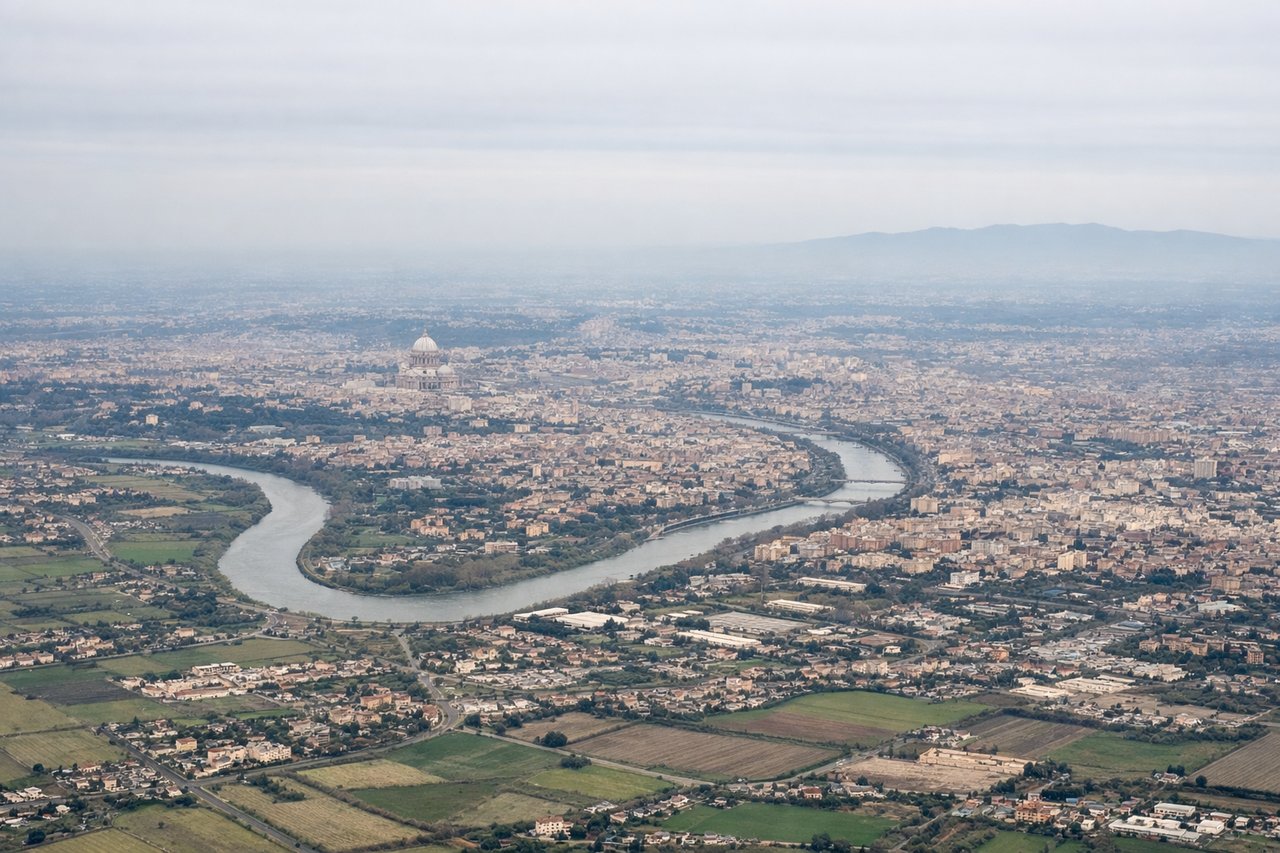
Takeoff from FCO
RIGHTDeparting FCO toward the east, the right side faces south, giving passengers a last look at the Roman coastline and the Tyrrhenian Sea before the aircraft turns onto its easterly track. The left side mostly shows the flat, hazy countryside north of Rome and the lower Apennines with little contrast.
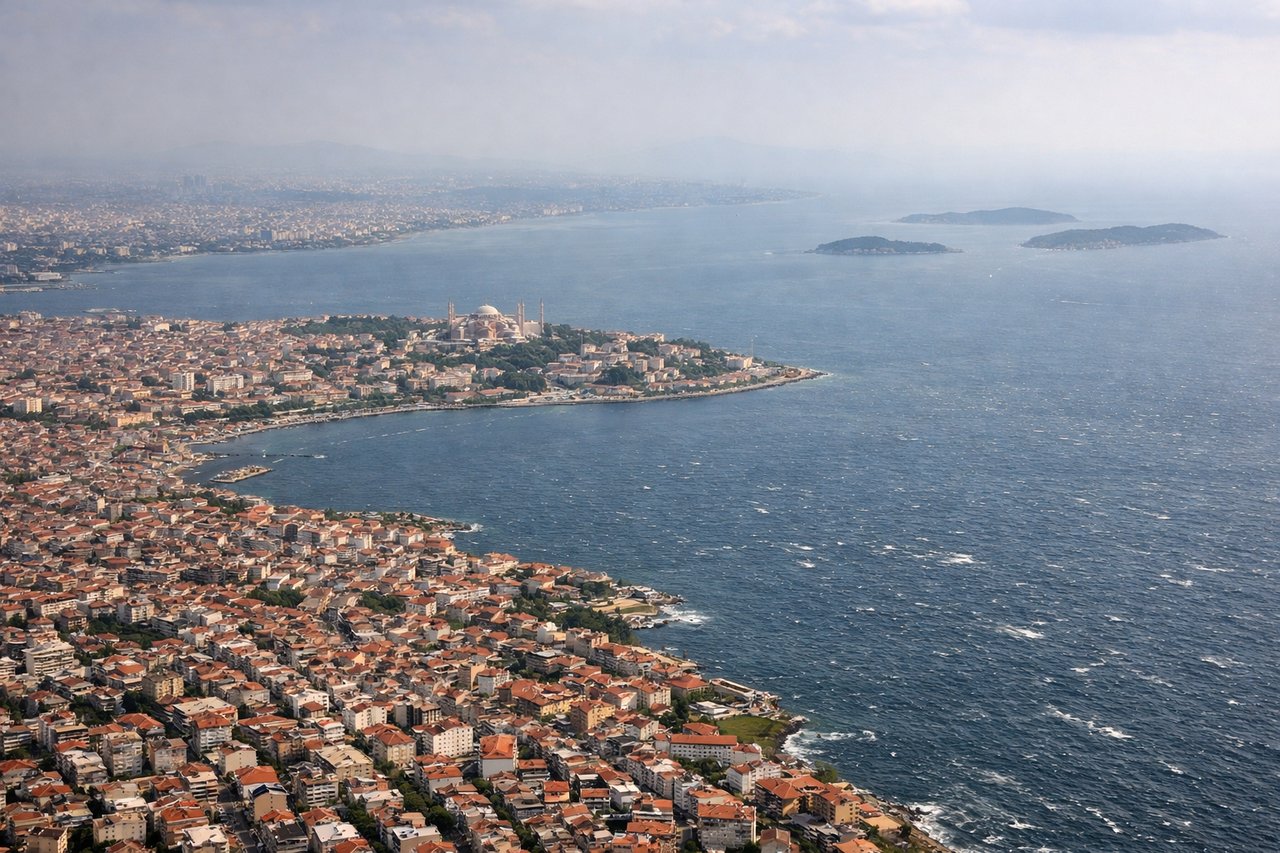
Landing at IST
RIGHTOn approach into IST from the west, the right side offers views over the Sea of Marmara and the outskirts of the Istanbul metropolitan sprawl, giving a strong sense of the city's scale and coastline. The left side mainly shows the flat farmland of Turkish Thrace with no major landmarks.
Landmarks on this routeAll landmarks →
Will your flight be in sunlight?
See exactly which side of the plane gets sun and shade at your departure time.
About This Route
Which side of the plane should I sit on flying from Fiumicino (FCO) to İstanbul Airport (IST)?
Sit on the Right side of the plane for the best views on flights from Rome to Istanbul. The right side consistently faces the Mediterranean and Aegean coastline, Greek islands, and the Sea of Marmara during cruise, offering far more visual variety and recognizable geography than the flatter, hazier inland views on the left.
What can I see during takeoff from Fiumicino in Rome?
During takeoff from Fiumicino (FCO), sit on the Right side for the best views. Departing FCO toward the east, the right side faces south, giving passengers a last look at the Roman coastline and the Tyrrhenian Sea before the aircraft turns onto its easterly track. The left side mostly shows the flat, hazy countryside north of Rome and the lower Apennines with little contrast. Notable sights include: Tyrrhenian coastline near Ostia, Rome's southern suburbs, the Castelli Romani hills.
What can I see when landing at İstanbul Airport in Istanbul?
When landing at İstanbul Airport (IST), sit on the Right side for the best views. On approach into IST from the west, the right side offers views over the Sea of Marmara and the outskirts of the Istanbul metropolitan sprawl, giving a strong sense of the city's scale and coastline. The left side mainly shows the flat farmland of Turkish Thrace with no major landmarks. Notable sights include: Sea of Marmara, Istanbul's western suburbs, scattered lakes near the Thrace coast.
How long is the flight from Rome to Istanbul?
The flight from Fiumicino (FCO) to İstanbul Airport (IST) takes 1h55m.
What does the Rome to Istanbul flight path pass over?
Adriatic Sea, the Albanian and Greek coastlines, and scattered Ionian/Aegean islands beneath the flight path as the route curves toward Turkey