The right side scores higher due to Shanghai's dramatic urban approach and the Huangpu River's distinctive geography during landing, which outweighs Rome's modest Mediterranean departure. The cruise segment over Central Asia and the Himalayas is equally visible from both sides, but Shanghai's final descent provides more concentrated scenic interest than Rome's takeoff.
Flight Path
The flight path crosses the Alps (visible from both sides during early cruise), the Balkans, the Black Sea region, the Caucasus Mountains, the Caspian Sea, the Turkmen and Uzbek deserts, the Tian Shan mountains, and the Taklamakan Desert before descending into eastern China. The Himalayas and Tibetan Plateau lie to the south of the typical routing but may be visible on the right side during cruise at certain flight levels. The Yangtze River valley becomes visible on approach to Shanghai.
Great circle distance and headings ›


.jpg?width=600)

Phase by phase
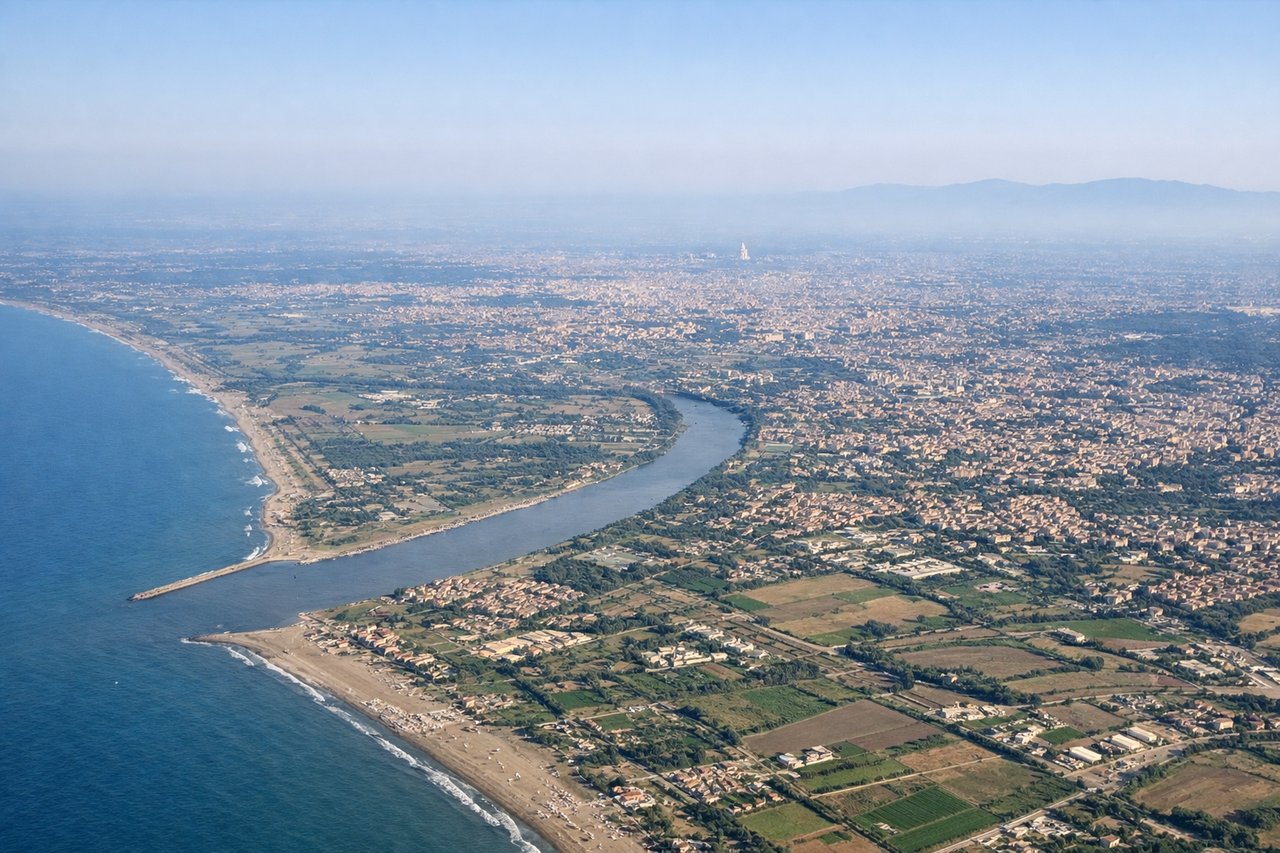
Takeoff from FCO
LEFTRome's departure offers immediate urban scenery and Mediterranean coastline. The left side captures the Tiber River valley, Rome's urban sprawl, and the transition to the Tyrrhenian Sea within the first 20 minutes of climb-out.
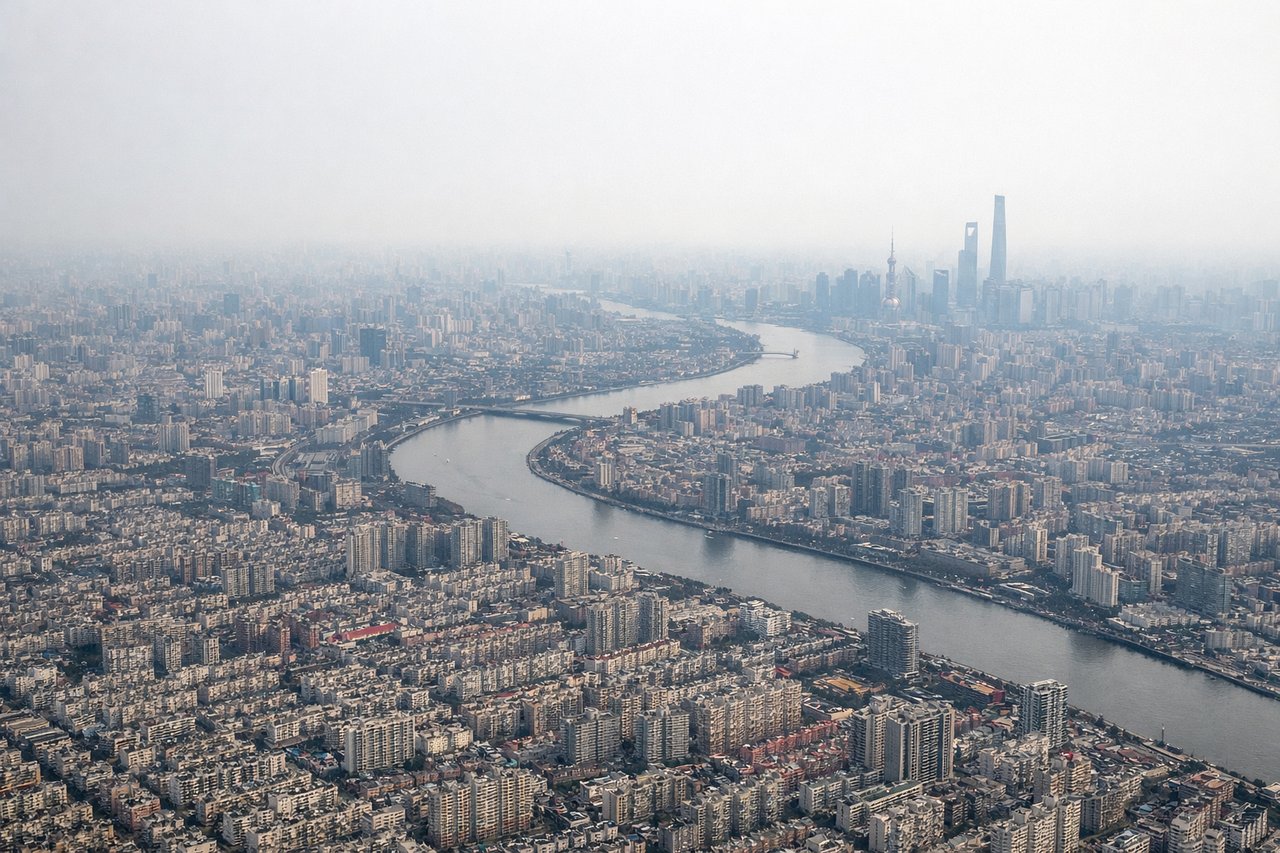
Landing at SHA
RIGHTShanghai's approach from the west provides dramatic urban density and the Huangpu River's distinctive meanders. The right side captures the sprawling metropolitan area, the East China Sea coastline, and Hangzhou Bay's geography during descent into Hongqiao.
Landmarks on this routeAll landmarks →
Will your flight be in sunlight?
See exactly which side of the plane gets sun and shade at your departure time.
About This Route
Which side of the plane should I sit on flying from Fiumicino (FCO) to Hongqiao International (SHA)?
Sit on the Right side of the plane for the best views on flights from Rome to Shanghai. The right side scores higher due to Shanghai's dramatic urban approach and the Huangpu River's distinctive geography during landing, which outweighs Rome's modest Mediterranean departure. The cruise segment over Central Asia and the Himalayas is equally visible from both sides, but Shanghai's final descent provides more concentrated scenic interest than Rome's takeoff.
What can I see during takeoff from Fiumicino in Rome?
During takeoff from Fiumicino (FCO), sit on the Left side for the best views. Rome's departure offers immediate urban scenery and Mediterranean coastline. The left side captures the Tiber River valley, Rome's urban sprawl, and the transition to the Tyrrhenian Sea within the first 20 minutes of climb-out. Notable sights include: Tiber River and Rome city center, Tyrrhenian Sea coastline, Alban Hills to the southeast.
What can I see when landing at Hongqiao International in Shanghai?
When landing at Hongqiao International (SHA), sit on the Right side for the best views. Shanghai's approach from the west provides dramatic urban density and the Huangpu River's distinctive meanders. The right side captures the sprawling metropolitan area, the East China Sea coastline, and Hangzhou Bay's geography during descent into Hongqiao. Notable sights include: Huangpu River with its characteristic bends, Shanghai's high-rise skyline and Pudong district, Hangzhou Bay to the east.
How long is the flight from Rome to Shanghai?
The flight from Fiumicino (FCO) to Hongqiao International (SHA) takes 11h 15m.
What does the Rome to Shanghai flight path pass over?
The flight path crosses the Alps (visible from both sides during early cruise), the Balkans, the Black Sea region, the Caucasus Mountains, the Caspian Sea, the Turkmen and Uzbek deserts, the Tian Shan mountains, and the Taklamakan Desert before descending into eastern China. The Himalayas and Tibetan Plateau lie to the south of the typical routing but may be visible on the right side during cruise at certain flight levels. The Yangtze River valley becomes visible on approach to Shanghai.