Left side wins both ends of the flight. During the cruise over Honshu, left-side seats also face south toward the Seto Inland Sea coastline and the mountains of the Chugoku and Kinki regions, including distant views of the Japanese Alps on clear days. Right side faces the Pacific Ocean for most of the cruise, which is featureless open water.
Flight Path
The flight tracks northeast over northern Kyushu, crosses the Kanmon Strait between Kyushu and Honshu, then follows the Chugoku region of western Honshu. The Seto Inland Sea is visible to the south with its hundreds of small islands. Over the Kinki and Tokai regions, the Japanese Alps (Hida Mountains) may be visible to the north on clear days. The flight descends over the flat Kanto Plain approaching Narita.
Great circle distance and headings ›

Phase by phase
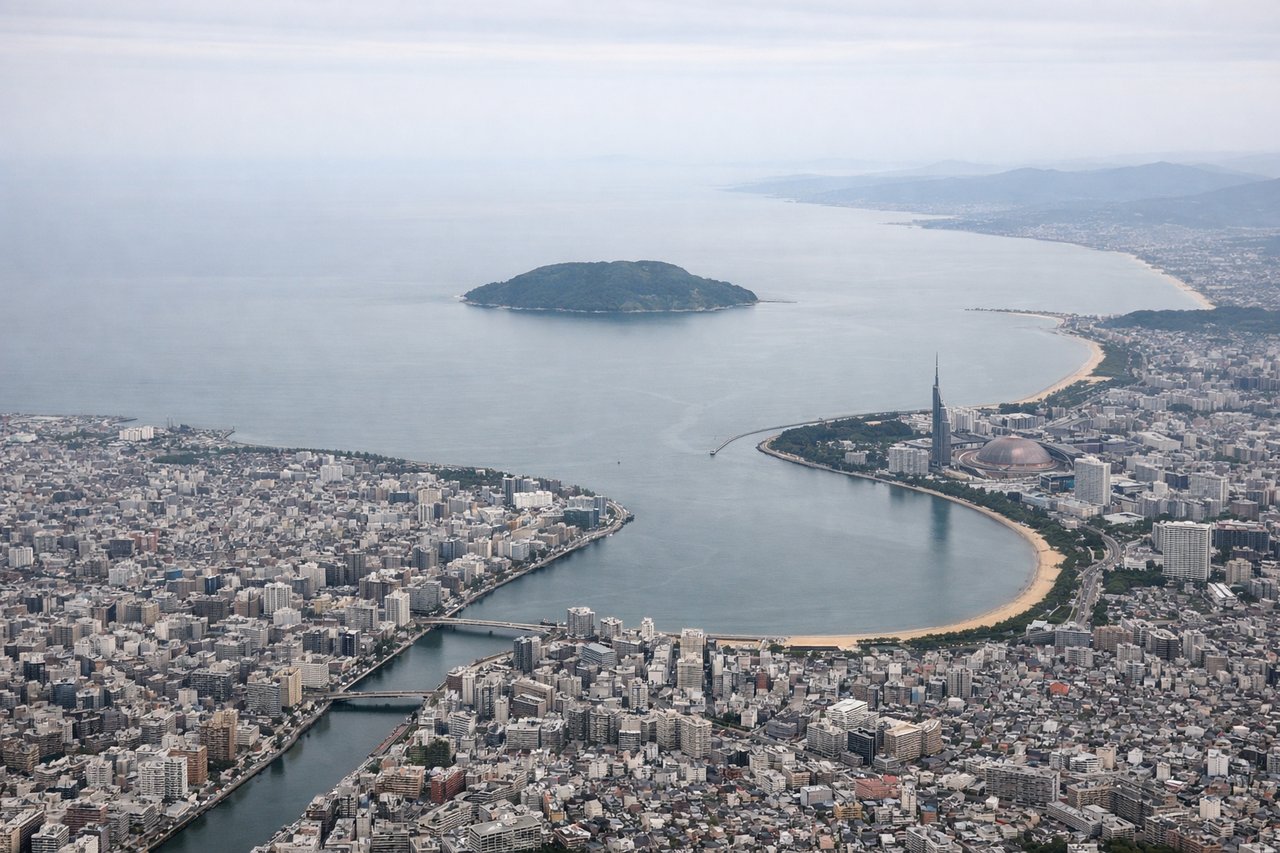
Takeoff from FUK
LEFTFukuoka Airport's primary departure runway 16 sends aircraft southeast over Hakata Bay before turning northeast toward Tokyo. Left-side seats get a clear view back over Fukuoka city, Hakata Bay, and the Genkai Sea as the aircraft climbs and banks. Right side faces inland toward suburban sprawl with less visual interest.
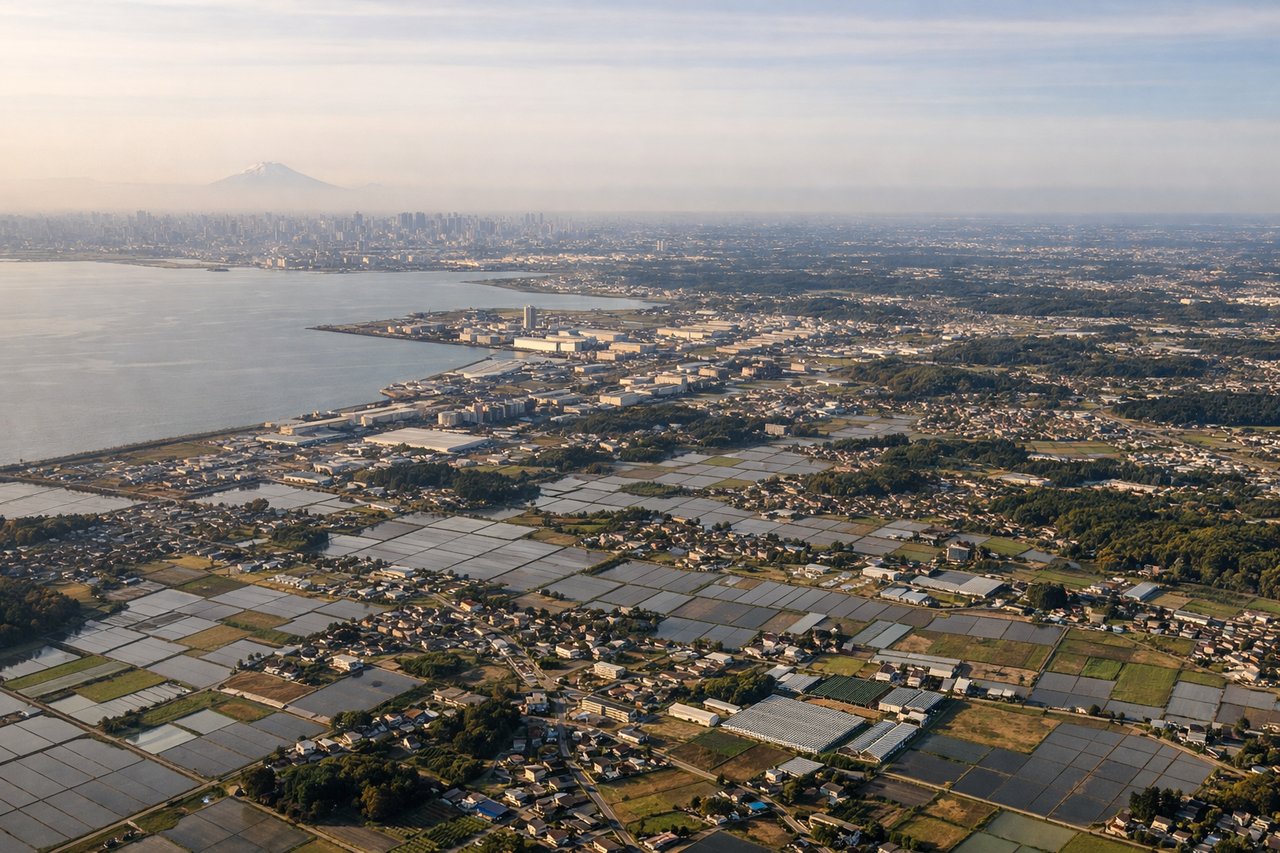
Landing at NRT
LEFTNRT's primary landing approach on runway 34L brings aircraft in from the south-southeast over the Boso Peninsula and Tokyo Bay. Left-side seats face east toward the Pacific coast of Chiba and the Boso Peninsula shoreline during approach. Right side looks west toward the Kanto Plain interior, but left offers the more dramatic coastal geometry and bay views.
Landmarks on this routeAll landmarks →
Will your flight be in sunlight?
See exactly which side of the plane gets sun and shade at your departure time.
About This Route
Which side of the plane should I sit on flying from Fukuoka (FUK) to New Tokyo International (NRT)?
Sit on the Left side of the plane for the best views on flights from Fukuoka to Tokyo. Left side wins both ends of the flight. During the cruise over Honshu, left-side seats also face south toward the Seto Inland Sea coastline and the mountains of the Chugoku and Kinki regions, including distant views of the Japanese Alps on clear days. Right side faces the Pacific Ocean for most of the cruise, which is featureless open water.
What can I see during takeoff from Fukuoka in Fukuoka?
During takeoff from Fukuoka (FUK), sit on the Left side for the best views. Fukuoka Airport's primary departure runway 16 sends aircraft southeast over Hakata Bay before turning northeast toward Tokyo. Left-side seats get a clear view back over Fukuoka city, Hakata Bay, and the Genkai Sea as the aircraft climbs and banks. Right side faces inland toward suburban sprawl with less visual interest. Notable sights include: Hakata Bay and its reclaimed land port areas, Fukuoka city center and Tenjin district grid, Genkai Sea stretching northwest toward Iki Island, Nokonoshima island sitting in the bay.
What can I see when landing at New Tokyo International in Tokyo?
When landing at New Tokyo International (NRT), sit on the Left side for the best views. NRT's primary landing approach on runway 34L brings aircraft in from the south-southeast over the Boso Peninsula and Tokyo Bay. Left-side seats face east toward the Pacific coast of Chiba and the Boso Peninsula shoreline during approach. Right side looks west toward the Kanto Plain interior, but left offers the more dramatic coastal geometry and bay views. Notable sights include: Tokyo Bay's broad expanse visible to the southwest, Boso Peninsula coastline below, Narita city and surrounding flat Kanto agricultural plain, Tone River delta region to the north.
How long is the flight from Fukuoka to Tokyo?
The flight from Fukuoka (FUK) to New Tokyo International (NRT) takes Approximately 1 hour 40 minutes.
What does the Fukuoka to Tokyo flight path pass over?
The flight tracks northeast over northern Kyushu, crosses the Kanmon Strait between Kyushu and Honshu, then follows the Chugoku region of western Honshu. The Seto Inland Sea is visible to the south with its hundreds of small islands. Over the Kinki and Tokai regions, the Japanese Alps (Hida Mountains) may be visible to the north on clear days. The flight descends over the flat Kanto Plain approaching Narita.