While left offers the dramatic Guanabara Bay departure, right provides the more visually distinctive arrival over the Río de la Plata and Montevideo's waterfront. The landing view is more rewarding and geographically unique than the takeoff.
Flown GIG to MVD? Did we get it right?
Flight Path
Rio De Janeiro to Montevideo is 1,133 miles (1,823 km), a flight of about 2 hours 15 minutes.
The flight path crosses the Atlantic coast near Cabo Polonio (Uruguay's northeastern point), then tracks southwest over the open Atlantic. At cruise altitude (around 25,000 feet), the coastline and interior are too distant to distinguish clearly. The Río de la Plata estuary becomes visible about 30 minutes before landing—its distinctive tan coloration from sediment plumes marks the approach to Montevideo.
Great circle distance and headings ›Phase by phase
Takeoff from GIG
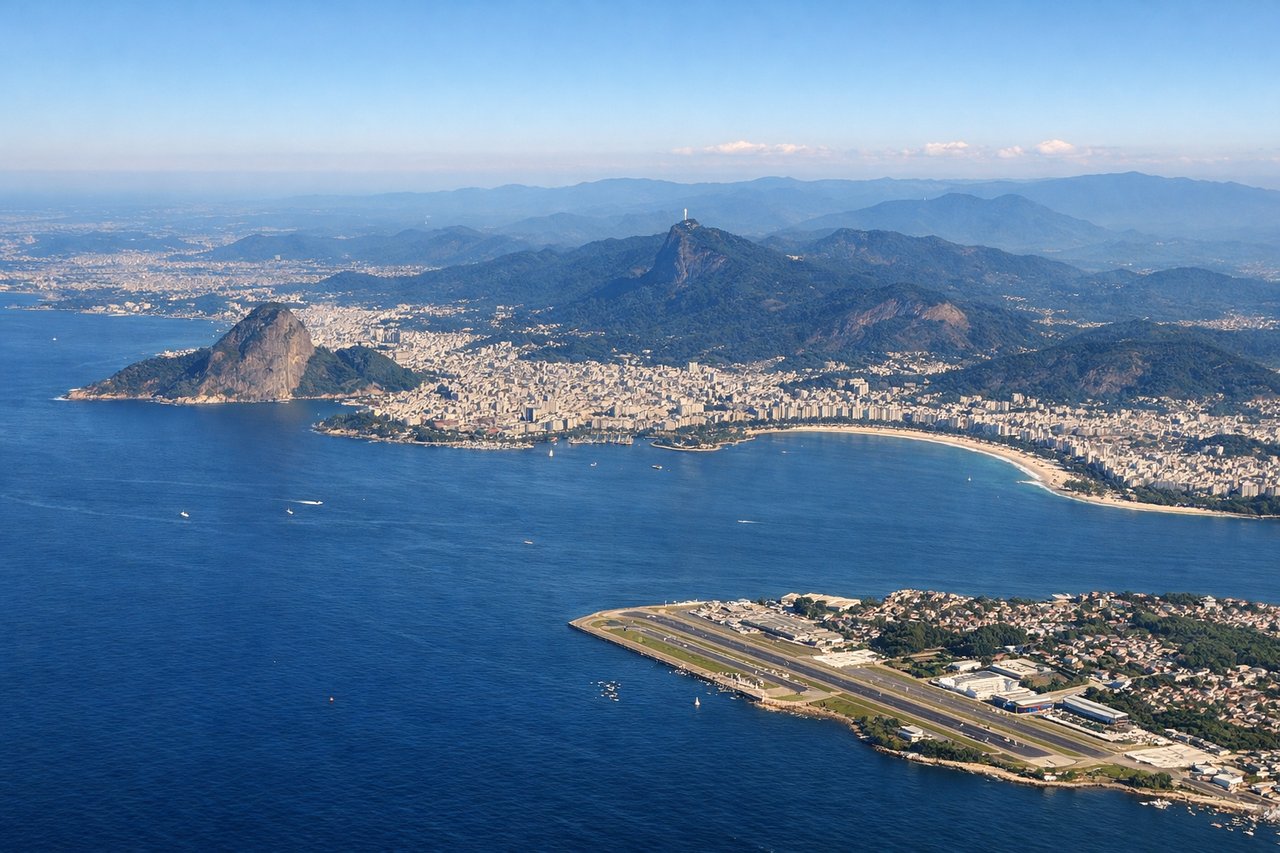
LEFTGIG typically departs runway 10L/10R (northeasterly heading). Left seats face the Atlantic Ocean and Guanabara Bay's eastern shoreline during initial climb, with clear views of the coastal geography. Right seats look inland toward the city and mountains.
Landing at MVD
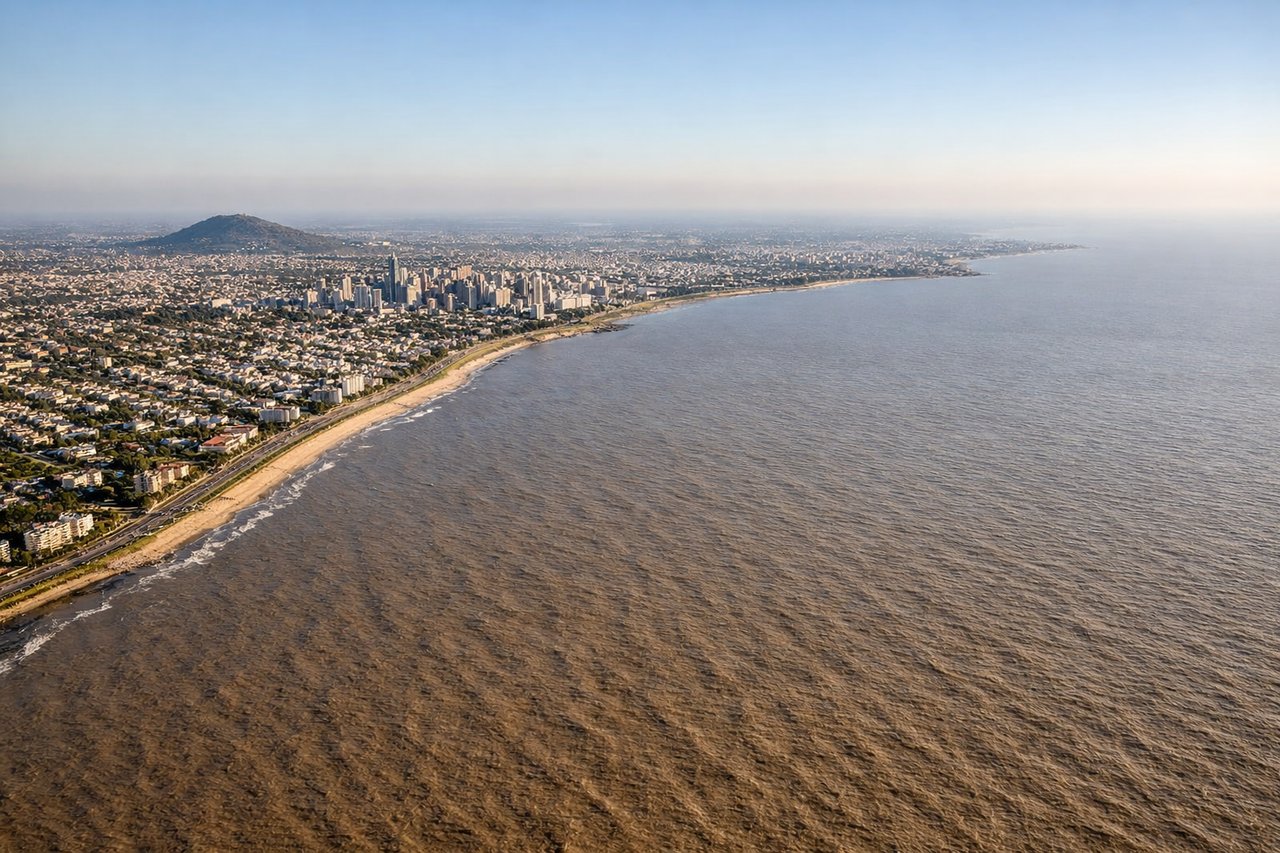
RIGHTMVD approaches from the northeast (runway 26 typical). Right seats face the Río de la Plata estuary and the Uruguayan coast during descent. Left seats see the interior plains. The river's wide, muddy waters and Montevideo's waterfront are distinctive from the right side.
Will your flight be in sunlight?
Pick a date and time in the Sun Map to watch the sun move across your whole flight.
About This Route
Which side of the plane should I sit on flying from Galeao Antonio Carlos Jobim (GIG) to Carrasco International (MVD)?
Sit on the Right side of the plane for the best views on flights from Rio De Janeiro to Montevideo. While left offers the dramatic Guanabara Bay departure, right provides the more visually distinctive arrival over the Río de la Plata and Montevideo's waterfront. The landing view is more rewarding and geographically unique than the takeoff.
What can I see during takeoff from Galeao Antonio Carlos Jobim in Rio De Janeiro?
During takeoff from Galeao Antonio Carlos Jobim (GIG), sit on the Left side for the best views. GIG typically departs runway 10L/10R (northeasterly heading). Left seats face the Atlantic Ocean and Guanabara Bay's eastern shoreline during initial climb, with clear views of the coastal geography. Right seats look inland toward the city and mountains. Notable sights include: Guanabara Bay (immediate left, sparkling water with islands), Niterói city across the bay (left middle distance), Serra da Carioca mountain range (right, receding inland), Atlantic coastline curving northward (left horizon).
What can I see when landing at Carrasco International in Montevideo?
When landing at Carrasco International (MVD), sit on the Right side for the best views. MVD approaches from the northeast (runway 26 typical). Right seats face the Río de la Plata estuary and the Uruguayan coast during descent. Left seats see the interior plains. The river's wide, muddy waters and Montevideo's waterfront are distinctive from the right side. Notable sights include: Río de la Plata estuary (right, wide and tan-colored), Montevideo's Old City and waterfront (right, clustered buildings), Cerro hill with its distinctive profile (right, rising above the city), Punta Carretas peninsula (right, jutting into the river).
How long is the flight from Rio De Janeiro to Montevideo?
The flight from Galeao Antonio Carlos Jobim (GIG) to Carrasco International (MVD) takes about 2 hours 15 minutes. The shortest flight path between them is 1,133 miles (1,823 km); winds and air traffic control usually add a few percent.
What does the Rio De Janeiro to Montevideo flight path pass over?
The flight path crosses the Atlantic coast near Cabo Polonio (Uruguay's northeastern point), then tracks southwest over the open Atlantic. At cruise altitude (around 25,000 feet), the coastline and interior are too distant to distinguish clearly. The Río de la Plata estuary becomes visible about 30 minutes before landing—its distinctive tan coloration from sediment plumes marks the approach to Montevideo.