Seoul to Tokyo is 763 miles (1,228 km), a flight of about 2 hours 15 minutes.
The right side offers the most consistent scenic value across the flight — city and river views during departure from Seoul, and coastal/Fuji views on arrival into Narita — while the left side faces mostly open sea and flat plains with little variation.
Flight Path
Korea Strait and open waters of the East China Sea, with occasional views of Japanese offshore islands near Kyushu before the final descent into the Kanto Plain.
Great circle distance and headings ›

Phase by phase
Takeoff from GMP
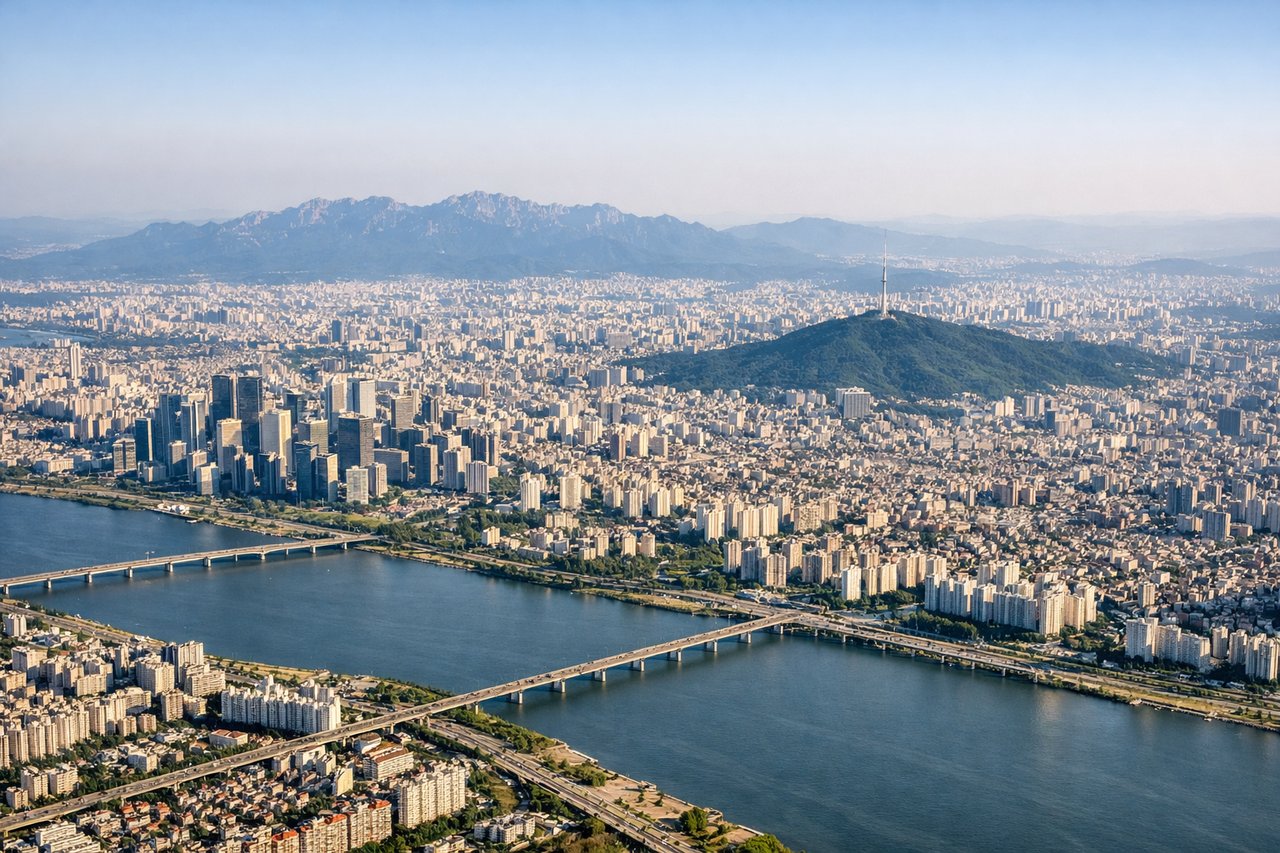
RIGHTDeparting Gimpo toward the southeast, the right side offers views of the Han River winding through Seoul and the southern suburbs before the aircraft turns east over the Korean peninsula's interior ridges. The left side mostly shows the flatter Incheon coastal plain and Yellow Sea haze.
Landing at NRT
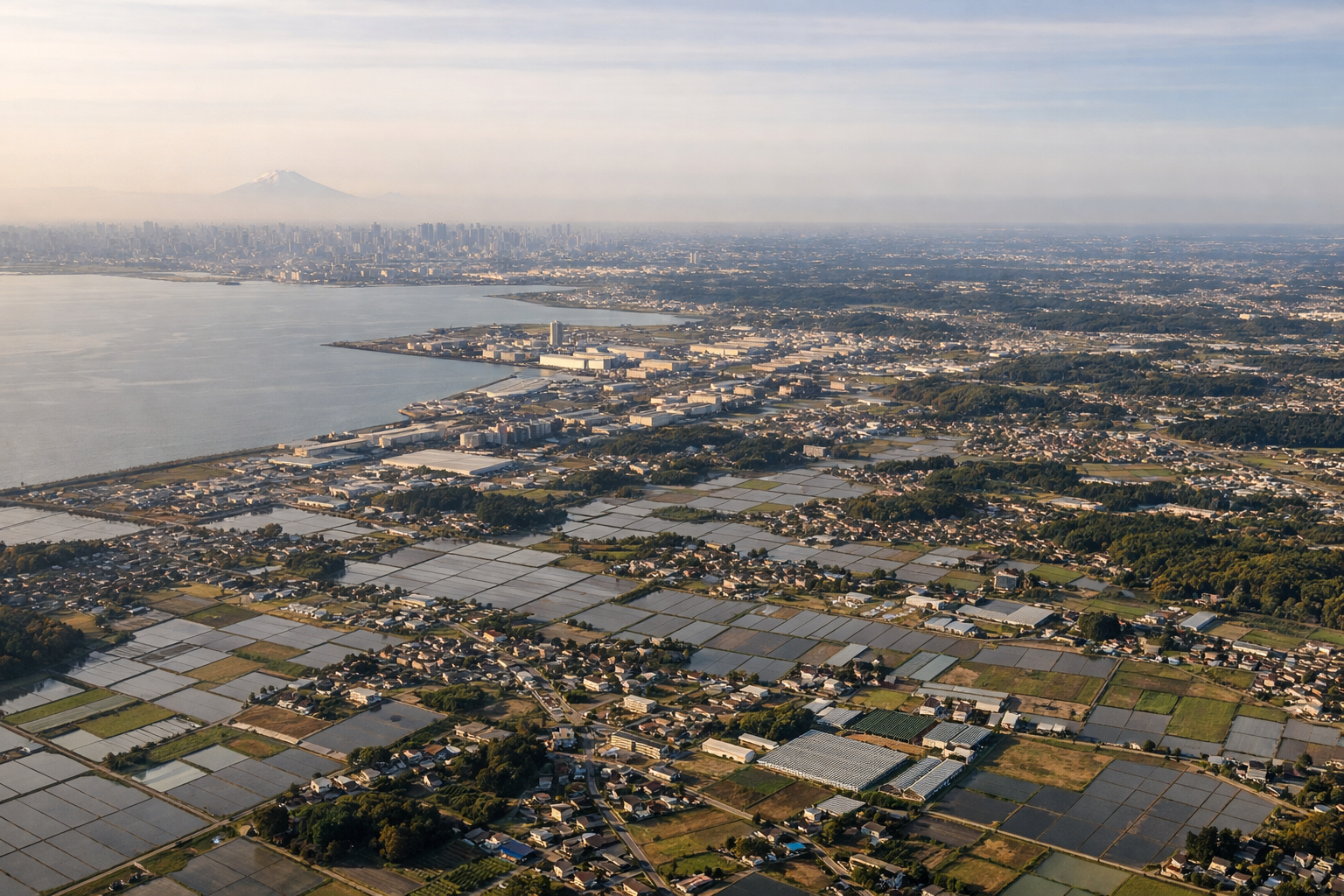
RIGHTOn approach to Narita from the west, the right side of the aircraft (facing south) can catch a glimpse of Tokyo Bay and, on clear days, the distant silhouette of Mount Fuji beyond the Chiba plains. The left side mostly shows flat agricultural land north of Narita with less visual interest.
Landmarks on this routeAll landmarks →
Will your flight be in sunlight?
Pick a date and time in the Sun Map to watch the sun move across your whole flight.
About This Route
Which side of the plane should I sit on flying from Gimpo (GMP) to New Tokyo International (NRT)?
Sit on the Right side of the plane for the best views on flights from Seoul to Tokyo. The right side offers the most consistent scenic value across the flight — city and river views during departure from Seoul, and coastal/Fuji views on arrival into Narita — while the left side faces mostly open sea and flat plains with little variation.
What can I see during takeoff from Gimpo in Seoul?
During takeoff from Gimpo (GMP), sit on the Right side for the best views. Departing Gimpo toward the southeast, the right side offers views of the Han River winding through Seoul and the southern suburbs before the aircraft turns east over the Korean peninsula's interior ridges. The left side mostly shows the flatter Incheon coastal plain and Yellow Sea haze. Notable sights include: Han River, southern Seoul skyline, Korean peninsula foothills, Yellow Sea coastline.
What can I see when landing at New Tokyo International in Tokyo?
When landing at New Tokyo International (NRT), sit on the Right side for the best views. On approach to Narita from the west, the right side of the aircraft (facing south) can catch a glimpse of Tokyo Bay and, on clear days, the distant silhouette of Mount Fuji beyond the Chiba plains. The left side mostly shows flat agricultural land north of Narita with less visual interest. Notable sights include: Tokyo Bay, Mount Fuji (distant, weather permitting), Chiba farmland patchwork, Narita city outskirts.
How long is the flight from Seoul to Tokyo?
The flight from Gimpo (GMP) to New Tokyo International (NRT) takes about 2 hours 15 minutes. The shortest flight path between them is 763 miles (1,228 km); winds and air traffic control usually add a few percent.
What does the Seoul to Tokyo flight path pass over?
Korea Strait and open waters of the East China Sea, with occasional views of Japanese offshore islands near Kyushu before the final descent into the Kanto Plain.